What is PMI on a mortgage ? PMI stands for private mortgage insurance. It is a type of mortgage insurance that may be required when you get a conventional loan and make a down payment of less than 20%.
The simple answer:
PMI is insurance that protects the lender, not the borrower, if the borrower stops making mortgage payments. PMI can help eligible buyers purchase a home with less than 20% down, but it adds cost to the monthly mortgage payment or overall loan structure. The good news is that PMI on a conventional loan may be removable later if you meet cancellation requirements.
The Consumer Financial Protection Bureau explains that private mortgage insurance is a type of mortgage insurance you might be required to buy if you take out a conventional loan with a down payment of less than 20% of the purchase price. CFPB also says PMI protects the lender, not the borrower, if you stop making payments on the loan.
Important note: This article is for informational purposes only and is not a commitment to lend. PMI requirements, mortgage insurance cost, payment estimates, loan approval, down payment options, PMI cancellation, rates, APR, fees, closing costs, cash to close, property eligibility, and loan program availability depend on borrower qualifications, credit profile, down payment, loan-to-value ratio, property details, loan type, lender guidelines, underwriting, servicer rules, and current program requirements.
Key Takeaways PMI means private mortgage insurance. PMI is usually connected to conventional loans, not FHA, VA, or USDA loans. You may hear PMI described as PMI mortgage insurance, PMI for a home loan, or simply mortgage insurance. PMI may be required when a conventional borrower puts less than 20% down. PMI protects the lender if the borrower stops making payments; it does not protect the borrower from foreclosure or missed payments. PMI may help eligible buyers purchase with a lower down payment instead of waiting until they have 20% saved. PMI cost can vary based on down payment, credit score, loan amount, loan type, and lender or insurer guidelines. CFPB says private mortgage insurance rates vary by down payment amount and credit score, and most PMI is paid monthly with little or no initial payment required at closing. PMI may be cancellable later if requirements are met. CFPB says borrowers can request PMI cancellation when the principal balance is scheduled to fall to 80% of the home’s original value, and PMI must be automatically canceled at 78% if the borrower is current. At Loan Factory, we help buyers compare loan options with and without PMI so they can understand the full monthly payment, cash to close, and long-term cost. What Is PMI Mortgage Insurance? PMI mortgage insurance is private mortgage insurance on a conventional mortgage.
It is called “private” because it is provided by a private mortgage insurance company, not by a government agency.
PMI is different from homeowners insurance.
Insurance Type
Who It Protects
What It Covers
PMI Lender Helps protect lender if borrower defaults Homeowners insurance Homeowner and lender interest in the property Damage, covered hazards, property protection Flood insurance Homeowner and lender interest in flood-risk property Flood-related covered losses FHA mortgage insurance FHA/lender program Required for FHA-insured loans VA funding fee VA loan program cost Different from monthly PMI
PMI does not pay your mortgage for you if you lose income.
It does not protect your credit.
It does not prevent foreclosure.
It helps make a lower down payment conventional loan possible by reducing lender risk.
What Is PMI in Mortgage Payments? What is PMI in mortgage payments? PMI is an additional cost that may be included in your total monthly mortgage payment when you use a conventional loan with less than 20% down.
To understand how these costs work together, review how to calculate your mortgage payment .
A mortgage payment may include:
Principal Interest Property taxes Homeowners insurance PMI, if required HOA dues, usually paid separately but counted for qualification Flood insurance, if required CFPB explains that a Loan Estimate helps borrowers review important mortgage details, including monthly payment, total closing costs, and whether taxes and insurance are included.
PMI in a Monthly Payment Payment Item
What It Means
Principal Reduces your loan balance Interest Cost of borrowing money Property taxes Local tax authority charges Homeowners insurance Property insurance coverage PMI Private mortgage insurance, if required HOA dues Usually paid separately, but counted in housing expense
When comparing mortgage options, do not look only at the interest rate.
Look at the full payment, including PMI if it applies.
What Is PMI for a Home Loan? PMI for a home loan is a cost that may allow eligible borrowers to buy a home with a smaller down payment.
Many buyers think they need 20% down to buy a home.
That is not always true.
A conventional loan may allow a lower down payment if the borrower qualifies, but PMI may be required when the down payment is below 20%.
CFPB’s home loan toolkit explains that lenders most likely require PMI when borrowers make no down payment or a small down payment, and that PMI lets buyers make a lower down payment by insuring the lender against loss if the borrower fails to pay the mortgage.
Why PMI Exists PMI helps solve a common homebuying challenge:
Without PMI
With PMI
Buyer may need to wait until 20% down is saved Buyer may be able to buy sooner with less down, if eligible Lower loan-to-value risk for lender PMI helps reduce lender risk No monthly PMI if 20% down and program allows Monthly PMI may increase payment Lower monthly housing cost in some cases Higher monthly payment due to PMI
PMI can be useful, but it is not free.
The right question is not only “Can I avoid PMI?”
The better question is:
Which mortgage option gives me the best balance of monthly payment, cash to close, approval strength, and long-term cost?
When Is PMI Required? PMI may be required when:
You use a conventional loan. Your down payment is less than 20%. Your loan-to-value ratio is above 80%. The lender, investor, or automated underwriting system requires it. CFPB says PMI may be required when a borrower takes out a conventional loan with a down payment of less than 20% of the purchase price.
Common PMI Scenarios Scenario
PMI Likely?
Conventional loan with 3% down Usually yes Conventional loan with 5% down Usually yes Conventional loan with 10% down Usually yes Conventional loan with 15% down Usually yes Conventional loan with 20% down Usually no, if program guidelines are met FHA loan No PMI, but FHA mortgage insurance applies VA loan No monthly PMI, but VA funding fee may apply USDA loan No PMI, but USDA guarantee fees may apply
PMI is mainly a conventional loan term.
Other loan types may have different mortgage insurance or program fees.
Eligible military borrowers can read our guide, Does a VA loan have PMI ?, to compare PMI with the VA funding fee
PMI vs Mortgage Insurance: Are They the Same? PMI is one type of mortgage insurance.
But not all mortgage insurance is PMI.
Loan Type
Mortgage Insurance or Fee
Conventional loan Private mortgage insurance, if required FHA loan FHA mortgage insurance premium VA loan VA funding fee, no monthly PMI USDA loan USDA guarantee fee Jumbo loan Depends on lender and loan structure Non-QM loan Depends on lender and investor guidelines
CFPB explains that if you get a conventional loan, your lender may arrange private mortgage insurance with a private company. CFPB also notes that FHA mortgage insurance works differently and is required for FHA loans.
Important Difference PMI may be cancellable on a conventional loan.
FHA mortgage insurance follows different rules.
That difference is one reason buyers often compare Conventional vs FHA before choosing a mortgage.
Buyers considering eligible rural or suburban properties can also review how a USDA home loan uses guarantee fees instead of conventional PMI.
How Much Does PMI Cost? PMI cost varies.
There is no single PMI amount that applies to every borrower.
PMI may depend on:
Down payment Loan amount Loan-to-value ratio Credit score Loan term Property type Occupancy Debt-to-income ratio Number of borrowers Mortgage insurer pricing Lender or investor guidelines CFPB says PMI rates vary by down payment amount and credit score.
What Can Affect PMI Cost? Factor
Why It Matters
Down payment Larger down payment may reduce PMI cost Credit score Stronger credit may improve PMI pricing Loan amount Larger loan may increase total PMI dollars Property type Condos, 2–4 units, or investment properties may differ Occupancy Primary residence may price differently than investment property Loan program HomeReady or Home Possible may have different MI features Lender guidelines Lender and investor overlays can affect options
The best way to know your PMI cost is to compare actual loan estimates based on your credit, property, loan amount, and down payment.
How Is PMI Paid? PMI can be structured in different ways.
The most common structure is monthly borrower-paid PMI.
CFPB says most private mortgage insurance is paid monthly, with little or no initial payment required at closing.
Common PMI Payment Structures PMI Type
How It Works
What to Consider
Monthly PMI Added to monthly mortgage payment Common and easier to compare Upfront PMI Paid at closing Higher cash to close Split-premium PMI Part upfront and part monthly Balances upfront and monthly cost Lender-paid PMI Lender pays PMI, often with higher rate May reduce visible PMI but not always total cost Single-premium PMI One-time premium May not be refundable in some cases
A no PMI mortgage program does not always mean there is no cost.
CFPB’s home loan toolkit warns that “no PMI” offers may have higher interest rates or may require a second mortgage, so borrowers should understand the details.
Does PMI Help You Qualify? PMI does not directly make income higher or debt lower.
But PMI may help eligible borrowers access conventional financing with less than 20% down.
Without PMI, a lender may not be willing to approve a higher loan-to-value conventional loan.
PMI May Help If You have less than 20% down. You want to buy sooner instead of waiting. You qualify for a conventional loan. You can afford the full monthly payment including PMI. The property and loan program are eligible. You want a path where PMI may be removed later. PMI May Not Help If The monthly payment becomes too high. Your debt-to-income ratio does not qualify. FHA, VA, USDA, or another option is a better fit. You plan to sell or refinance very soon. A higher down payment is available and makes more sense. The PMI structure has a high upfront cost. PMI should be reviewed as part of the full loan structure, not as a stand-alone item.
Can PMI Be Removed? Yes, PMI on a conventional loan may be removable if requirements are met.
CFPB says borrowers have the right to ask the servicer to cancel PMI when the principal balance is scheduled to fall to 80% of the original value of the home. CFPB also says the request must be in writing, the borrower must have a good payment history and be current, the borrower may need to certify there are no junior liens, and the borrower may need to provide evidence that the property value has not declined.
CFPB also says PMI must be automatically canceled when the principal balance is scheduled to reach 78% of the original value of the home, if the borrower is current on payments.
PMI Cancellation Overview PMI Milestone
What May Happen
80% of original value Borrower may request PMI cancellation in writing if requirements are met 78% of original value PMI must be automatically canceled if borrower is current Midpoint of loan term PMI may need to end even if balance has not reached 78%, if borrower is current Value-based request Servicer may require appraisal and other documentation
Your PMI disclosure, mortgage servicer, and loan documents should provide more details about your specific cancellation rights.
How to Remove PMI From a Mortgage To request PMI cancellation, contact your mortgage servicer.
You may need to:
Confirm the date or loan balance when PMI may be canceled. Submit a written request. Be current on your mortgage payments. Show good payment history. Certify that there are no junior liens, such as a second mortgage. Provide evidence of property value if required. Pay for an appraisal or broker price opinion if required by the servicer. Wait for servicer review and approval. CFPB says the first date you can request PMI cancellation should appear on your PMI disclosure form, and if you cannot find it, you should contact your servicer.
Important Servicer Tip Do not stop paying PMI until your servicer confirms cancellation.
PMI is part of your required payment until the servicer removes it.
PMI vs FHA Mortgage Insurance PMI and FHA mortgage insurance are often confused.
They are not the same.
Feature
Conventional PMI
FHA Mortgage Insurance
Loan type Conventional loans FHA loans Provider Private mortgage insurance company FHA program Common trigger Less than 20% down Required for FHA loans Paid monthly? Often yes Often yes, plus upfront premium Cancellable? May be cancellable if requirements are met FHA rules differ Cost factors Credit score, down payment, loan-to-value, loan type FHA program rules Best fit Depends on borrower profile Depends on borrower profile
CFPB says PMI can often be cheaper than FHA mortgage insurance for borrowers with good credit, while FHA may be a better fit for borrowers with lower credit scores or different qualification needs.
This is why buyers should compare Conventional and FHA side by side before choosing.
PMI and Low Down Payment Conventional Loans PMI is often part of low down payment conventional financing.
Common low down payment conventional options may include:
Conventional 97 HomeReady Home Possible HomeOne Standard conventional with less than 20% down Fannie Mae’s HomeReady product matrix describes the Fannie Mae HomeReady Loan as affordable conventional financing with cancellable mortgage insurance, subject to restrictions, and up to 97% LTV financing.
When Low Down Payment With PMI May Make Sense It may make sense if:
You want to buy sooner. You qualify for conventional financing. You can afford the full monthly payment. PMI cost is reasonable for your scenario. You want potential PMI cancellation later. Waiting to save 20% down could take too long. HomeReady, Home Possible, or another conventional option fits your profile. When Waiting or Comparing Other Options May Make Sense It may make sense to compare alternatives if:
PMI makes the payment too high. FHA has a stronger approval path. VA or USDA is available and fits your situation. You have access to down payment assistance programs . You can comfortably increase your down payment. You plan to sell or refinance quickly. A different lender offers a better structure. PMI is not automatically bad.
It is a tool that should be compared carefully.
How PMI Affects Affordability PMI increases the total monthly housing payment when it is paid monthly.
That can affect:
Monthly payment comfort Debt-to-income ratio Purchase price range Loan approval strength Cash flow after closing Long-term cost Refinance planning PMI removal planning A buyer should compare:
Comparison Item
Why It Matters
Rate Affects principal and interest APR Helps compare broader cost PMI Affects monthly payment Closing costs Affects cash to close Down payment Affects loan-to-value and PMI Mortgage insurance structure Monthly vs upfront vs lender-paid Total monthly payment Shows real affordability PMI cancellation path Affects long-term cost FHA comparison May be better or worse depending on profile VA or USDA eligibility May offer different insurance/fee structure
The lowest down payment is not always the best option.
The best loan is the one that fits approval, payment, cash to close, and long-term goals.
Where to Find PMI on a Loan Estimate Your Loan Estimate can help you see whether PMI is included.
CFPB says the Loan Estimate tells you important details about a mortgage loan you requested, and buyers should use it to make sure the offer reflects what they discussed with the lender.
Look for PMI-related information in:
Projected Payments Estimated Taxes, Insurance & Assessments Closing Cost Details Prepaids Cash to Close Comparisons section Loan terms and monthly payment details If PMI is not clear, ask your loan advisor:
Is PMI required? How much is the monthly PMI? Is PMI borrower-paid, lender-paid, upfront, or split premium? When can PMI be removed? What is the estimated loan-to-value ratio? How does PMI compare with FHA mortgage insurance? Would a larger down payment reduce PMI? Are there low down payment conventional options with reduced MI? Do not sign a loan structure until you understand the total payment.
How to Compare Loans With PMI When comparing loans with PMI, ask for side-by-side options.
Compare These Options Option
Why Review It
Lower down payment with PMI May reduce cash to close but increase monthly payment Higher down payment with lower PMI May reduce monthly cost 20% down May avoid PMI if program guidelines are met FHA loan May fit better for some credit profiles VA loan May fit eligible borrowers without monthly PMI USDA loan May fit eligible rural buyers HomeReady or Home Possible May offer affordable conventional options Lender-paid PMI May remove visible monthly PMI but increase rate Down payment assistance May help reduce cash needed, if eligible
A Loan Estimate is useful because it lets you compare actual offers instead of guessing.
CFPB encourages borrowers to request multiple Loan Estimates from different lenders so they can compare and choose the loan that is right for them.
What We See in Real Buyer Reviews At Loan Factory, many buyers first see PMI as just an extra cost.
That is understandable.
But in real mortgage comparisons, PMI can be part of a larger strategy.
Here are common situations we see:
A buyer can afford the payment with PMI and prefers buying sooner instead of waiting years to save 20%. A buyer has strong credit and finds conventional PMI more competitive than FHA mortgage insurance. A buyer with lower credit compares FHA because it may produce a stronger approval path. A buyer increases the down payment slightly to reduce PMI and improve monthly affordability. A buyer chooses a low down payment option and plans to request PMI removal later if eligible. A buyer compares monthly PMI with lender-paid PMI and realizes the “no monthly PMI” option may come with a higher rate. A buyer focuses only on avoiding PMI but overlooks closing costs, cash reserves, and payment comfort. The right move depends on your full mortgage picture.
PMI Checklist Before You Choose a Loan Use this checklist before deciding.
Question
Why It Matters
Is PMI required? Confirms whether mortgage insurance applies How much is monthly PMI? Affects affordability Is PMI paid monthly, upfront, split, or lender-paid? Affects monthly payment and cash to close Can PMI be removed later? Affects long-term cost When is the first cancellation date? Helps plan ahead Would a larger down payment reduce PMI? May improve payment Is FHA better or worse in this scenario? FHA may fit some borrowers better Are VA or USDA options available? Could change mortgage insurance structure Are there HomeReady or Home Possible options? May help eligible buyers What is the total monthly payment? Shows real affordability What is the total cash to close? Shows upfront cost How long do you plan to keep the home? Affects cost-benefit analysis
PMI should not be reviewed in isolation.
It should be part of the full loan comparison.
Common PMI Mistakes to Avoid Mistake 1: Thinking PMI Protects the Borrower PMI protects the lender if the borrower stops making mortgage payments. It does not protect the borrower from foreclosure or missed payments.
Mistake 2: Assuming You Always Need 20% Down A 20% down payment may help avoid PMI, but some eligible buyers can purchase with less than 20% down if they qualify and accept PMI or another mortgage insurance structure.
Mistake 3: Comparing Only the Interest Rate PMI affects monthly payment and long-term cost.
Compare rate, APR, PMI, closing costs on a mortgage , cash to close, and loan program fit.
Mistake 4: Thinking “No PMI” Means No Cost CFPB warns that “no PMI” offers may involve higher interest rates or a second mortgage, so borrowers should understand the details.
Mistake 5: Not Asking About PMI Cancellation If you have conventional PMI, ask when you may be able to request cancellation and what the servicer requires.
Mistake 6: Confusing PMI With FHA Mortgage Insurance PMI applies to conventional loans.
FHA mortgage insurance follows FHA rules and is different.
Mistake 7: Ignoring Credit Score and Down Payment Impact PMI cost may vary by credit score and down payment amount.
Mistake 8: Not Reviewing the Loan Estimate Your Loan Estimate helps you compare loan terms, monthly payment, closing costs, and estimated costs. Review it carefully and ask questions before moving forward.
How Loan Factory Helps Buyers Compare PMI and Loan Options At Loan Factory, we help buyers compare mortgage options side by side so they can understand how PMI affects payment, cash to close, and long-term cost.
Loan Factory’s website highlights access to 240+ lenders, transparent pricing, expert support, and TERA technology for comparing mortgage options.
What Loan Factory Offers Homebuyers Conventional loan comparison with PMI review FHA, VA, USDA, Jumbo, Non-QM, and other loan option comparisons Side-by-side review of rate, APR, PMI, mortgage insurance, fees, credits, and cash to close Help comparing low down payment options such as HomeReady, Home Possible, and other available programs Local loan advisor support to explain Loan Estimates, PMI, escrow, taxes, insurance, and monthly payment TERA technology platform to support pricing, loan comparison, document flow, and loan review No application fee to start reviewing mortgage options Loan Factory does not guarantee loan approval, PMI cancellation, lower payment, lower rate, property eligibility, appraisal results, or that one loan program will be best for every borrower.
But we can help you compare available mortgage paths before you apply, make an offer, or choose a loan program.
Ready to compare mortgage options with and without PMI?
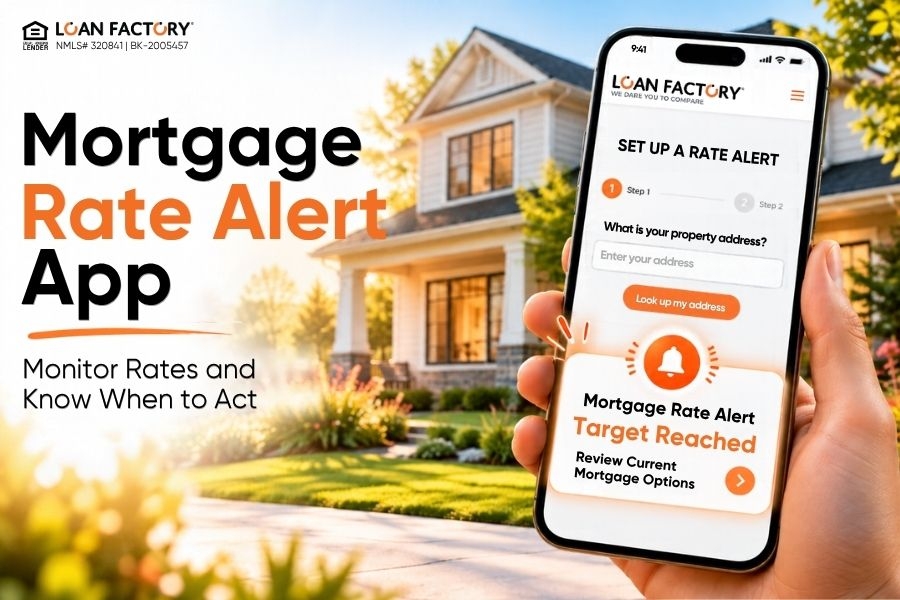
Compare mortgage options Apply online Use the mortgage calculator Set up a mortgage rate alert
Author Box Written by: Loan Factory Mortgage Education Team
Loan Factory is a technology-powered mortgage platform helping borrowers compare mortgage options through a broad wholesale lender network. Our mortgage education content is designed to help buyers understand PMI, mortgage insurance, down payment options, Conventional vs FHA comparisons, monthly payments, closing costs, loan documents, and the home loan process before applying.
Compliance Disclaimer This content is for informational and educational purposes only and is not a commitment to lend, not tax advice, not insurance advice, not legal advice, and not financial advice. PMI requirements, mortgage insurance cost, PMI cancellation, loan approval, Conventional, FHA, VA, USDA, Jumbo, Non-QM, or other loan eligibility, rates, APR, fees, payment estimates, down payment, seller credits, lender credits, closing costs, cash to close, escrow, property taxes, homeowners insurance, property eligibility, appraisal results, and closing timelines depend on borrower qualifications, credit profile, income, debts, assets, down payment, loan-to-value ratio, property details, lender guidelines, underwriting, mortgage servicer rules, investor requirements, and current program rules. Not all applicants, homes, properties, or programs will qualify. Terms may change without notice.
Loan Factory is not affiliated with or acting on behalf of HUD, FHA, VA, USDA, Fannie Mae, Freddie Mac, FHFA, CFPB, FTC, any mortgage insurer, insurance company, or government agency. FHA, VA, USDA, Conventional, Jumbo, conforming, non-conforming, refinance, cash-out refinance, home equity, and other loan programs are offered through participating lender partners and approved program providers, subject to eligibility and underwriting approval.
Equal Housing Opportunity.
FAQ: What Is PMI on a Mortgage?