How to shop for a mortgage means comparing more than just the lowest advertised interest rate. A smart mortgage comparison includes the lender or broker, interest rate, APR, points, fees, mortgage insurance, closing costs, cash to close, loan program, communication quality, and closing timeline.
The simple answer:
To shop for a mortgage, compare multiple lenders or mortgage brokers, request Lhttps://www.consumerfinance.gov/oan Estimates for the same loan type and scenario, review the interest rate and APR, compare lender fees and credits, ask about mortgage insurance and closing costs, and choose the option that fits your budget, timeline, and approval profile.
The Consumer Financial Protection Bureau says buyers should compare Loan Estimates from multiple lenders to determine what loan and lender is right for them, and the Federal Trade Commission recommends shopping around by getting details and terms from several lenders or mortgage brokers.
Important note: This article is for informational purposes only and is not a commitment to lend. Mortgage approval, loan options, rates, APR, points, fees, lender credits, seller credits, mortgage insurance, closing costs, cash to close, payment estimates, rate lock terms, and closing timelines depend on borrower qualifications, income, debts, credit profile, assets, property details, lender guidelines, underwriting, title, insurance, and market conditions.
Key Takeaways How to shop for a mortgage: compare lenders, brokers, Loan Estimates, rates, APR, fees, credits, loan programs, and service quality. Do not compare only the advertised interest rate. The FTC recommends comparing both rates and fees when shopping for mortgage loans. CFPB says multiple Loan Estimates can help borrowers compare loan offers and may help with negotiation. A mortgage lender makes direct loans, while a mortgage broker does not lend money but may help you find different lenders or mortgage loans. Mortgage brokers and loan officers are usually paid a loan-specific fee or commission, paid by the borrower or the lender used. You can verify state-licensed mortgage companies, branches, and individuals through NMLS Consumer Access. Choosing a mortgage broker or lender should include pricing, communication, licensing, loan options, experience with your scenario, and ability to meet your closing timeline. Loan Factory helps borrowers compare mortgage options using real market data from 240+ wholesale lenders and the TERA technology platform. What Does It Mean to Shop for a Mortgage? Shopping for a mortgage means collecting and comparing loan options before choosing the lender, broker, rate, loan program, and terms.
A good mortgage shopping process compares:
Loan program Interest rate APR Discount points Lender fees Lender credits Third-party fees Mortgage insurance Estimated monthly payment Estimated cash to close Rate lock period Loan term Prepayment penalty, if any Closing timeline Loan officer or broker communication Experience with your borrower profile Mortgage shopping is not just about finding the lowest rate.
A loan with a lower rate may have higher points or fees.
A loan with slightly higher rate may have lower closing costs.
A broker may offer access to multiple lenders.
A direct lender may have specific in-house products.
The best choice depends on the full loan structure.
How to Shop for a Mortgage Step by Step Step 1: Know Your Borrower Profile Before comparing lenders, understand your basic profile.
Review:
Credit score Income type Employment history Monthly debts Down payment funds Gift funds, if any Desired purchase price Property type Occupancy Location Timeline First-time buyer status VA or USDA eligibility, if applicable A lender or broker cannot give you a meaningful comparison without knowing the basics.
Before requesting quotes, borrowers can use a mortgage application document checklist to organize common income, asset, identification, and property documents that may be needed during the loan process.
For example, an FHA buyer with moderate credit may need a different comparison than a conventional buyer with stronger credit and 20% down.
Step 2: Compare Loan Programs First Before choosing a lender, compare which loan program may fit.
Common mortgage programs include:
Loan Program
Common Buyer Fit
Conventional Buyers with stronger credit, stable income, and an eligible down payment FHA Buyers who may need more flexible credit or a lower down payment VA Eligible Veterans, service members, and qualifying surviving spouses USDA Eligible buyers purchasing in eligible rural or suburban areas Jumbo Buyers needing a loan above conforming loan limits Non-QM Borrowers with non-traditional income or complex scenarios DSCR Real estate investors using rental income/property cash flow
A lender offering the lowest conventional rate may not be the best fit if your file works better with FHA, VA, USDA, or another program.
Start with fit.
Then compare pricing.
Borrowers comparing standard financing can review a conventional loan or USDA home loans to better understand common eligibility and program requirements.
Borrowers with non-traditional income or more complex qualification scenarios can also review Non-QM loans .
Step 3: Decide Whether You Want a Lender, Broker, or Both When learning how to shop for a mortgage lender, it helps to understand the difference between a lender and a broker.
CFPB explains that a lender is a financial institution that makes direct loans, while a broker does not lend money and may help borrowers find different lenders or mortgage loans.
Option
What It Does
Possible Benefit
Direct lender Makes the loan directly Direct process, specific products Mortgage broker Shops with multiple lenders More lender options through one contact Bank or credit union May offer relationship-based products Existing banking relationship Online lender Digital process Convenience and speed Local mortgage advisor Personalized guidance Local market and offer strategy support
You do not need to choose only one category at first.
You can compare a bank, a broker, and a mortgage platform to see which gives you the best combination of loan options, pricing, communication, and confidence.
Step 4: Ask for the Same Scenario From Each Lender To compare fairly, give each lender or broker the same information.
Use the same:
Purchase price Down payment Property type Credit score range Occupancy Loan type Loan term Estimated closing date Rate lock period County and state Seller credit request, if any This helps prevent an apples-to-oranges comparison.
For example, one quote may look better because it assumes a shorter lock period, different loan term, lower taxes, no mortgage insurance, or more discount points.
Ask every lender to quote the same structure.
Step 5: Request a Loan Estimate Once you have a property and loan scenario, request official Loan Estimates.
CFPB says buyers should request, review, and compare Loan Estimates from multiple lenders to determine which loan and lender is right for them.
A Loan Estimate helps you compare:
Loan amount Interest rate Monthly payment Closing costs Cash to close APR Total interest percentage Points Lender credits Mortgage insurance Prepayment penalty, if any CFPB also says borrowers should compare Loan Estimate details, including loan amount and interest rate, and that multiple Loan Estimates can help borrowers negotiate.
How to Compare Mortgage Loan Estimates A Loan Estimate is one of the most important tools when shopping for a mortgage.
What to Compare on Page 1 Loan Estimate Item
Why It Matters
Loan amount Confirms how much you are borrowing Interest rate Affects monthly principal and interest Monthly payment Helps compare affordability Prepayment penalty Important if you sell, refinance, or pay off early Projected payments Shows mortgage insurance and escrow estimates Estimated cash to close Shows expected money needed at settlement
What to Compare on Page 2 Loan Estimate Item
Why It Matters
Origination charges Shows lender-controlled costs Discount points Shows whether you are paying upfront to lower rate Services you cannot shop for Usually lender-selected services Services you can shop for May allow comparison Taxes and government fees Vary by location Prepaids Includes insurance, taxes, prepaid interest Initial escrow payment Helps set up tax and insurance escrow Lender credits May reduce closing costs but can affect rate
What to Compare on Page 3 Loan Estimate Item
Why It Matters
APR Helps compare broader cost of credit Total interest percentage Shows interest paid over loan term In 5 years Shows principal paid and total paid in early years Appraisal, assumption, servicing Shows important loan conditions
Borrowers who want to understand lender-controlled charges in more detail can review loan origination fees before comparing Loan Estimates.
Do not choose based on one number.
Review the whole Loan Estimate.
When comparing mortgage offers, borrowers often ask whether interest rate or APR matters more.
Both matter.
Metric
What It Shows
Interest rate The rate used to calculate principal and interest APR Broader annual cost of credit including certain loan costs Monthly payment Payment estimate based on rate, loan amount, taxes, insurance, and mortgage insurance Cash to close Estimated money needed at closing Closing costs Upfront costs of the transaction
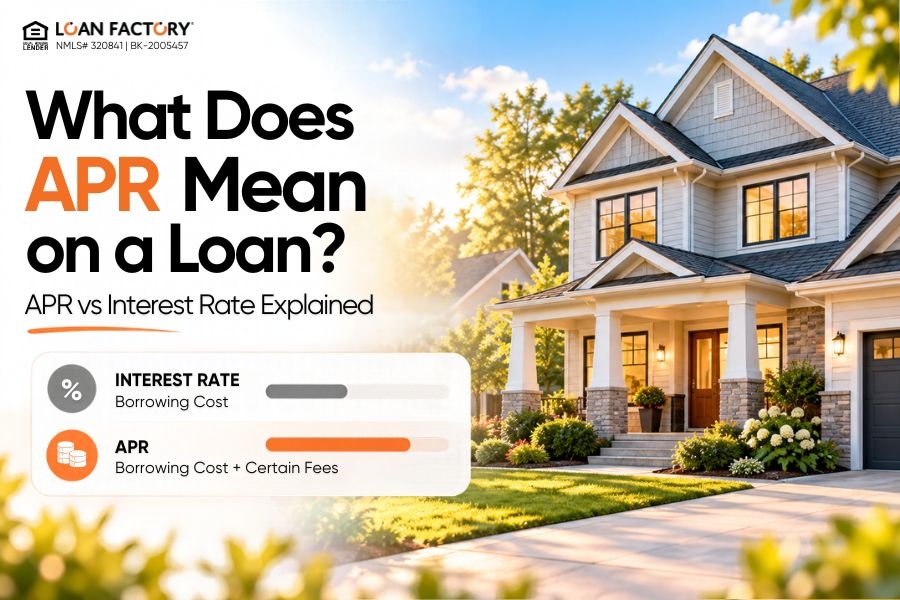
A lower interest rate can still come with a higher APR if the loan has more points or fees.
A slightly higher interest rate may sometimes come with lower cash to close.
When comparing upfront mortgage expenses, review cash to close vs. closing costs to understand why these two figures on a mortgage transaction are related but not the same.
The right choice depends on how long you plan to keep the home or loan.
How to Shop for a Mortgage Lender When comparing mortgage lenders, look beyond pricing.
1. Compare Cost Ask each lender for:
Interest rate APR Points Origination charges Lender fees Lender credits Estimated closing costs Estimated cash to close Mortgage insurance The FTC recommends shopping around by getting details and terms from several lenders or mortgage brokers and comparing rates and fees.
2. Compare Loan Options Ask whether the lender offers:
Conventional loans FHA loans VA loans USDA loans Jumbo loans Down payment assistance options First-time buyer options Refinance options Home equity options Investor loans, if applicable A lender with more options may be able to fit more borrower scenarios.
3. Compare Communication Ask yourself:
Did the loan advisor explain clearly? Did they answer questions directly? Did they explain fees and tradeoffs? Did they pressure you? Did they provide written details? Did they explain next steps? Did they respond quickly? A slightly cheaper loan may not be worth it if communication is poor and the closing timeline is at risk.
4. Compare Closing Confidence Ask:
Can you meet my contract deadline? What conditions could delay closing? How fast can underwriting review my file? What documents do you need now? Do you work with my property type? Have you handled this loan program before? Do you provide updates during the process? The right lender should help you understand both the price and the process.
Choosing a Mortgage Broker Choosing a mortgage broker can make sense if you want help comparing several lenders through one mortgage professional.
A broker may be useful if:
You want access to multiple wholesale lenders Your income is complex You are self-employed You are comparing FHA, Conventional, VA, USDA, Jumbo, or Non-QM options You want side-by-side lender comparisons You need help understanding pricing tradeoffs You want a loan advisor to help structure the file CFPB explains that mortgage brokers typically work with multiple lenders, while loan officers often work for one specific lender.
Questions to Ask a Mortgage Broker Before choosing a mortgage broker, ask:
Which lenders do you work with? How many loan options can you compare for my scenario? How are you compensated? Are you paid by me, the lender, or through the loan pricing? What fees will appear on my Loan Estimate? Are there any broker fees? Which lender is best for my file and why? Can you compare rate, APR, points, credits, and cash to close? Can you meet my closing timeline? Are you licensed in my state? Can I verify you through NMLS Consumer Access? What happens after I choose a lender? CFPB says a mortgage loan officer or broker is usually paid a loan-specific fee or commission, paid by the borrower or the lender used.
That is why compensation should be clear.
How to Check a Mortgage Broker or Lender Before sending documents or signing disclosures, verify the person or company.
You can use NMLS Consumer Access to look up licensed and registered mortgage companies, branches, and individuals. NMLS says Consumer Access is a searchable website that lets the public view information about state-licensed companies, branches, and individuals licensed and registered through NMLS.
Check:
Company name Individual loan originator name NMLS number State licensing Branch information Employment history Regulatory actions, if listed Contact information This step is especially important when working with someone online or through a referral.
Use this checklist before choosing a lender or broker.
Checklist Item
Ready?
I know my estimated credit profile ☐ I gathered income and asset documents ☐ I compared at least a few lender or broker options ☐ I asked for the same loan scenario from each provider ☐ I reviewed interest rate and APR ☐ I checked points and lender credits ☐ I compared lender fees ☐ I compared closing costs ☐ I compared cash to close ☐ I reviewed mortgage insurance ☐ I asked about rate lock period ☐ I asked about closing timeline ☐ I checked NMLS licensing ☐ I compared communication quality ☐ I asked what could delay approval ☐ I understand why one offer is better than another ☐
A clear mortgage shopping process can help you avoid choosing a loan based only on a headline rate.
Ask these questions before choosing.
Pricing Questions What is the interest rate? What is the APR? Are there discount points? Are there lender credits? What are the origination charges? What fees are controlled by the lender? What fees are third-party costs? What is the estimated cash to close? What is the estimated monthly payment? Loan Program Questions Which loan programs do I qualify for? Is FHA, Conventional, VA, USDA, Jumbo, or another option better? Is mortgage insurance required? Can mortgage insurance be removed later? Are down payment assistance options available? Are seller credits allowed? Approval Questions What documents do you need? What underwriting risks do you see? What could delay closing? Do I need an appraisal? Will the property type create issues? Do I need reserves? Does my income type need extra documentation? Service Questions Who will be my main contact? How often will I receive updates? Can you meet my closing date? How fast do you respond? Will you explain my Loan Estimate? What happens after I lock my rate? Mistake 1: Comparing Only the Interest Rate A lower rate may come with higher points, lender fees, or cash to close.
Compare rate, APR, closing costs, and cash to close together.
Mistake 2: Comparing Different Loan Types A 30-year fixed conventional quote and an FHA quote are not the same.
Make sure each lender is quoting the same loan type or clearly explain why they recommend a different program.
Mistake 3: Ignoring Points Discount points can lower the interest rate but increase upfront cost.
Ask for a no-points quote and a points quote so you can compare.
Mistake 4: Ignoring Lender Credits Lender credits can reduce cash to close but may come with a higher rate.
Ask how the credit affects the rate and long-term cost.
Mistake 5: Not Reviewing Mortgage Insurance Mortgage insurance can affect your monthly payment and total cost.
Compare FHA MIP, conventional PMI, USDA fees, and VA funding fee rules, if applicable.
Borrowers can review how mortgage insurance works to understand how PMI, FHA MIP, USDA fees, and other program-specific insurance costs may affect a mortgage comparison.
Mistake 6: Shopping Too Late Start comparing lenders before you are under serious offer pressure.
Once you are under contract, the timeline can move quickly.
Mistake 7: Not Checking Licensing Use NMLS Consumer Access to verify mortgage companies and individuals.
Mistake 8: Choosing Based on Personality Alone A friendly loan advisor is helpful, but you still need clear pricing, loan options, licensing, disclosures, and closing performance.
Mistake 9: Choosing Based on Price Alone The cheapest quote may not be the best if the lender cannot close on time or does not understand your scenario.
Mistake 10: Not Asking for Explanations in Writing Keep written Loan Estimates and updated fee worksheets so you can compare clearly.
Mortgage Broker vs Direct Lender Both can be useful.
The best choice depends on your scenario.
Feature
Mortgage Broker
Direct Lender
Lends money directly No Yes Shops multiple lenders Usually yes Usually no, unless part of a broader platform Product access Multiple wholesale lenders In-house loan products Good for Comparing options and complex scenarios Direct process with one lender Compensation Fee or commission paid by borrower or lender Loan-specific compensation through lender structure Main question to ask Which lenders are you comparing for me? Why is your in-house loan the best fit?
A broker may be helpful when you want broader lender access.
A direct lender may be helpful when you want one institution handling the loan.
A mortgage platform may help combine technology, loan comparison, and advisor support.
How Many Mortgage Quotes Should You Compare? A practical approach is to compare multiple mortgage quotes before choosing.
At minimum, compare enough options to understand whether the pricing is competitive and whether your loan program recommendation makes sense.
You may compare:
A mortgage broker A bank or credit union An online lender A local lender A mortgage platform with multiple wholesale lenders The FTC recommends getting details and terms from several lenders or mortgage brokers when shopping for a mortgage.
When comparing, keep the same loan scenario.
That makes the numbers much easier to trust.
You should start shopping before making an offer.
A good timeline:
Before Home Shopping Check credit Gather documents Compare loan programs Get pre-approved Ask about estimated payment and cash to close When You Find a Home Request updated quotes Confirm property taxes and insurance Compare Loan Estimates Ask about rate lock Review seller credit strategy After Offer Acceptance Choose lender or broker Lock rate, if ready Submit updated documents Complete appraisal and underwriting Review Closing Disclosure CFPB says once a buyer has a specific home in mind, they are ready to compare specific loan offers by requesting, reviewing, and comparing Loan Estimates from multiple lenders.
How to Negotiate a Mortgage Offer Mortgage offers may be negotiable.
CFPB says having multiple Loan Estimates can help borrowers negotiate.
You can ask:
Can you match or improve this rate? Can you reduce lender fees? Can you offer a lender credit? What happens if I remove discount points? What happens if I pay points? Can you compare FHA vs Conventional? Can you compare different down payment amounts? Can you explain why your APR is higher? Can you meet my closing date? Is this rate locked or floating? Negotiation should focus on the full loan structure, not only the rate.
How to Shop for a Mortgage Online Online mortgage shopping can be convenient, but be careful with incomplete quotes.
When shopping online:
Use the same loan scenario each time. Confirm whether the quote includes points. Ask whether taxes and insurance are estimated. Confirm whether the rate is locked. Ask what credit score assumption is being used. Ask whether the quote includes mortgage insurance. Request a Loan Estimate when ready. Verify the company and loan originator through NMLS. Be cautious with unrealistic claims or pressure tactics. A quick online quote can help you compare.
A full Loan Estimate gives a stronger basis for decision-making.
Hypothetical example only: This example is for educational purposes only and is not a quote, approval, advertisement, or commitment to lend. Actual rates, APR, fees, payments, cash to close, mortgage insurance, and loan approval depend on borrower qualifications, property details, lender guidelines, underwriting, title, insurance, and market conditions.
A buyer receives three mortgage options for the same purchase scenario.
Item
Lender A
Broker B
Lender C
Interest rate Lowest Middle Highest APR Higher Middle Lower Points Higher Low None Lender fees Higher Middle Lower Cash to close Highest Middle Lowest Closing confidence Good Strong Unclear
Lender A looks attractive because of the lowest rate.
But the higher APR, points, and cash to close may reduce the benefit.
Broker B may offer balanced pricing and strong closing confidence.
Lender C may have low upfront cost but a higher monthly payment.
The best choice depends on the buyer’s timeline, cash available, payment comfort, and confidence in closing.
How Loan Factory Helps Borrowers Shop for a Mortgage Loan Factory helps borrowers compare mortgage options using technology, loan advisor support, and access to real market data from 240+ wholesale lenders. Loan Factory says its platform is powered by real market data from 240+ wholesale lenders and uses automation, AI, and the TERA platform to streamline documents, updates, and communication.
If you are learning how to shop for a mortgage, Loan Factory can help you compare multiple loan options side by side instead of relying on one quote from one lender.
What Loan Factory Offers Borrowers Access to 240+ wholesale lenders Side-by-side comparisons for rate, APR, payment, fees, credits, mortgage insurance, and cash to close FHA, Conventional, VA, USDA, Jumbo, refinance, and other available loan option review, depending on eligibility Local loan advisor support to explain lender comparisons and Loan Estimates Technology-supported document flow through the TERA platform No application fee to start reviewing mortgage options Support for first-time buyers, repeat buyers, refinance borrowers, investors, and borrowers with complex scenarios Loan Factory does not guarantee loan approval, lower payment, lower rate, lender approval, seller credit acceptance, property eligibility, or that one option will always be best.
But Loan Factory can help you compare available mortgage paths before you apply, make an offer, lock a rate, or choose a lender.
Ready to compare mortgage options side by side?
Compare mortgage options Apply online Use the mortgage calculator Set up a mortgage rate alert
Author Box Written by: Loan Factory Mortgage Education Team
Loan Factory is a technology-powered mortgage platform helping borrowers compare mortgage options from 240+ wholesale lenders. Our mortgage education content is designed to help homebuyers and homeowners understand how to shop for a mortgage, compare lenders and brokers, review Loan Estimates, understand APR, compare closing costs, and choose a loan option before applying.
Compliance Disclaimer This content is for informational and educational purposes only and is not a commitment to lend, not legal advice, not tax advice, and not financial advice. Mortgage approval, loan program eligibility, rates, APR, points, fees, lender credits, seller credits, mortgage insurance, payment estimates, closing costs, cash to close, rate lock terms, property eligibility, appraisal results, and closing timelines depend on borrower qualifications, income, debts, credit profile, assets, property details, lender guidelines, underwriting, title, insurance, and market conditions. Not all applicants, properties, or programs will qualify. Terms may change without notice.
Loan Factory is not affiliated with or acting on behalf of HUD, FHA, VA, USDA, Fannie Mae, Freddie Mac, FHFA, CFPB, FTC, NMLS, or any government agency. FHA, VA, USDA, Conventional, Jumbo, conforming, non-conforming, refinance, cash-out refinance, home equity, down payment assistance, and other loan programs are offered through participating lender partners and approved program providers, subject to eligibility and underwriting approval.
Equal Housing Opportunity.
FAQ: How to Shop for a Mortgage