A Qualified Mortgage, or QM, is a mortgage that meets an applicable set of federal standards involving the borrower’s ability to repay, loan features, repayment term, pricing, and upfront points and fees.
QM loans generally exclude features such as negative amortization, interest-only payments, terms longer than 30 years, and most balloon payments. However, receiving a QM loan does not guarantee approval, affordable payments, favorable pricing, or that the mortgage is suitable for your personal budget.
Key Takeaways QM stands for Qualified Mortgage, a regulatory classification established under federal mortgage rules. A lender generally must verify and evaluate the borrower’s ability to repay a covered mortgage. General QM loans cannot include negative amortization, interest-only payments, terms longer than 30 years, or most balloon-payment structures. Qualified Mortgages are subject to limits on certain upfront points and fees. The current General QM definition uses an APR-based pricing test rather than a universal 43% debt-to-income limit. Conventional, FHA, VA, USDA, portfolio, and other mortgages may receive QM status under different categories. QM status provides lenders with specified legal protections related to Ability-to-Repay compliance. A Non-QM mortgage may still be responsibly underwritten and can be appropriate for borrowers needing alternative documentation. Important Note: Qualified Mortgage classification, Ability-to-Repay coverage, pricing thresholds, points-and-fees limits, program rules, documentation, and underwriting requirements vary by lender, transaction, property, occupancy, loan purpose, and applicable law. This article is informational and is not a commitment to lend.
Qualified Mortgage Definition at a Glance What Is a Qualified Mortgage ? A Qualified Mortgage is a covered mortgage that satisfies the requirements of an applicable QM category under Regulation Z.
The classification is designed to support documented repayment analysis while restricting certain product features and excessive upfront charges. The exact rules depend on whether the mortgage is a General QM, government-defined QM, small-creditor QM, balloon-payment QM, or Seasoned QM.
QM requirement
General explanation
Ability to repay Lender evaluates and verifies financial capacity Income or assets Current or expected eligible resources must be considered Debts Applicable monthly obligations must be evaluated Loan term Generally no longer than 30 years Negative amortization Not permitted for General QM Interest-only payments Not permitted for General QM Balloon payment Generally prohibited, with limited QM exceptions Points and fees Must remain within the applicable limit Pricing General QM must satisfy an APR-to-APOR test Payment calculation Underwriting must use the required amortizing-payment method
Meeting the product-feature rules alone does not make a mortgage a QM. The loan must satisfy the complete definition of the applicable category.
What Is a QM Loan? A QM loan is simply another name for a Qualified Mortgage.
The lender must originate the mortgage under one of the recognized QM frameworks. Depending on the category, that can require verified income or assets, review of debts and mortgage-related obligations, restrictions on loan features, a qualifying payment calculation, and compliance with applicable pricing and fee limits.
QM status describes how the loan was structured and underwritten. It does not describe:
The borrower’s creditworthiness by itself Whether the loan is conventional or government-backed Whether the interest rate is competitive Whether the borrower made a large down payment Whether mortgage insurance is required Whether the loan will be approved Whether the property is acceptable Two borrowers applying for similar QM loans can receive different terms based on credit, assets, loan-to-value ratio, property, occupancy, market conditions, and lender pricing.
Why Were Qualified Mortgage Rules Created? Qualified Mortgage rules form part of the federal Ability-to-Repay framework.
With certain exceptions, Regulation Z requires creditors to make a reasonable, good-faith determination that a borrower can repay a covered residential mortgage according to its terms. Loans meeting an applicable QM definition receive specified legal treatment connected with that determination.
The framework addresses two related goals:
Require meaningful repayment analysis for covered mortgages. Create clearer standards for mortgages receiving QM legal protections. A QM is not a government promise that the borrower will successfully repay the mortgage. Income loss, medical expenses, increased taxes, insurance changes, property repairs, or other financial events can still make any mortgage difficult to manage.
What Is the Ability-to-Repay Rule? The Ability-to-Repay rule generally requires the lender to evaluate whether the borrower can reasonably repay a covered mortgage based on verified financial information.
Depending on the transaction, the lender may need to consider income or assets, employment when relied upon, the mortgage payment, simultaneous loans, mortgage-related expenses, current debts, credit history, and debt-to-income ratio or residual income.
Common Ability-to-Repay Factors The lender may evaluate:
Current or reasonably expected income Eligible assets Employment status Proposed monthly mortgage payment Payments on another mortgage secured by the property Property taxes Homeowners insurance Mortgage insurance HOA dues Current monthly debts Debt-to-income ratio Residual income Credit history The lender generally cannot rely solely on the value of the property or assume that the borrower will refinance before a payment becomes unaffordable.
Ability-to-Repay and QM Are Not the Same Thing A lender can comply with the Ability-to-Repay rule without making a Qualified Mortgage.
Ability-to-Repay
Qualified Mortgage
General repayment-analysis requirement for many covered loans A defined mortgage category under the ATR framework Can apply to QM and Non-QM consumer mortgages Applies only when the loan meets an eligible QM definition Focuses on documented repayment capacity Adds product, term, price, and fee requirements Does not automatically give the loan QM status Provides specified legal treatment related to ATR compliance
This distinction is why a Non-QM mortgage is not automatically a no-document or irresponsible loan.
The 7 Main Rules of a General Qualified Mortgage The General QM category is one of several possible Qualified Mortgage classifications. It combines repayment analysis with restrictions on the mortgage’s features, term, costs, payment calculation, and pricing.
1. The Lender Must Consider Income or Assets and Debts A General QM creditor must consider the borrower’s current or reasonably expected income or assets and applicable debt obligations.
The lender must use reliable third-party records and apply reasonable standards when verifying the information. The regulation does not require every lender to use one identical underwriting manual, but the lender must document how it evaluated the borrower’s financial capacity.
Common Income and Asset Documents Depending on the borrower, the lender may review:
Pay stubs W-2 forms Tax returns Forms 1099 Employment verification Bank statements Investment accounts Retirement statements Benefit letters Rental-income documents Business tax returns Profit and loss statements The lender may not use every dollar shown on a document as qualifying income. Each source must meet the selected mortgage program’s stability, documentation, and continuance requirements.
2. The Loan Cannot Include Negative Amortization Negative amortization occurs when the scheduled payment is insufficient to cover the interest due, causing unpaid interest to be added to the principal balance.
A General QM cannot include this feature. The borrower’s balance should not increase merely because the borrower made the scheduled payment required by the mortgage agreement.
Negative amortization differs from:
A temporary payment forbearance An escrow shortage Capitalized amounts added through a later modification A borrower missing a required payment The restriction concerns the original contractual payment structure of the Qualified Mortgage.
3. The Loan Cannot Have Interest-Only Payments A General QM cannot provide a period during which scheduled payments cover only interest without reducing principal.
Interest-only mortgages may be available through certain Non-QM programs, but they do not satisfy the General QM product-feature requirement.
An interest-only structure can create:
A smaller initial scheduled payment No scheduled reduction in principal during the interest-only period A larger future amortizing payment Greater reliance on future income, sale, or refinancing A borrower considering this feature should review the fully amortizing payment—not only the initial payment.
Borrowers can review an interest-only mortgage to understand how the interest-only period affects principal repayment, future payments, and long-term borrowing costs.
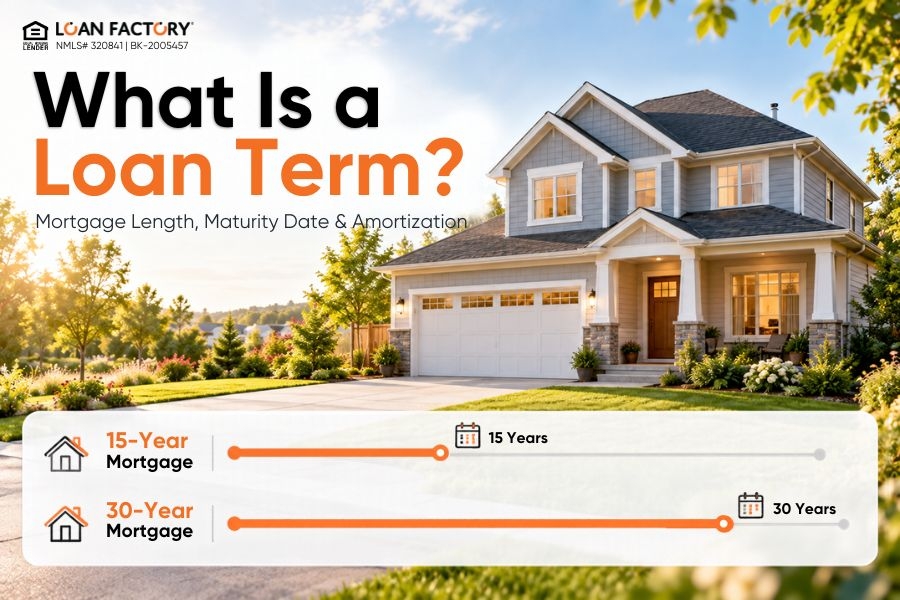
4. The Mortgage Term Generally Cannot Exceed 30 Years A General QM must have a loan term of no more than 30 years.
A 15-year, 20-year, 25-year, or 30-year loan can potentially satisfy this rule. A mortgage with a contractual term longer than 30 years does not meet the General QM definition, although it may be available as a Non-QM product when otherwise permitted.
A shorter term can reduce the length of repayment but may increase the required monthly principal-and-interest payment.
A longer permissible term can reduce the scheduled payment but may increase total interest if the mortgage remains outstanding for the full term.
5. Most Balloon Payments Are Not Allowed A balloon mortgage requires a large payment of remaining principal before the end of a fully amortizing repayment schedule.
General QM loans generally cannot include a balloon payment. Regulation Z provides limited QM categories for qualifying small creditors and certain transactions, but those exceptions should not be treated as broadly available to every borrower or lender.
Before accepting any mortgage with a balloon feature, review:
The balloon due date Estimated remaining balance Whether the loan amortizes before the balloon Refinancing risk Property-sale plans Prepayment restrictions Available reserves Future refinancing is never guaranteed.
6. Points and Fees Must Remain Within the Applicable Limit A Qualified Mortgage cannot exceed the applicable limit on certain upfront points and fees.
The permitted amount changes according to the total loan amount, and the dollar thresholds are adjusted annually for inflation. Not every closing charge shown on a Loan Estimate is necessarily included in the regulatory points-and-fees calculation.
2026 QM Points-and-Fees Limits For 2026, the applicable caps are:
Total loan amount
Maximum applicable QM points and fees
$137,958 or more 3% of the total loan amount $82,775 to less than $137,958 $4,139 $27,592 to less than $82,775 5% of the total loan amount $17,245 to less than $27,592 $1,380 Less than $17,245 8% of the total loan amount
These thresholds became effective January 1, 2026, and can change in future years.
Points and Fees Do Not Equal All Closing Costs The regulatory calculation can include certain:
Origination charges Broker compensation Affiliate fees Credit insurance charges Prepayment penalties Other covered amounts It does not necessarily equal the total amount shown under closing costs.
Borrowers can review the loan origination fee to understand how origination charges work and how they differ from other mortgage closing costs.
Property taxes, prepaid interest, homeowners insurance, escrow deposits, title charges, appraisal fees, and other items may receive different treatment depending on the charge and transaction.
7. General QM Must Pass a Pricing Test The current General QM definition uses a price-based test comparing the mortgage’s annual percentage rate with the Average Prime Offer Rate for a comparable transaction.
The permitted APR-over-APOR threshold depends on loan amount, lien position, and whether the collateral includes a manufactured home. The related loan-amount thresholds are adjusted annually.
2026 General QM Pricing Thresholds For applications subject to the 2026 thresholds:
Transaction
Maximum APR spread over comparable APOR
First lien of $137,958 or more 2.25 percentage points First lien from $82,775 to less than $137,958 3.5 percentage points First lien below $82,775 6.5 percentage points Smaller qualifying manufactured-home first lien 6.5 percentage points Subordinate lien of $82,775 or more 3.5 percentage points Subordinate lien below $82,775 6.5 percentage points
These figures concern the General QM classification. They are not advertised mortgage rates and should not be used to estimate the rate for an individual borrower.
What Is APOR? Average Prime Offer Rate is a benchmark based on mortgage pricing offered to borrowers with relatively favorable credit characteristics.
The General QM test compares the loan’s calculated APR with the APOR for a comparable transaction when the interest rate is set.
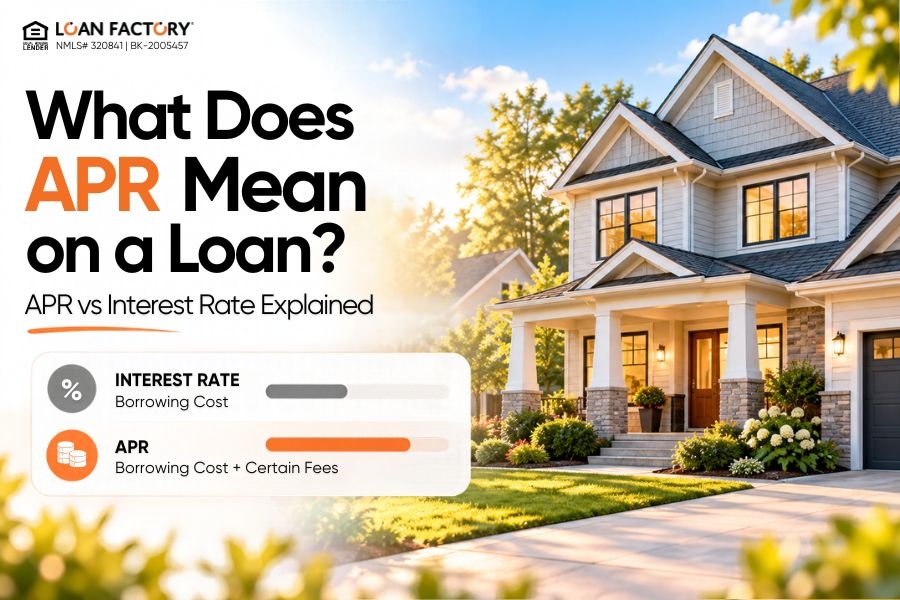
APR is broader than the note rate because it reflects the interest rate plus certain financing charges. A mortgage can therefore have a note rate that appears competitive while its APR is affected by points or other costs.
Does a Qualified Mortgage Have a 43% DTI Limit? No universal 43% debt-to-income limit currently applies to every General QM.
The earlier General QM definition included a 43% DTI requirement. The CFPB replaced that requirement with the current APR-based pricing test, and mandatory compliance with the revised General QM framework began for applicable applications received on or after October 1, 2022.
Debt-to-Income Still Matters Removing the universal General QM 43% cap did not eliminate debt analysis.
A borrower can still face limits established through:
Conventional underwriting Fannie Mae or Freddie Mac guidelines FHA requirements VA residual-income and underwriting rules USDA ratio requirements Automated underwriting findings Manual underwriting Mortgage insurance Lender overlays Private investor requirements The lender must still evaluate whether the borrower can support the proposed payment and recurring obligations.
DTI Formula A simplified debt-to-income calculation is:
Monthly qualifying debts ÷ gross qualifying monthly income = DTI ratio
Debts may include:
Proposed housing payment Credit-card minimum payments Auto loans Student loans Personal loans Support obligations Other mortgages Applicable recurring liabilities The exact treatment of each debt and income source depends on the selected program.
Borrowers can review the debt-to-income ratio to understand how qualifying monthly debts are compared with gross qualifying income during mortgage underwriting.
What Types of Qualified Mortgages Exist? Regulation Z recognizes several QM pathways rather than one universal loan type.
General Qualified Mortgage General QM is the broadly applicable category using product restrictions, payment-calculation requirements, verified income or assets and debts, points-and-fees limits, and an APR-based pricing test.
It can include:
Fixed-rate mortgages Eligible adjustable-rate mortgages Purchase loans Rate-and-term refinances Cash-out refinances Conventional home loans or portfolio loans satisfying the definitionNot every conventional loan is automatically a General QM.
Government-Defined Qualified Mortgages Certain mortgages insured or guaranteed by government agencies may receive QM status under agency-specific regulations.
These can include eligible:
FHA-insured mortgages VA-guaranteed mortgages USDA-guaranteed mortgages The applicable agency establishes program-specific standards within the federal framework.
Borrowers comparing government-backed options can review FHA loan requirements , the VA home loan , and USDA home loans for program-specific eligibility and qualification requirements.
Government backing does not mean:
Everyone qualifies. No down payment is required. The property is automatically eligible. Mortgage insurance or program fees are eliminated. Approval is guaranteed. Small-Creditor Qualified Mortgages Certain qualifying small creditors may originate portfolio QMs under separate requirements.
These rules can provide different treatment for eligible creditors that meet regulatory limits involving asset size, origination activity, and retention of the mortgage in portfolio.
This is a creditor classification—not a loan program that every mortgage company can offer.
Balloon-Payment Qualified Mortgages A limited balloon-payment QM category may be available to certain eligible small creditors operating under applicable rural, underserved, portfolio, and regulatory conditions.
This category is an exception to the general prohibition on balloon payments. Borrowers should not assume a balloon loan is a QM unless the lender confirms the applicable category and requirements.
Seasoned Qualified Mortgages A qualifying loan may become a Seasoned QM after meeting requirements related to portfolio retention, performance, payment history, product features, and the applicable seasoning period.
Seasoned QM treatment is primarily a regulatory classification based partly on successful loan performance. It is not a mortgage product that a consumer selects from a standard rate sheet in the same way as a conventional or FHA loan.
What Does QM Status Mean for the Lender? QM status can give the creditor and certain subsequent holders specified legal protection regarding compliance with the Ability-to-Repay requirement.
Depending on the loan’s pricing and QM category, the mortgage may receive:
Safe-harbor treatment A rebuttable presumption of compliance Applicable Seasoned QM treatment The precise protection depends on the mortgage and governing regulation.
Safe Harbor A qualifying QM receiving safe-harbor treatment is generally treated as complying with the Ability-to-Repay rule.
This provides stronger legal protection for the lender than a rebuttable presumption.
Rebuttable Presumption Certain higher-priced QMs may receive a rebuttable presumption rather than safe-harbor treatment.
This means the creditor is presumed to have complied, but the borrower may have an opportunity to challenge that presumption under applicable legal standards.
QM legal classifications are complex. Borrowers with a dispute should consult an appropriately qualified attorney rather than relying on a general mortgage article.
What Does QM Status Mean for the Borrower? For the borrower, QM status generally indicates that the mortgage was originated within a recognized federal framework limiting certain features and requiring repayment analysis.
However, a Qualified Mortgage does not guarantee:
Mortgage approval A specific interest rate Reduced closing costs No mortgage insurance A small monthly payment No risk of default Stable taxes or insurance Property appreciation A successful future refinance The most suitable option for the household A payment permitted by mortgage underwriting may still exceed the amount a household personally feels comfortable paying.
Your budget should also account for:
Utilities Repairs Maintenance Childcare Transportation Medical expenses Savings Retirement contributions Emergency reserves What Is the Difference Between QM and Non-QM? A Non-QM mortgage is a loan that does not meet every requirement of an applicable Qualified Mortgage definition.
The Non-QM label does not mean the borrower is unqualified. It means the mortgage uses a product, documentation method, pricing structure, or other characteristic outside the selected QM framework.
Feature
Qualified Mortgage
Non-QM Mortgage
Regulatory status Meets an applicable QM definition Does not meet every applicable QM requirement Repayment review Required for covered loans Generally still required for covered consumer loans Documentation Commonly standardized May use alternative verified documentation Interest-only feature Not permitted for General QM May be available through some programs Term General QM limited to 30 years Longer terms may be available Points and fees Must meet the applicable QM cap May fall outside the cap, subject to other laws General pricing test Must meet the applicable APR threshold May fall outside the General QM threshold Common income methods Pay stubs, W-2s, tax returns, verified assets Bank statements, P&L, 1099, assets, DSCR, or full documentation Legal treatment Receives applicable QM protection Does not receive QM protection merely by being Non-QM Lender guidelines More standardized Can vary significantly by lender
A Non-QM lender may still conduct detailed underwriting and verify repayment capacity.
For a more detailed comparison, review QM vs. Non-QM to understand how the two classifications differ in documentation, loan features, costs, qualification, and borrower scenarios.
Is a Conventional Loan Always a Qualified Mortgage? No.
“Conventional” generally means the mortgage is not insured or guaranteed by FHA, VA, or USDA. “Qualified Mortgage” refers to the loan’s regulatory classification.
A conventional mortgage can be:
A General QM A small-creditor QM A Seasoned QM A Non-QM Conforming Non-conforming Jumbo Similarly, a jumbo mortgage may be structured as either QM or Non-QM.
The categories answer different questions:
Term
Main question answered
Conventional Is the loan outside federal government insurance or guarantee programs? Conforming Is the loan eligible under Fannie Mae or Freddie Mac requirements? Jumbo Does the loan exceed the applicable conforming limit or follow jumbo guidelines? QM Does the loan meet an applicable Qualified Mortgage definition? Non-QM Does the loan fall outside an applicable QM definition?
Do not assume a mortgage’s QM status based only on its marketing name.
What Documents Are Needed for a QM Loan? Documents depend on the mortgage program, borrower, property, and income structure.
Identity and Application Government-issued identification Social Security number Address history Property information Purchase contract when applicable Occupancy information Income Pay stubs W-2 forms Tax returns when required Forms 1099 Employment verification Benefit letters Rental-income records Self-employment documentation Assets Bank statements Investment statements Retirement accounts Gift documentation Earnest-money records Closing-fund documentation Large-deposit explanations Debts and Credit Credit authorization Mortgage statements Student loan information Auto and personal loan statements Support obligations Documentation for recent inquiries Credit-event explanations Property Appraisal or approved valuation Title documentation Homeowners insurance Flood insurance when required HOA or condo records Repair documentation when applicable Providing complete documents does not guarantee approval. The information must satisfy the selected loan program and underwriting requirements.
Borrowers preparing to apply can use a mortgage application document checklist to organize commonly requested income, asset, credit, and property documents.
Advantages of a Qualified Mortgage Restricted Product Features General QM rules exclude negative amortization, interest-only payments, terms beyond 30 years, and most balloon structures.
Documented Repayment Analysis The creditor generally must consider verified income or assets and relevant debt obligations.
Limits on Certain Upfront Charges QM points-and-fees limits can restrict specified charges included in the regulatory calculation.
Broad Program Availability QM options can include conventional and certain government-backed mortgages, subject to eligibility.
Established Legal Framework The federal QM classification gives creditors defined standards and applicable legal treatment related to Ability-to-Repay compliance.
Potential Limitations of a Qualified Mortgage Standard Documentation May Not Fit Every Borrower Tax returns and traditional income calculations may not fully reflect the current cash flow of a self-employed borrower or business owner.
Product Restrictions Reduce Flexibility Borrowers seeking an interest-only period, longer term, or alternative structure may need to consider a Non-QM program.
QM Does Not Guarantee Favorable Pricing Credit, down payment, property, occupancy, market conditions, points, and lender pricing still affect the offer.
Underwriting Can Still Be Detailed QM status does not eliminate requests for updated bank statements, tax documents, employment verification, appraisal records, or explanations.
Personal Affordability May Differ From Approval A lender’s approval calculation does not include every discretionary expense or personal savings goal.
Who May Be a Good Fit for a QM Loan? A QM loan may be a practical starting point for borrowers who have stable, documentable income and qualify for a conventional or government-backed mortgage.
Potential candidates include:
Salaried employees Hourly employees Borrowers with stable overtime or bonus income Retirees with eligible documented income Self-employed borrowers whose tax returns support qualification First-time homebuyers Repeat buyers Homeowners refinancing an existing mortgage Eligible FHA, VA, or USDA borrowers Jumbo borrowers qualifying under a QM program The property, loan purpose, credit, assets, debts, and complete transaction must also satisfy underwriting.
When Might a Non-QM Option Deserve Consideration? A Non-QM mortgage may be worth reviewing when a borrower has documented financial capacity but does not fit a traditional QM qualification path.
Examples include:
Tax returns do not reflect current business cash flow. Income is received through 1099 contracts. Bank deposits provide a more useful income history. The borrower has substantial assets but limited recurring employment income. A rental property is being evaluated through DSCR. A recent credit event prevents standard eligibility. A foreign national requires specialized documentation. The borrower needs an eligible interest-only structure. Non-QM loans can have different rates, fees, down payments, reserves, and prepayment terms. Compare them with every QM option for which you may qualify.
Borrowers who need an alternative qualification path can review Non-QM loans to understand common loan types, alternative income documentation, qualification requirements, costs, benefits, and potential risks.
Compare the full mortgage structure: Request personalized mortgage options using the same property, loan amount, down payment, occupancy, term, points, credits, and lock period.
How to Compare Qualified Mortgage Offers QM status does not make two mortgage offers identical.
Use the Loan Estimate to compare equivalent offers from different lenders.
Keep These Assumptions Consistent Property Purchase price or estimated value Loan amount Down payment Occupancy Loan purpose Loan term Fixed or adjustable structure Credit assumptions Rate-lock period Discount points Lender-credit structure Review These Loan Estimate Items Item
Why it matters
Interest rate Determines the interest calculation APR Reflects the rate and certain financing costs Discount points Increase upfront cost for different pricing Lender credits Reduce eligible upfront charges through another pricing structure Principal and interest Core scheduled mortgage payment Mortgage insurance Can affect monthly and upfront costs Origination charges Costs controlled by the lender or broker Cash to close Estimated funds required at settlement Loan term Affects payment and total repayment period Adjustable-rate features Can change future payments
The QM label should be one part of the review—not the only deciding factor.
When reviewing a Loan Estimate, compare cash to close vs. closing costs to understand the difference between total transaction costs and the estimated funds required at settlement.
Questions to Ask About a QM Mortgage Before selecting a mortgage, ask:
Is this loan classified as QM or Non-QM? Which Qualified Mortgage category applies? Is the mortgage fixed-rate or adjustable? Does the loan fully amortize? What income and asset documents are required? How was qualifying income calculated? What debt-ratio or residual-income standard applies? How many points are included? What lender credits are included? What is the APR? What is the estimated cash to close? Is mortgage insurance required? Can the payment change? Is there a prepayment penalty? Which requirements come from the program versus the lender? Clear answers can help you compare the actual terms rather than relying on the product label.
How Loan Factory Helps Borrowers Compare QM Options Loan Factory is a technology-powered mortgage platform helping borrowers compare mortgage options through a broad wholesale lender network.
Depending on borrower eligibility and participating lender availability, a licensed Loan Officer can help you:
Compare conventional and government-backed QM options Review whether a standard or alternative documentation path may fit Compare fixed-rate and adjustable-rate mortgages Evaluate income, assets, debts, down payment, and reserves Compare QM and Non-QM structures when appropriate Review rates, APRs, points, fees, lender credits, payments, and cash to close Identify mortgage-insurance or program-fee considerations Organize application documents through TERA Track available application and underwriting milestones Through TERA, borrowers can complete an application, securely upload requested documents, communicate with their Loan Officer, and follow available mortgage milestones.
Compare mortgage options , or call or text (660) 333-3333 for direct assistance.
Is a Qualified Mortgage Right for You? A Qualified Mortgage follows a recognized federal framework addressing repayment analysis, product features, loan term, pricing, and points and fees.
For many borrowers, a QM conventional or government-backed mortgage can provide a straightforward path to financing. However, QM status does not guarantee approval, favorable pricing, or personal affordability.
Compare the complete mortgage—including the rate, APR, points, lender credits, monthly payment, mortgage insurance, cash to close, and future payment risk. When standard documentation does not reflect your financial capacity, compare an appropriate Non-QM option rather than assuming no mortgage solution exists.
Apply online to begin reviewing your mortgage options, or call or text (660) 333-3333 to discuss the documentation and programs that may apply to your situation.
Experience Note The definitions, comparisons, document lists, and borrower questions in this article are educational illustrations based on common Qualified Mortgage, Ability-to-Repay, conventional, government-backed, and Non-QM considerations.
They do not represent a specific Loan Factory borrower, regulatory determination, income calculation, mortgage quote, preapproval, approval, closing, or funded loan. Actual requirements and outcomes vary by borrower, lender, investor, property, occupancy, loan purpose, and applicable law.
Sources About the Author Loan Factory Mortgage Education Team
Loan Factory is a technology-powered mortgage platform helping borrowers compare mortgage options through a broad wholesale lender network.
The Loan Factory Mortgage Education Team helps homebuyers and homeowners understand Qualified Mortgage standards, Ability-to-Repay requirements, income documentation, mortgage pricing, product features, and the differences between QM and Non-QM financing.
Disclaimer This content is for educational and informational purposes only and is not financial, tax, legal, credit, accounting, investment, real estate, insurance, or housing-counseling advice. It is not a commitment to lend or a guarantee of Qualified Mortgage status, eligibility, income acceptance, approval, rates, APRs, payments, closing, or funding.
Qualified Mortgage definitions, Ability-to-Repay coverage, APR thresholds, APOR calculations, points-and-fees limits, documentation, debt analysis, mortgage programs, rates, fees, and underwriting requirements may change and vary by lender, investor, borrower, property, occupancy, state, loan purpose, and applicable law.
Certain business-purpose, investment-property, open-end, reverse-mortgage, temporary, and other transactions may receive different regulatory treatment. Consult appropriately licensed mortgage, tax, legal, and financial professionals regarding your circumstances.
Frequently Asked Questions