What Is a Loan Origination Fee? A loan origination fee is an upfront charge a lender or mortgage broker may collect for creating and processing a home loan. It can pay for services such as reviewing the application, processing documents, underwriting the file, preparing the mortgage, and funding the transaction.
The Consumer Financial Protection Bureau defines an origination fee as the amount a lender charges a borrower for making the mortgage loan. Origination services can include application processing, underwriting, funding, and related administrative work.
The fee may be expressed as:
A percentage of the mortgage amount A flat dollar charge Several separately itemized lender fees A combination of percentage-based and flat charges There is no single origination fee that applies to every mortgage. The amount and structure depend on the lender, mortgage broker, loan program, property, transaction, and pricing arrangement.
The most important step is to compare total origination charges, not only the line labeled “origination fee.”
Key Takeaways A loan origination fee pays the lender or mortgage broker for arranging and producing the mortgage. It may cover application processing, underwriting, document preparation, administrative work, and funding. Origination charges appear in Section A of page 2 of the Loan Estimate. A discount point is not the same as a standard origination fee. A mortgage loan officer’s compensation may be paid by the lender, broker, or borrower, depending on the transaction structure. A smaller origination fee does not automatically mean the mortgage is less expensive. Compare the rate, APR, points, lender credits, total loan costs, payment, and cash to close together. Important Note: Origination charges, mortgage pricing, APR, payments, credits, points, and eligibility vary by lender, mortgage program, borrower qualifications, property, and market conditions. This article is for educational purposes and is not a commitment to lend.
What Does a Loan Origination Fee Cover? A home loan origination fee generally pays for work performed by the lender or mortgage broker to move the mortgage from application through closing.
Depending on how the lender itemizes its fees, origination services may include:
Reviewing the mortgage application Collecting income and asset documents Processing the loan file Ordering required verifications Reviewing credit information Submitting the file to underwriting Analyzing loan-program eligibility Coordinating appraisal and title requirements Preparing mortgage disclosures Clearing closing conditions Preparing closing documents Funding the mortgage General administrative support The CFPB notes that lenders may itemize origination charges differently. One lender may combine several services into one origination fee, while another may list processing, underwriting, or administrative fees separately.
For that reason, a borrower should not compare only one fee name.
Example of Different Fee Structures Two lenders could present their origination charges like this:
Charge
Lender A
Lender B
Origination fee $3,500 $0 Underwriting fee $0 $1,500 Processing fee $0 $1,000 Administrative fee $0 $750 Document fee $0 $250 Total origination charges $3,500 $3,500
Lender B advertises “no origination fee,” but its total lender-controlled charges are the same in this simplified example.
The total matters more than the label.
How Much Is a Loan Origination Fee? There is no universal dollar amount or federally required percentage for a standard loan origination fee.
A lender may calculate it as:
A percentage of the mortgage amount A fixed dollar fee Several separate lender charges A pricing adjustment based on the mortgage structure When the charge is percentage-based, use this calculation:
Mortgage amount × origination-fee percentage = fee amount
Illustrative Origination Fee Examples Mortgage amount
0.50% fee
1.00% fee
1.50% fee
$200,000 $1,000 $2,000 $3,000 $300,000 $1,500 $3,000 $4,500 $400,000 $2,000 $4,000 $6,000 $500,000 $2,500 $5,000 $7,500 $750,000 $3,750 $7,500 $11,250
Illustrative Examples: These percentages do not represent a standard Loan Factory fee or a specific mortgage offer. Actual charges depend on the lender and transaction.
A percentage-based fee is calculated from the mortgage amount, not the purchase price.
For example:
Home price: $500,000 Down payment: $50,000 Mortgage amount: $450,000 Origination fee: 1% The fee would be:
$450,000 × 1% = $4,500
Where Is the Origination Fee on the Loan Estimate? Origination charges appear on page 2, Section A—Origination Charges—of the Loan Estimate.
This section may show:
Discount points Application fee Origination fee Underwriting fee Processing fee Administrative fee Document preparation fee Other lender-controlled charges The CFPB describes origination charges as upfront lender fees and recommends comparing this section across Loan Estimates from different lenders. Origination charges are only one part of the broader closing costs on a mortgage , which can also include appraisal, title, taxes, insurance, prepaid expenses, and other transaction costs.
Where to Look on the Closing Disclosure The final borrower-paid origination charges appear on page 2 of the Closing Disclosure.
Before signing, compare the Closing Disclosure with the most recent Loan Estimate and verify:
Origination fee Discount points Underwriting charge Processing charge Lender credits Total loan costs Cash to close The CFPB’s Closing Disclosure guide specifically directs borrowers to review borrower-paid origination charges, points, lender credits, and total closing costs.
Origination Fee vs. Origination Charges An origination fee can be one individual charge.
Origination charges are the complete group of upfront fees charged by the lender or broker in Section A.
For example, the Loan Estimate might include:
Origination fee: $2,000 Underwriting fee: $1,000 Processing fee: $750 Administrative fee: $250 The origination fee is $2,000, but total origination charges equal $4,000.
When comparing mortgage offers, focus on the total amount in Section A rather than one line.
Origination Fee vs. Discount Points Origination fees and discount points are both upfront mortgage costs, but they serve different purposes.
Feature
Origination fee
Discount points
Primary purpose Pays for producing and processing the mortgage Pays for a reduced interest-rate structure Usually based on loan amount Can be Yes Reduces the mortgage rate Not necessarily Yes, when properly disclosed as points Appears in Section A Yes Yes Increases cash to close Usually Usually Included in APR calculations Generally Generally
The CFPB defines points as upfront fees paid to obtain an interest rate below the rate available without those points.
One mortgage point equals 1% of the mortgage amount, but the amount of rate adjustment associated with one point varies by lender, mortgage type, and market conditions.
Ask This Important Question When a percentage-based charge appears in Section A, ask:
Does this fee reduce my interest rate, or does it pay for origination services?
A fee calculated as 1% of the mortgage is not automatically a discount point.
Origination Fee vs. Underwriting Fee An underwriting fee is a charge for reviewing the mortgage file and determining whether the borrower, property, and transaction satisfy the applicable guidelines.
Underwriting can include reviewing:
Credit Income Employment Assets Monthly debts Mortgage insurance Appraisal Title Property eligibility Program requirements A lender may include underwriting within one origination fee or list it separately.
For comparison purposes:
Origination fee + underwriting fee + processing fee + other Section A charges = total origination charges
Origination Fee vs. Processing Fee A processing fee generally covers administrative work involved in assembling and preparing the mortgage file.
Processing can include:
Collecting documents Reviewing the application for completeness Ordering verifications Coordinating with the borrower Organizing the file for underwriting Tracking underwriting conditions Coordinating closing requirements As with underwriting, the lender may include processing in the origination fee or disclose it as a separate line.
A lender advertising “no processing fee” may still charge an origination or administrative fee.
Origination Fee vs. Application Fee An application fee may cover the lender’s initial administrative costs, but lenders structure this charge differently.
Federal mortgage disclosure rules limit what a lender can require before providing a Loan Estimate. The CFPB states that the only fee a lender may generally require before giving the Loan Estimate is a reasonable fee for obtaining the borrower’s credit report.
Before paying an application-related charge, ask:
Is the fee refundable? What service does it cover? Is it credited toward closing? Is it separate from the credit-report fee? Does payment mean I have agreed to proceed? Will it appear in Section A of the Loan Estimate? Do not rely on the phrase “application fee” alone. Review the written disclosure.
What Are Mortgage Loan Officer Fees? The phrase mortgage loan officer fees can create confusion because borrowers do not always pay an individual Loan Officer through a separate line item.
Mortgage Loan Officers and brokers are usually paid through a salary, commission, loan-specific compensation, or a combination of compensation methods.
The CFPB explains that a Loan Officer or mortgage broker is often paid a fee or commission connected to the loan. Depending on the structure, the payment may come from the lender, mortgage broker organization, or borrower. Borrowers should understand both the amount and who is paying it.
Federal Regulation Z also governs loan-originator compensation. Among other requirements, it restricts compensation based on the terms of the mortgage, prohibits certain dual-compensation arrangements, and includes anti-steering requirements.
Does the Origination Fee Go Directly to the Loan Officer? Not necessarily.
An origination charge paid by the borrower may go to:
The lender A mortgage brokerage The loan-originator organization Another disclosed mortgage provider The individual Loan Officer may then be compensated by the employer or brokerage under a separate compensation agreement.
The borrower should not assume that every dollar labeled “origination fee” is personally paid to the Loan Officer.
Mortgage Broker Compensation A mortgage broker can be compensated by:
The borrower The wholesale lender The broker organization under the permitted compensation structure The compensation and related origination charges should be reflected in the applicable mortgage disclosures.
Ask:
Is the broker compensation borrower-paid or lender-paid? Is it included in Section A? Are there additional lender origination charges? Does the pricing include discount points? Is there a lender credit? What is the complete cash to close? Who Pays the Loan Origination Fee? The origination fee can be paid through several sources, subject to the mortgage program and transaction requirements. For a broader breakdown of who pays closing costs , responsibility can vary among the buyer, seller, and lender depending on the transaction.
Borrower-Paid Origination Fee The borrower can pay the charge directly as part of closing costs.
This generally increases cash to close.
Seller-Paid Origination Fee On a home purchase, an eligible seller contribution can potentially cover the buyer’s origination charges.
The amount must comply with:
Mortgage-program limits Purchase contract Actual eligible closing costs Down payment Occupancy Loan-to-value ratio Appraisal and underwriting requirements A seller contribution generally cannot exceed eligible buyer expenses or become unrestricted cash to the borrower.
Lender Credit A lender credit can offset eligible closing costs, including origination charges.
The CFPB explains that lender credits generally reduce upfront closing expenses in exchange for a higher interest-rate structure.
Compare:
Rate APR Estimated payment Lender-credit amount Origination charges Total closing costs Cash to close Expected time in the mortgage Gift Funds or Assistance Eligible gift funds or closing cost assistance programs may help eligible borrowers cover closing costs under applicable mortgage-program requirements.
The permitted use depends on:
Mortgage program Donor or assistance provider Required documentation Minimum borrower contribution Property and occupancy Underwriting guidelines Can a Loan Origination Fee Be Negotiated? Potentially. The lender or broker may have discretion to adjust certain origination charges, offer a lender credit, or present another pricing structure.
Possible approaches include:
Requesting a reduction in lender-controlled fees Comparing another lender’s Loan Estimate Asking whether charges can be combined Requesting an option without discount points Requesting a lender-credit option Negotiating a seller contribution Comparing a different mortgage program The CFPB recommends obtaining and comparing multiple Loan Estimates because origination charges and lender credits are among the costs that commonly vary between lenders.
A lender may not remove a fee without changing another part of the pricing. The goal should be a competitive overall rate-and-cost combination—not simply a zero in one fee field.
Can You Avoid a Home Loan Origination Fee? A lender may offer a mortgage described as having:
No origination fee No lender fee No closing-cost structure Lender-paid origination A lender credit covering origination charges These phrases do not necessarily mean the transaction has no cost. For refinance transactions, a no-closing-cost refinance typically shifts eligible upfront costs through the mortgage pricing or loan structure rather than making every cost disappear.
The lender may:
Charge other administrative fees Use a different interest-rate structure Offer a lender credit Include broker compensation elsewhere Finance eligible costs in a refinance Waive one fee while third-party charges remain Review the complete Loan Estimate to identify where the cost appears.
A mortgage with a $0 origination fee could still have more total loan costs than a mortgage with a clearly disclosed origination fee.
Can an Origination Fee Be Added to the Mortgage? Whether closing costs can be rolled into a mortgage depends on the transaction type, mortgage program, equity, and applicable loan limits. The answer differs between a purchase and refinance.
Purchase Mortgage On a standard purchase, origination charges generally cannot simply be added above the maximum mortgage amount allowed by the loan program.
Buyers commonly pay them through:
Personal funds Seller credits Lender credits Eligible gift funds Closing-cost assistance Certain program-specific fees may be financed when applicable guidelines permit, but that does not mean every lender charge can automatically be added to the balance.
Refinance Mortgage On an eligible mortgage refinance , origination charges and other closing costs may sometimes be included in the new mortgage balance when the property value, equity, loan-to-value ratio, and underwriting requirements support the increased amount.
Financing the fee:
Reduces cash needed at closing Increases the mortgage balance Uses additional equity Increases the amount subject to interest Can affect loan-to-value and pricing Compare paying the charge directly with financing it over time.
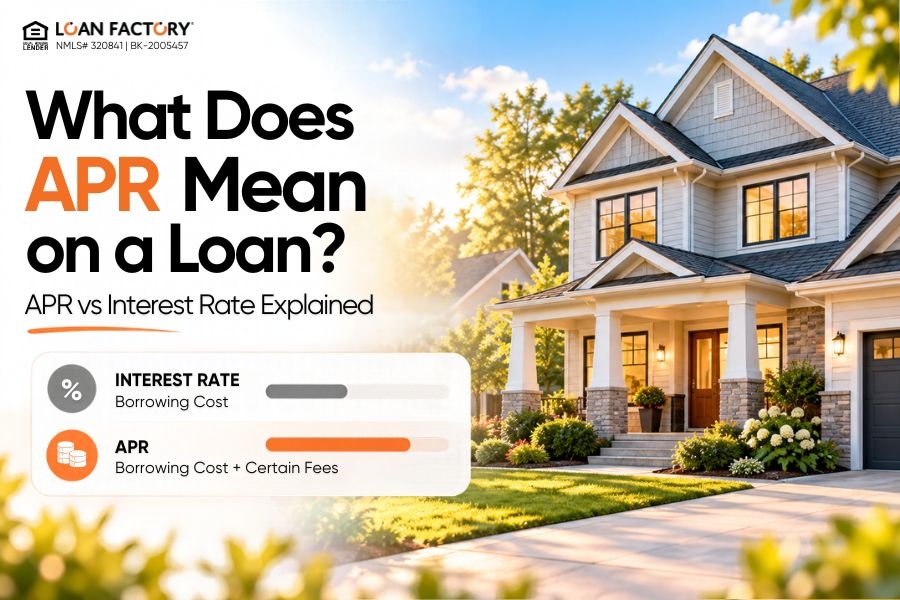
Does the Origination Fee Affect APR? Origination charges generally affect APR because APR reflects the interest rate and certain finance charges connected to obtaining the mortgage.
The CFPB includes origination charges, discount points, mortgage insurance, and other applicable lender charges among the items that can contribute to the mortgage finance charge.
When comparing offers, review both:
Also review:
Origination charges Discount points Lender credits Mortgage insurance Monthly payment Total loan costs Cash to close APR is useful, but it does not explain every individual charge or your expected time in the mortgage.
Loan Origination Fee Example Assume a borrower is considering a $400,000 mortgage.
Offer A Origination fee: $4,000 Underwriting fee: $0 Processing fee: $0 Discount points: $0 Lender credit: $0 Total Section A charges: $4,000
Offer B Origination fee: $0 Underwriting fee: $1,500 Processing fee: $1,000 Administrative fee: $750 Discount points: $2,000 Lender credit: $0 Total Section A charges: $5,250
Offer C Origination charges: $4,500 Lender credit: $3,000 Different interest-rate structure Net upfront lender-cost effect before other closing expenses: approximately $1,500
Offer C appears to require less upfront cash, but the borrower must compare the payment and long-term cost created by the corresponding pricing structure.
Illustrative Example: These figures do not represent an actual mortgage quote. Rates, payments, APR, credits, and costs depend on the specific borrower and transaction.
How to Compare Origination Fees Correctly When deciding how to choose a mortgage lender , compare equivalent Loan Estimates rather than relying on advertisements or a single fee. The CFPB recommends using standardized Loan Estimates for side-by-side comparison.
Request offers using the same:
Mortgage amount Loan type Loan term Down payment Occupancy Property type Rate-lock period Credit profile Point or lender-credit structure Then compare these sections.
1. Section A: Origination Charges Review:
Points Origination fee Underwriting fee Processing fee Administrative charges 2. Section B: Services You Cannot Shop For These can include services required by the lender, such as:
Appraisal Credit report Flood determination Tax services 3. Section J: Lender Credits Confirm whether the lender is offsetting part of your closing costs and how the pricing changes.
4. APR and Monthly Payment A smaller lender fee can be paired with a different rate-and-payment structure.
5. Cash to Close Confirm the total amount required after:
Down payment Closing costs Deposits Seller credits Lender credits Assistance Other adjustments 6. Five-Year Cost The CFPB encourages borrowers to evaluate upfront lender costs and the cost of borrowing over a meaningful period—not only the amount due at closing.
What Origination Charges Can Change Before Closing? Some mortgage costs can change after the initial Loan Estimate, but federal rules limit when and how certain charges may increase.
The CFPB states that lenders cannot deliberately underestimate Loan Estimate costs. Revised estimates may be allowed when a valid changed circumstance or another permitted event affects the transaction.
Possible changes can involve:
Loan amount Mortgage program Property type Rate lock Borrower-requested changes New information affecting eligibility Valid changed circumstances If the origination charges increase unexpectedly, ask:
What changed? When did the change occur? Was a revised Loan Estimate issued? Is this a new fee or a corrected fee? Is the increase permitted? Will the lender provide a credit or cure? Warning Signs to Review Carefully An origination fee is not automatically improper. The concern is whether the complete mortgage cost is clearly disclosed and competitive.
Review the offer carefully when:
Fee names are vague Charges appear twice under different names A discount point is described as a general lender fee The advertised “no origination fee” offer includes substantial administrative charges The lender will not provide a Loan Estimate The interest rate, APR, and fee structure are not explained together The lender credit was added without discussing its pricing effect Fees change without a clear reason The Loan Officer cannot explain who receives a broker charge You are asked to pay an unusual fee before receiving the Loan Estimate Remember that the CFPB states the only fee a lender may generally require before providing a Loan Estimate is a reasonable credit-report fee.
Questions to Ask About a Loan Origination Fee Before choosing a mortgage, ask:
What services does the origination fee cover? Is the fee a percentage or flat charge? Is it calculated from the mortgage amount? Are underwriting and processing included? Are there separate administrative charges? Are any discount points included? What rate is available without points? Is there a lender credit? Who pays the mortgage broker? Is the broker compensation included in Section A? Can the seller pay part of the fee? Can the fee be negotiated? Can I compare another pricing structure? How does the fee affect APR? What are the total origination charges? What is the final cash to close? A clear answer should include written dollar figures on the Loan Estimate.
How Loan Factory Helps You Compare Origination Charges An origination fee should never be evaluated in isolation.
At Loan Factory , our Loan Officers can help borrowers compare:
Total Section A origination charges Discount points Lender credits Interest-rate structures APR Estimated monthly payment Mortgage insurance Total loan costs Cash to close Cost over the expected mortgage period Loan Factory works with 240+ wholesale lenders, giving borrowers access to multiple mortgage-pricing and fee structures. TERA supports side-by-side pricing, disclosures, documents, communication, and loan progress.
This comparison is particularly useful when:
One lender charges an origination fee but no points Another lender separates underwriting and processing Another lender offers a substantial credit Different lenders price the same borrower and program differently The objective is not to find an offer with the fewest fee labels. It is to identify the option that appropriately balances rate, APR, payment, fees, credits, and cash to close.
Compare mortgage options before deciding which origination-fee structure fits your plans.
For faster support, call or text (660) 333-3333.
Is a Loan Origination Fee Worth Paying? A loan origination fee can be reasonable when the complete mortgage offer is competitive and the fee is clearly disclosed.
It may be acceptable when:
The total origination charges are competitive The rate-and-cost combination fits your plans The lender provides responsive service The mortgage program fits your financial profile The fee does not duplicate other charges The Loan Estimate clearly explains the expense You have compared equivalent offers A different offer may deserve consideration when:
Total lender fees are substantially higher A competing lender provides a more favorable overall structure The fee is not clearly explained Points are included without your understanding A lender credit creates an unsuitable payment tradeoff The offer requires more cash than your budget supports The origination fee is only one component of the decision.
Conclusion A loan origination fee is an upfront charge for arranging, processing, underwriting, preparing, and funding a mortgage. It may appear as one percentage-based fee or as several separate lender charges.
To evaluate it correctly:
Review Section A of the Loan Estimate Add every origination-related charge Separate standard lender fees from discount points Confirm how the Loan Officer or broker is compensated Compare lender credits Review APR, payment, and cash to close Request equivalent Loan Estimates from multiple lenders At Loan Factory, we help borrowers compare the complete mortgage structure—not just one advertised fee—across a broad wholesale lender network.
Apply online or call or text (660) 333-3333 to begin your mortgage review.
Experience Note When our Loan Officers compare origination fees, we do not assume that the mortgage with the smallest origination-fee line is automatically the most suitable option.
We review:
Every charge in Section A Discount points Lender credits Rate and APR Estimated payment Mortgage insurance Total closing costs Cash to close Expected time in the mortgage This helps borrowers identify whether costs are being removed, renamed, offset through a credit, or shifted into another part of the mortgage pricing.
Sources Consumer Financial Protection Bureau guidance defining mortgage origination services and origination fees. CFPB Loan Estimate and Closing Disclosure explainers covering origination charges, discount points, lender credits, and cash to close. CFPB guidance on comparing lender costs and Loan Estimates. CFPB guidance on mortgage Loan Officer and broker compensation. Regulation Z rules governing loan-originator compensation and prohibited practices. Loan Factory information regarding its wholesale lender network and TERA platform. Disclaimer: This content is for educational and informational purposes only and is not financial, tax, legal, credit, or housing counseling advice, a commitment to lend, or a guarantee of approval. Mortgage programs, rates, APRs, payments, origination charges, points, lender credits, broker compensation, closing costs, and eligibility are subject to change and vary by lender, borrower, property, transaction, underwriting, lender overlays, and investor guidelines.
About the Author Loan Factory Mortgage Education Team
Loan Factory is a technology-powered mortgage platform helping borrowers compare mortgage options through a broad wholesale lender network.
The Loan Factory Mortgage Education Team helps homebuyers and homeowners understand origination fees, mortgage broker compensation, discount points, lender credits, APR, Loan Estimates, and the complete cost of obtaining a home loan.
Frequently Asked Questions