The Fannie Mae HomeReady® Loan is a conventional mortgage designed for eligible lower-income borrowers. Qualified buyers may purchase an eligible one-unit primary residence with as little as 3% down while using permitted gifts, grants, or down payment assistance toward the transaction.
HomeReady is not limited exclusively to first-time buyers. However, qualifying income generally cannot exceed 80% of the area median income for the property’s location, and additional credit, property, mortgage insurance, and underwriting requirements apply.
Key Takeaways HomeReady may provide up to 97% loan-to-value financing on an eligible one-unit primary-residence purchase. Total qualifying income generally cannot exceed 80% of the area median income for the property location. Eligible gifts, grants, employer assistance, and approved secondary financing may help cover the down payment or closing costs. Homeownership education is required when all occupying borrowers on a HomeReady purchase are first-time homebuyers. HomeReady includes conventional private mortgage insurance that may be cancellable when applicable requirements are met. Important Note: A 3% down payment, income eligibility, mortgage insurance, credits, and underwriting approval are not guaranteed. Requirements depend on the borrower, lender, property, location, loan structure, Desktop Underwriter findings, and current Fannie Mae guidelines.
What Is a Fannie Mae HomeReady® Loan? HomeReady is an affordable conventional mortgage program developed by Fannie Mae for creditworthy borrowers whose qualifying income falls within the program’s limits.
The program may be used for:
An eligible home purchase Certain limited cash-out refinances One-unit primary residences at up to 97% LTV Eligible two- to four-unit primary residences at lower maximum LTV levels Transactions using gifts, grants, or approved subordinate financing Fannie Mae describes HomeReady as conventional financing with flexible funding sources, underwriting flexibilities, and cancellable mortgage insurance, subject to restrictions.
Is “Home Ready” the Same as HomeReady? Yes. People sometimes write the program name as “Home Ready,” but the official Fannie Mae product name is HomeReady®.
Other common references include:
HomeReady mortgage HomeReady program HomeReady mortgage loan Fannie Mae 3% down loan Fannie Mae affordable mortgage These phrases may refer to HomeReady, but not every conventional mortgage with a 3% down payment is a HomeReady loan.
Does Fannie Mae Lend Directly to Homebuyers? No. Fannie Mae generally does not accept retail mortgage applications directly from individual homebuyers.
A buyer submits a Fannie Mae HomeReady application through a mortgage lender, bank, credit union, mortgage broker, or mortgage company that offers Fannie Mae-eligible loans.
The lender:
Accepts the mortgage application. Reviews income, credit, assets, and debts. Submits the loan through Desktop Underwriter. Verifies HomeReady eligibility. Orders the property valuation. Completes underwriting and closing. May sell the eligible mortgage to Fannie Mae after closing. Fannie Mae’s Desktop Underwriter system evaluates submitted loan information and helps determine whether the mortgage is eligible for delivery as a HomeReady loan.
Who Qualifies for the HomeReady Program? HomeReady applicants must meet the program’s income limit and standard Fannie Mae requirements for borrower eligibility, income stability, credit, assets, debts, occupancy, and property eligibility.
A potential borrower generally needs:
Qualifying income within the applicable limit An eligible primary residence Sufficient verified funds or approved assistance Acceptable credit history A manageable debt profile Required mortgage insurance An acceptable underwriting result Completion of education when required Eligibility is based on the complete mortgage application rather than one requirement alone.
Do You Have to Be a First-Time Homebuyer? No. HomeReady is available to eligible first-time and repeat buyers.
A repeat buyer may qualify when:
The new property will be an eligible primary residence. Qualifying income is within the HomeReady limit. The mortgage satisfies current Fannie Mae guidelines. Existing-property ownership and financing are acceptable. Desktop Underwriter provides an eligible result. HomeReady differs from Fannie Mae’s standard 97% LTV purchase option, which generally requires at least one borrower to meet the applicable first-time homebuyer definition.
What Is the HomeReady Income Limit? Total annual qualifying income generally cannot exceed 80% of the area median income, or AMI, for the property’s location.
The limit is based on where the home being financed is located—not necessarily where the applicant currently lives or works.
Fannie Mae updates its AMI data periodically. The 2026 AMI limits were implemented in Desktop Underwriter and related HomeReady systems effective June 13, 2026.
Illustrative Income-Limit Example Assume the HomeReady income limit for a property location is $88,000.
Annual qualifying income
Preliminary result
$72,000 Within the limit $84,000 Within the limit $88,000 At the limit $92,000 Above the limit
Being within the limit does not guarantee approval. The lender must still verify income and determine whether the borrower can support the proposed housing payment and other obligations.
Illustrative Example: This example is for educational purposes only. Actual AMI limits vary by property location and may change over time.
What Income Is Included? The lender generally considers the qualifying income used to approve the mortgage.
Possible income sources may include:
Salary or hourly wages Overtime, bonuses, or commissions Self-employment income Retirement or pension income Social Security or disability income Alimony or child support when elected and eligible Rental income Boarder income under qualifying circumstances Accessory-unit income when permitted Each income source has its own history, calculation, stability, continuance, and documentation requirements.
Is the Income Limit Based on Household Size? HomeReady eligibility is generally based on qualifying income relative to 80% of the property-area AMI rather than a household-size adjustment used by some local assistance programs.
A separate down payment assistance provider may apply different rules, such as:
Total household income Family size County limits Purchase-price caps Occupancy requirements A borrower may therefore satisfy HomeReady’s income test but exceed the limit for a separate assistance program—or the reverse.
How Much Is the HomeReady Down Payment? A qualified borrower may put as little as 3% down when purchasing an eligible one-unit primary residence with 97% LTV HomeReady financing.
HomeReady 3% Down Examples Purchase price
3% down payment
Illustrative base loan
$250,000 $7,500 $242,500 $300,000 $9,000 $291,000 $400,000 $12,000 $388,000 $500,000 $15,000 $485,000
The down payment is only one part of the buyer’s cash requirement.
The buyer may also need funds for:
Closing costs Prepaid interest Homeowners insurance Property-tax escrows Appraisal or inspection expenses Moving costs Repairs Post-closing savings Illustrative Example: These calculations do not include mortgage insurance, closing costs, credits, prepaid expenses, or down payment assistance. They are not commitments to lend.
Can Gifts Pay the HomeReady Down Payment? Eligible gift funds may potentially cover part or all of the down payment and closing costs in a qualifying HomeReady transaction.
The lender generally verifies:
The donor’s eligibility The relationship between donor and borrower The amount being given That repayment is not expected The source of the money Transfer of the funds Do not move gift funds before receiving documentation instructions from the lender.
A large transfer without a clear paper trail may delay underwriting even when the gift itself is permitted.
Can You Use Down Payment Assistance With HomeReady? Yes. Eligible down payment assistance, grants, employer assistance, and approved subordinate financing may be combined with a HomeReady mortgage.
HomeReady’s flexible sources of funds are one of the program’s main features. Fannie Mae identifies gifts, grants, and approved secondary financing as potential resources for eligible transactions.
Assistance may come from:
State housing finance agencies City or county programs Approved nonprofit organizations Employers Community programs Federal Home Loan Bank initiatives Community Seconds providers Other eligible sources → Read more: State and Local Down Payment Assistance Programs
Is Down Payment Assistance Free Money? Not always. Assistance may be structured as:
A grant A forgivable second mortgage A deferred-payment second mortgage A repayable second mortgage A shared-appreciation obligation Before accepting assistance, review:
Interest rate Monthly payment Forgiveness schedule Repayment triggers Occupancy period Refinance restrictions Sale or transfer requirements Lien position The largest assistance amount is not necessarily the most favorable option.
Does HomeReady Require Personal Funds? HomeReady may allow a borrower to complete an eligible one-unit transaction without making a minimum contribution from personal funds when the down payment and closing expenses are covered through permitted sources.
Acceptable funds may include:
Checking or savings Gift funds Grants Employer assistance Community Seconds Eligible down payment assistance Seller credits for allowable costs Lender credits for allowable costs The structure changes for certain property types, higher-risk scenarios, and subordinate-financing arrangements.
The lender must confirm that every source is eligible and fully documented.
What Homeownership Education Is Required? Homeownership education is required for a HomeReady purchase when all occupying borrowers are first-time homebuyers.
An eligible course may include Fannie Mae’s free HomeView® program, which provides education about the homebuying and homeownership process.
The course commonly covers:
Preparing finances Understanding credit Comparing mortgage options Making an offer Inspections and appraisals Closing costs Mortgage payments Maintaining a home Avoiding foreclosure Managing unexpected expenses Complete required education early enough to provide the certificate before closing.
Is Housing Counseling the Same as Education? No. Homeownership education usually provides structured information through a course. Housing counseling commonly involves individualized guidance from a qualified counselor.
Fannie Mae allows qualifying counseling to satisfy certain education requirements and may provide specific pricing treatment when counseling is completed under applicable conditions.
What Credit Score Is Required for HomeReady? There is no single consumer-facing HomeReady credit score that guarantees approval.
The lender submits the mortgage through Desktop Underwriter, which evaluates the complete credit-risk profile. Lenders may also apply their own credit requirements beyond Fannie Mae’s eligibility standards.
The review may consider:
Credit history Mortgage or rent payment history Revolving credit use Installment debts Collections or charge-offs Bankruptcy or foreclosure Available assets Down payment Debt-to-income ratio Property and transaction characteristics A stronger credit profile may support a more competitive rate-and-cost combination or reduced mortgage insurance expense. However, credit is only one part of qualification.
→ Read more: Can I get a home loan with no credit score?
Can Rent Payments Help With HomeReady Qualification? On-time rent-payment history may be considered in certain Desktop Underwriter evaluations for eligible applicants.
Fannie Mae identifies the consideration of positive rent payments as one feature designed to expand responsible access to HomeReady financing.
The lender may need permission to access bank-account or rent-payment data. An applicant should continue making all housing payments on time while preparing to buy.
Positive rent history does not override unresolved credit, income, debt, asset, or property requirements.
Can Boarder Income Be Used? Eligible boarder income may be considered when the borrower has an established history of receiving payments from someone who lives in the borrower’s residence.
Documentation requirements can include:
Proof of shared residency A history of payments Bank records or payment evidence Confirmation that the arrangement is expected to continue Compliance with Fannie Mae’s boarder-income rules Projected income from someone who has not yet moved into the new home generally should not be assumed to qualify.
The lender must determine whether the income is stable, documented, and permitted under current guidelines.
Are Non-Occupant Borrowers Allowed? HomeReady may permit a non-occupant borrower under applicable requirements.
For example, a parent may potentially apply with an adult child who will occupy the home. The non-occupant borrower can be responsible for the mortgage without living in the property.
The lender must review:
Borrower relationships Income and debts Title ownership Occupancy Loan-to-value limits Desktop Underwriter findings Applicable lender requirements A non-occupant borrower is legally responsible for the loan and should understand the effect on their credit and future borrowing capacity.
What Properties Are Eligible? HomeReady is intended for primary residences. At least one borrower must occupy the property as required.
Potentially eligible property types include:
Detached single-family homes Townhomes Planned-unit developments Eligible condominiums Eligible cooperative units Certain manufactured homes Two- to four-unit properties under applicable limits The 3% down structure is generally associated with an eligible one-unit primary residence. Two- to four-unit transactions use different LTV, reserve, and underwriting requirements.
*Subject to eligibility review Can HomeReady Finance an Investment Property? No. HomeReady is not designed to finance a non-owner-occupied investment property or second home.
The borrower must accurately disclose occupancy plans. Misrepresenting occupancy can constitute mortgage fraud.
Can HomeReady Be Used for a Condo? Yes, an eligible condominium may be financed with HomeReady.
The lender must review both:
The individual unit The condominium project Project eligibility can be affected by insurance, financial condition, litigation, structural issues, commercial space, owner occupancy, and other factors.
Does HomeReady Require Mortgage Insurance? Private mortgage insurance generally applies when the first-mortgage LTV exceeds 80%.
Because a 3% down HomeReady loan begins near 97% LTV, mortgage insurance will normally be included in the monthly housing cost.
Fannie Mae describes HomeReady as offering cancellable conventional mortgage insurance, subject to applicable restrictions.
The cost may depend on:
Credit profile LTV Loan term Mortgage insurance coverage Property type Number of borrowers Insurer pricing Can HomeReady PMI Be Removed? Potentially. Conventional private mortgage insuranc e may be cancellable when legal, investor, servicer, payment-history, seasoning, and equity requirements are met.
A homeowner should not assume PMI disappears automatically as soon as the estimated property value increases.
The servicer may require:
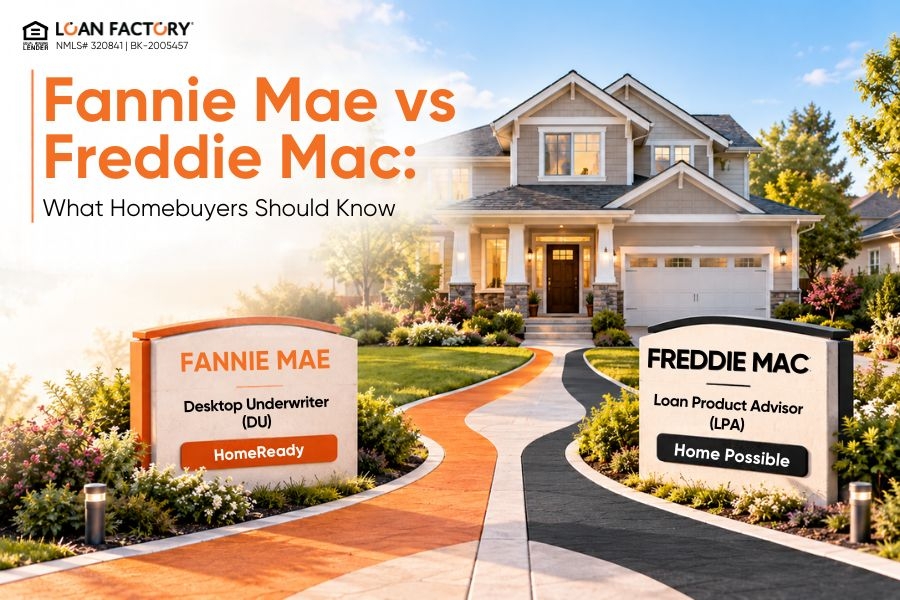
A written request Acceptable payment history A current valuation A minimum ownership period Confirmation that no disqualifying subordinate liens exist HomeReady vs. Standard Fannie Mae 3% Down Both HomeReady and Fannie Mae’s standard 97% LTV option may allow a 3% down payment, but their eligibility rules differ.
Feature
HomeReady
Standard 97% option
Minimum down payment As little as 3% As little as 3% Income limit Generally 80% AMI No HomeReady 80% AMI test First-time buyer required No general requirement At least one borrower generally required Primary residence Required Required Mortgage insurance Generally required above 80% LTV Generally required above 80% LTV Gifts and assistance May be permitted May be permitted Education Required in specified first-time-buyer cases May apply under high-LTV rules
A buyer whose income exceeds the HomeReady limit may still qualify for a standard Fannie Mae 3% down mortgage when the applicable requirements are satisfied.
HomeReady vs. FHA HomeReady and FHA both provide low-down-payment options, but they differ in income limits, mortgage insurance, property requirements, and underwriting.
Feature
HomeReady
FHA
Mortgage type Conventional Government-insured Potential down payment As little as 3% Commonly as little as 3.5% Program income limit Generally 80% AMI No HomeReady-style AMI limit Insurance Private mortgage insurance Upfront and annual FHA mortgage insurance First-time buyer required No No Primary residence Required Required Property range Program-specific conventional eligibility Eligible one- to four-unit properties Insurance cancellation May be available under conventional rules Depends on FHA policy and loan terms
HUD states that qualifying FHA purchase loans may allow down payments as low as 3.5%, and most FHA mortgages require upfront and ongoing mortgage insurance.
HomeReady may be worth comparing when:
Income falls within the AMI limit. The borrower qualifies through conventional underwriting. Cancellable PMI is important. Gifts or DPA will be used. A 3% down payment preserves savings. FHA may be worth comparing when:
HomeReady income limits are exceeded. FHA underwriting provides a different qualification path. A two- to four-unit property is being considered. The borrower’s credit or debt profile fits FHA more effectively. Neither option is universally better. Compare rate, APR, mortgage insurance, closing costs, payment, cash to close, and long-term plans.
→ Read more: FHA Loans: What Homebuyers Worry About Most
How Do You Complete a Fannie Mae HomeReady Application? A HomeReady application follows the standard mortgage process but includes verification of AMI eligibility and program-specific requirements.
1. Apply With a HomeReady Lender Choose a mortgage lender or broker that offers Fannie Mae conventional financing.
Provide basic information about:
Income Employment Credit Monthly debts Available assets Purchase price Property location Occupancy Gift funds or assistance 2. Check the Property’s Income Limit The lender checks the applicable 80% AMI limit using the property address.
Before a property is selected, the lender may provide an estimate using the target city, county, or census area. Final eligibility depends on the actual property location.
3. Compare HomeReady With Other Options Ask the lender to compare:
HomeReady Standard Fannie Mae 3% down Freddie Mac Home Possible FHA State or local housing finance programs Other conventional structures Compare the complete rate-and-cost structure rather than only the down payment.
4. Submit Supporting Documents Common documentation may include:
Government-issued identification Recent pay statements W-2 forms Tax returns when required Bank and investment statements Gift documentation Assistance-program approval Purchase contract Homeownership education certificate Insurance information 5. Complete Desktop Underwriter Review The lender submits the application through DU and selects HomeReady when appropriate.
DU may identify potential HomeReady eligibility, but the lender must verify the information and resubmit the file using the correct product selection.
6. Complete Education and Property Review Complete required education and provide the certificate.
The lender also obtains an appraisal or approved property valuation and reviews property eligibility.
7. Review Final Terms Before closing, review:
Interest rate APR Discount points Lender credits PMI Estimated payment Closing costs Assistance terms Cash to close Post-closing savings How Do You Find HomeReady Lenders? HomeReady lenders are mortgage companies approved to originate conventional loans that can be sold to Fannie Mae.
Most major mortgage banks, many credit unions, mortgage brokers, and independent mortgage companies can access Fannie Mae financing. However, lender overlays, pricing, mortgage insurance, documentation, and DPA participation can vary.
Ask each lender:
Do you offer HomeReady? Can you check AMI eligibility? Do you participate in local DPA programs? How does HomeReady compare with standard 3% down? What mortgage-insurance options are available? Are there additional credit-score overlays? Can you evaluate boarder income or a non-occupant borrower? What education must be completed? What closing costs should I expect? A lender offering HomeReady does not necessarily participate in every state or local assistance program.
What Are Common HomeReady Mistakes? The most common errors are assuming HomeReady is available to everyone, budgeting only for 3% down, and failing to confirm the property-specific AMI limit.
Writing “Home Ready” as if it were a separate program Assuming only first-time buyers qualify Ignoring the income limit Budgeting only for the down payment Assuming every property qualifies Transferring gift funds without instructions Treating DPA as a grant without reading the terms Waiting to complete education Comparing only the interest rate How Loan Factory Helps Loan Factory helps borrowers compare HomeReady with other low-down-payment conventional and government-backed mortgage options.
A licensed Loan Officer may help you:
Check HomeReady AMI eligibility Compare HomeReady with standard 3% down financing Review gifts, grants, and DPA Estimate private mortgage insurance Evaluate boarder income or a non-occupant borrower Compare HomeReady with FHA or Home Possible Estimate closing costs and cash to close Organize income and asset documentation Prepare for Desktop Underwriter and property review Use TERA-supported tools for pricing, documents, communication, and loan progress Loan Factory does not guarantee approval, a 3% down payment, down payment assistance, PMI cancellation, or a specific rate or payment.
To review available HomeReady and conventional mortgage structures, compare mortgage options or call or text (660) 333-3333.
When you are ready to provide your financial and property information, apply online .
Conclusion The Fannie Mae HomeReady® Loan may help eligible lower-income borrowers purchase a primary residence with as little as 3% down.
The program generally limits qualifying income to 80% of the property-area AMI and may permit flexible funding sources, including gifts, grants, employer assistance, and approved secondary financing.
HomeReady is not limited to first-time buyers, but education is required when all occupying borrowers are purchasing their first home. Mortgage insurance, credit, income, property, and underwriting requirements still apply.
To compare the HomeReady program with other mortgage options, compare mortgage options or call or text (660) 333-3333.
Experience Note The eligibility framework and application steps in this article reflect common HomeReady income, down payment, asset, education, mortgage insurance, property, and underwriting considerations.
They do not represent a specific Loan Factory borrower, Desktop Underwriter result, mortgage approval, assistance award, PMI quote, rate quote, or closed transaction.
Sources Fannie Mae Selling Guide — HomeReady mortgage loan and borrower eligibility, AMI limits, and education requirements. Fannie Mae HomeReady product information and 2026 AMI updates. Fannie Mae HomeReady Mortgage Product Matrix. Fannie Mae HomeReady underwriting and Desktop Underwriter guidance. Fannie Mae HomeView and consumer HomeReady resources. HUD resources regarding FHA down payment and mortgage insurance. About the Author Loan Factory Mortgage Education Team
Loan Factory is a technology-powered mortgage platform helping borrowers compare mortgage options through a broad wholesale lender network.
The Loan Factory Mortgage Education Team helps homebuyers understand HomeReady guidelines, income limits, low-down-payment financing, mortgage insurance, down payment assistance, and conventional mortgage preparation.
Disclaimer: This content is for educational and informational purposes only and is not financial, tax, legal, credit, accounting, real estate, or housing-counseling advice, a commitment to lend, or a guarantee of approval or assistance. Income limits, down payments, rates, APRs, payments, mortgage insurance, closing costs, credits, property requirements, underwriting findings, and eligibility vary by borrower, lender, property, location, market conditions, and current Fannie Mae or investor guidelines.
Frequently Asked Questions