A conventional loan is a mortgage that is not insured or guaranteed by the federal government. Unlike FHA, VA, or USDA loans, a conventional mortgage is not backed by a government agency. The Consumer Financial Protection Bureau defines a conventional loan as any mortgage loan that is not insured or guaranteed by the government, such as FHA, VA, or USDA loan programs.
A conventional loan can be used to buy or refinance a home. It may be used for a primary residence, second home, or investment property, depending on borrower qualifications, property type, loan amount, and lender guidelines.
The simple answer:
A conventional loan is a non-government-backed mortgage that may offer strong options for buyers with solid credit, stable income, documented assets, and enough down payment or equity.
Important note: This article is for informational purposes only and is not a commitment to lend. Conventional loan approval, rates, APR, fees, payment estimates, private mortgage insurance, loan limits, down payment, cash to close, and program availability depend on borrower qualifications, credit profile, income, debts, assets, property details, lender guidelines, underwriting, appraisal, title, insurance, and applicable program rules.
Key Takeaways A conventional loan is a mortgage that is not insured or guaranteed by the federal government. Conventional loans may be conforming or non-conforming. A conforming conventional loan generally follows Fannie Mae or Freddie Mac standards and must fit applicable loan limits. FHFA announced that the 2026 baseline conforming loan limit for one-unit properties in most of the United States is $832,750. Some qualified buyers may be able to use low-down-payment conventional options, including Fannie Mae 97% LTV options and Freddie Mac HomeOne or Home Possible programs. Private mortgage insurance, or PMI, is often required when the down payment is less than 20% on a conventional mortgage. Conventional loans may be a good fit for buyers who want flexible property options, cancellable PMI, and competitive long-term mortgage choices. Loan Factory can help borrowers compare conventional home loan options from 240+ wholesale lenders. How Does a Conventional Home Loan Work? A conventional home loan works like many other mortgages: the borrower applies, the lender reviews the file, the property is appraised, and the loan is underwritten before closing.
The lender may review:
Credit score Credit history Income Employment Debt-to-income ratio Bank statements Assets Down payment Cash reserves Property type Appraisal Title Homeowners insurance Occupancy Loan amount Underwriting results If approved, the borrower closes on the loan and makes monthly mortgage payments according to the loan terms.
A conventional mortgage may have a fixed interest rate or an adjustable interest rate, depending on the selected product.
Conventional Mortgage vs. Government-Backed Loan A conventional mortgage is different from FHA, VA, and USDA loans because it is not government-insured or government-guaranteed.
Loan Type
Government-Backed?
Common Buyer Fit
Conventional loan No Buyers with stronger credit, income, and down payment/equity FHA loan Yes, insured by FHA Buyers needing more flexible credit or down payment options VA loan Yes, guaranteed by VA Eligible veterans, service members, and qualifying surviving spouses USDA loan Yes, backed through USDA Eligible rural/suburban buyers meeting income and property rules
A conventional loan may offer strong benefits, but it may also have stricter credit, income, and underwriting standards than some government-backed programs.
That does not mean conventional is always harder or better.
The best loan depends on the borrower’s full profile.
→ Read more: What are the different types of mortgages
Types of Conventional Loans There are several types of conventional loans. Understanding the differences helps buyers choose the right mortgage structure.
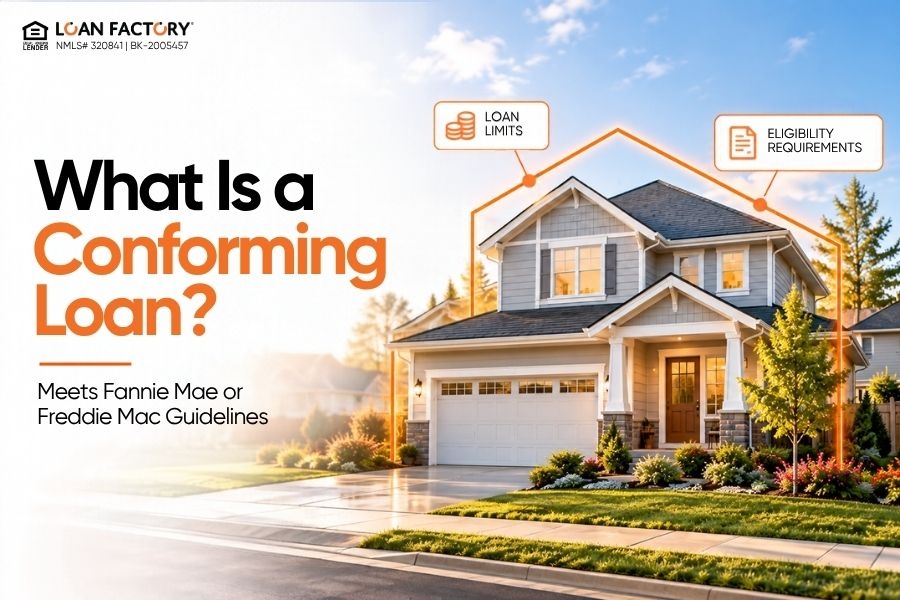
1. Conforming Conventional Loan A conforming conventional loan meets Fannie Mae or Freddie Mac guidelines and fits within FHFA conforming loan limits.
Fannie Mae states that FHFA publishes annual conforming loan limit values that apply to conventional loans delivered to Fannie Mae, including baseline and high-cost area limits.
For 2026, FHFA announced a baseline conforming loan limit of $832,750 for one-unit properties in most of the United States.
A conforming loan may be a good fit when:
The loan amount is within the conforming limit The borrower meets credit and income requirements The property meets eligibility rules The loan receives eligible underwriting results 2. Non-Conforming Conventional Loan A non-conforming conventional loan does not meet one or more conforming loan requirements.
The most common example is a jumbo loan, where the loan amount exceeds conforming limits.
Non-conforming loans may have different rules for:
Credit score Down payment Cash reserves Debt-to-income ratio Property type Documentation Appraisal review Pricing A non-conforming loan may be useful for higher-priced homes, but it may require stronger qualifications.
3. Fixed-Rate Conventional Loan A fixed-rate conventional loan has an interest rate that stays the same for the life of the loan.
This may help buyers who want:
Predictable principal and interest payment Long-term stability Easier budgeting Protection from future rate increases on that loan Common fixed-rate terms may include 30-year, 20-year, 15-year, or other lender-available terms.
4. Adjustable-Rate Conventional Loan An adjustable-rate mortgage, or ARM, usually starts with an initial fixed period and then adjusts later based on the loan terms.
An ARM may be worth reviewing if:
The buyer expects to move or refinance before the adjustment period The initial payment is more attractive than a fixed-rate option The borrower understands adjustment risk The loan terms are clearly reviewed An ARM can create payment uncertainty later, so buyers should review adjustment caps, index, margin, and worst-case payment scenarios.
5. Conventional 97 Loan A Conventional 97 loan is a low-down-payment conventional option for eligible first-time buyers.
Fannie Mae describes its 97% loan-to-value options as low-down-payment mortgage options that expand access to sustainable homeownership for first-time buyers.
A 97% LTV structure generally means the buyer may finance up to 97% of the home’s value, which can translate to a 3% down payment if the borrower qualifies.
Eligibility requirements still apply.
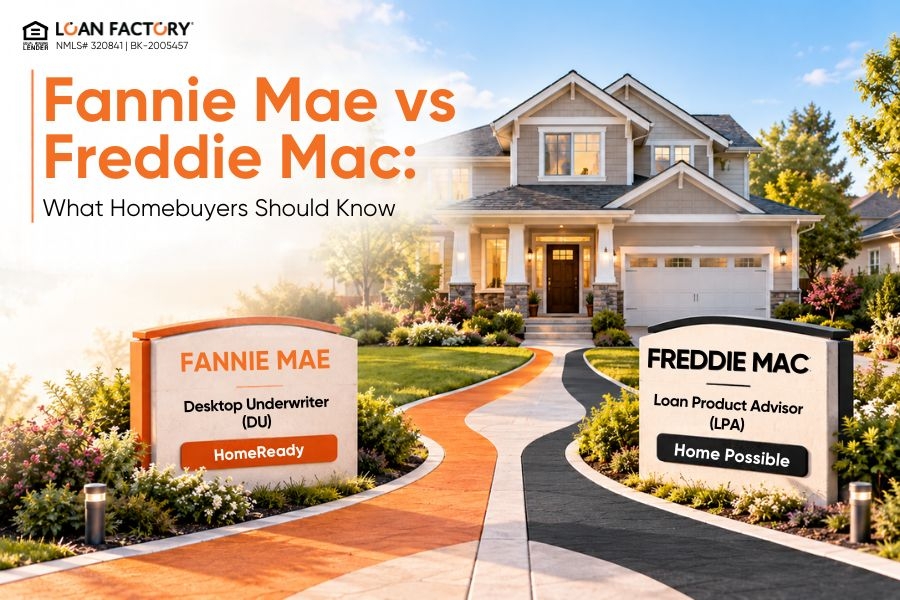
6. HomeReady Mortgage HomeReady is a Fannie Mae conventional loan option designed for creditworthy low-income borrowers. Fannie Mae’s HomeReady matrix describes it as affordable conventional financing with cancellable mortgage insurance, up to 97% LTV financing, and flexible sources of funds.
HomeReady may be worth reviewing for buyers who:
Meet income requirements Need a low down payment option Want conventional financing May use flexible funding sources Want cancellable mortgage insurance, subject to program rules 7. Home Possible Mortgage Home Possible is Freddie Mac’s affordable conventional mortgage option for very low- to moderate-income borrowers. Freddie Mac says Home Possible offers a down payment requirement as low as 3% and additional flexibilities to responsibly increase homeownership access.
Home Possible may be worth reviewing for eligible buyers who need a low-down-payment conventional option.
8. HomeOne Mortgage HomeOne is a Freddie Mac conventional option for qualified first-time homebuyers. Freddie Mac states HomeOne is available to qualified first-time homebuyers with a low down payment of just 3%.
HomeOne may be useful for first-time buyers who need a low-down-payment conventional loan but do not fit other affordable mortgage programs.
9. Conventional Refinance Loan A conventional refinance replaces an existing mortgage with a new conventional loan.
Common refinance types include:
Rate-and-term refinance Limited cash-out refinance Conventional cash-out refinance Refinance from FHA to conventional Refinance to remove mortgage insurance, if eligible Refinance to shorten or extend loan term A conventional refinance may be worth reviewing if the borrower has enough equity, credit, income, and qualifying profile.
10. Conventional Investment Property Loan Conventional loans may also be used for eligible investment properties.
Fannie Mae recognizes principal residences, second homes, and investment properties as occupancy types for mortgage eligibility and pricing.
Investment property loans may have stricter requirements than primary residence loans, including higher down payment, reserve, and pricing considerations.
Conventional Loan Requirements Conventional loan requirements vary by lender, loan type, underwriting system, occupancy, property type, and borrower profile.
Common requirements may include:
Requirement
What Lenders May Review
Credit score Credit score, credit history, recent late payments Income W-2, self-employed, 1099, retirement, or other eligible income Debt-to-income ratio Monthly debts compared with qualifying income Down payment Borrower funds, gift funds, grants, or approved sources Assets Bank statements, reserves, investment accounts Property Appraisal, title, insurance, condition, occupancy Loan amount Must fit conforming limit if conforming Mortgage insurance May be required if less than 20% down Underwriting Automated or manual underwriting approval
Fannie Mae’s Eligibility Matrix provides LTV, CLTV, HCLTV, credit score, reserve, and debt-to-income requirements for conventional first mortgages eligible for delivery to Fannie Mae.
This is why conventional loan approval is not based on one factor alone.
A borrower with strong credit but high debt may still have challenges.
A borrower with moderate credit but strong income, assets, and down payment may have a different result.
→ Read more: can you get a first time home buyer loan with bad credit?
Conventional Loan Down Payment A conventional loan does not always require 20% down.
Some qualified buyers may be eligible for low-down-payment conventional options.
Possible conventional down payment scenarios may include:
3% down for certain first-time buyer or affordable conventional options 5% down for some eligible primary residence purchases Higher down payment for second homes Higher down payment for investment properties Higher down payment for jumbo or non-conforming loans Fannie Mae offers 97% LTV options for eligible first-time buyers, and Freddie Mac HomeOne and Home Possible may allow low down payment options for qualified borrowers.
A larger down payment may help reduce:
Loan amount Monthly payment PMI cost Loan-to-value ratio Overall risk profile But a buyer should not assume they must have 20% down to use a conventional mortgage.
Private Mortgage Insurance on Conventional Loans Private mortgage insurance, or PMI, is often required when a borrower makes a down payment of less than 20% on a conventional mortgage.
The CFPB explains that PMI protects the lender if the borrower stops making payments, and lenders generally require PMI when the down payment is less than 20% of the sales price or appraised value.
PMI may be paid:
Monthly Upfront Through lender-paid PMI with pricing trade-offs Through other lender-approved structures One advantage of conventional PMI is that it may be cancellable.
The CFPB says borrowers can ask to cancel PMI if additional payments reduce the principal balance to 80% of the original value of the home.
This can make conventional loans attractive for some borrowers compared with loan types where mortgage insurance may last longer.
Conventional Loan Limits Conventional loans can be conforming or non-conforming.
For conforming conventional loans, the loan amount must fit within applicable FHFA loan limits.
For 2026, FHFA announced:
$832,750 baseline limit for one-unit properties in most of the United States Higher limits may apply in designated high-cost areas Loan limits may vary by:
Year County Number of units High-cost area status Property type Conforming vs. jumbo classification If the loan amount exceeds the conforming limit, a jumbo or other non-conforming loan may be needed.
Buyers should confirm the current county loan limit before shopping in higher-priced markets.
Conventional Financing for First-Time Buyers Conventional financing may be a strong option for some first-time buyers.
First-time buyers may assume FHA is the only low-down-payment path, but conventional options may also be available.
Conventional first-time buyer options may include:
Fannie Mae 97% LTV options Freddie Mac HomeOne HomeReady Home Possible Standard conforming conventional loans Conventional loans with eligible gift funds Conventional loans with eligible down payment assistance Fannie Mae’s 97% LTV options are designed to expand access to sustainable homeownership for first-time buyers, and Freddie Mac HomeOne is available to qualified first-time buyers with a low down payment of just 3%.
First-time buyers should compare:
FHA vs. conventional payment PMI vs. FHA mortgage insurance Down payment Closing costs Credit score Debt-to-income ratio Income limits, if using HomeReady or Home Possible Homebuyer education requirements Long-term affordability Conventional Loan vs. FHA Loan Conventional and FHA loans are often compared.
Feature
Conventional Loan
FHA Loan
Government-backed? No Yes, insured by FHA Down payment May be as low as 3% for eligible borrowers Often used by buyers needing flexible credit/down payment options Mortgage insurance PMI may be cancellable FHA mortgage insurance rules differ Credit flexibility May be stricter May be more flexible for some borrowers Property types Primary, second home, investment, if eligible Primarily owner-occupied Best fit Buyers with stronger credit or equity Buyers needing more flexible underwriting
A conventional loan may be better for one borrower.
FHA may be better for another.
The best choice depends on the full loan scenario.
Conventional Loan vs. VA Loan A VA loan may be a powerful option for eligible veterans, service members, and qualifying surviving spouses.
Feature
Conventional Loan
VA Loan
Eligibility Broad borrower eligibility Requires VA eligibility Government-backed? No Yes, VA-guaranteed Down payment Depends on program and borrower profile May allow no down payment for eligible borrowers Mortgage insurance PMI if required No monthly PMI, but VA funding fee may apply unless exempt Occupancy Primary, second home, or investment depending on rules Primary residence occupancy required Best fit Broad buyer pool Eligible military borrowers
A VA-eligible borrower should compare VA and conventional options before choosing.
Conventional Loan vs. USDA Loan USDA loans may help eligible buyers purchase homes in eligible rural or suburban areas.
Feature
Conventional Loan
USDA Loan
Location rules No USDA rural eligibility requirement Property must be USDA-eligible Income limits Program-specific only for some conventional options USDA income limits apply Government-backed? No Yes Down payment Depends on program May allow no down payment for eligible buyers Mortgage insurance/fees PMI may apply USDA guarantee fees apply Best fit Broad property and borrower scenarios Eligible rural/suburban buyers
USDA may be attractive if the property and borrower qualify.
Conventional may offer more flexibility for location and property type.
Benefits of a Conventional Loan A conventional loan may offer several benefits for qualified borrowers.
1. Flexible Property Options Conventional loans may be used for:
Primary residences Second homes Investment properties Fannie Mae recognizes principal residence, second home, and investment property occupancy types.
2. Cancellable PMI PMI may be cancellable once equity requirements are met, subject to rules and servicer requirements. The CFPB says borrowers may request PMI cancellation when the principal balance is reduced to 80% of the original home value.
3. Low-Down-Payment Options Some eligible buyers may qualify for 3% down conventional options through programs such as Fannie Mae 97% LTV, HomeReady, Freddie Mac HomeOne, or Home Possible.
4. No Upfront FHA-Style Mortgage Insurance Premium Conventional loans do not use FHA mortgage insurance.
However, PMI may still apply when the down payment is below 20%.
5. Strong Refinance Options Borrowers may use conventional refinance options to:
Lower payment Change loan term Remove mortgage insurance, if eligible Cash out equity, if eligible Refinance from FHA to conventional 6. Broad Use Cases Conventional loans may support first-time buyers, move-up buyers, repeat buyers, second-home buyers, and investors.
Possible Drawbacks of a Conventional Loan A conventional loan may not be the best fit for every borrower.
Possible drawbacks include:
Stricter credit expectations than some government-backed loans PMI may be required with less than 20% down Pricing may be sensitive to credit score, down payment, and loan characteristics Lower scores may make FHA more attractive in some cases Higher down payment may be required for second homes or investment properties Jumbo/non-conforming options may require stronger qualifications Automated underwriting approval may be required for many scenarios A conventional loan may be strong, but it still needs to be compared with FHA, VA, USDA, jumbo, and other available programs.
Who Should Consider a Conventional Loan? A conventional loan may be worth reviewing if you:
Have stable income Have acceptable credit Have funds for down payment and closing costs Want a primary residence, second home, or investment property Want the possibility of cancellable PMI Have enough income to support the payment Want to compare long-term mortgage costs Are buying within conforming loan limits Are refinancing out of FHA mortgage insurance Are buying a higher-priced home with a jumbo conventional option A conventional loan may be especially attractive for borrowers with stronger credit, lower DTI, and enough savings.
Who May Want to Compare Other Loan Types? A buyer may want to compare FHA, VA, USDA, or other options if:
Credit score is lower Down payment funds are limited DTI is high The buyer is VA-eligible The property is USDA-eligible The buyer needs a more flexible underwriting path Income or documentation is complex A state or local assistance program pairs better with another loan type The goal is not to choose conventional automatically.
The goal is to compare the best overall option
Documents Needed for a Conventional Loan Common conventional loan documents may include:
Income Documents Pay stubs W-2s Tax returns, if applicable 1099s, if applicable Profit and loss statement, if self-employed Employment verification Award letters for retirement or other eligible income Asset Documents Bank statements Savings account statements Investment account statements Retirement account statements Gift letter, if applicable Proof of gift transfer, if applicable Source of large deposits Credit and Identity Documents Government-issued ID Credit authorization Explanation letters, if requested Documentation for credit disputes, if applicable Property Documents Purchase contract Appraisal Title report Homeowners insurance HOA or condo documents, if applicable Inspection-related items, if requested Documents may vary depending on loan type, underwriting findings, and borrower profile.
How to Improve Your Chances of Conventional Loan Approval A borrower can improve conventional loan approval chances by preparing early.
1. Review Your Credit Check for:
Late payments High balances Collections Errors Disputes Recent inquiries 2. Lower Credit Card Balances Lower utilization may help your credit profile and DTI.
3. Avoid New Debt Before closing, avoid:
Financing a car Opening new credit cards Co-signing loans Large new monthly payments 4. Save More Cash Savings can help with:
Down payment Closing costs Reserves Appraisal Inspection Emergency fund 5. Compare Loan Options Ask your loan advisor to compare:
Conventional FHA VA, if eligible USDA, if eligible Jumbo, if needed HomeReady Home Possible Conventional 97 Down payment assistance options 6. Get Pre-Approved Before Shopping Pre-approval can help you understand budget, loan type, cash to close, and documentation needs before making an offer.
Example Scenario: Conventional Loan for a First-Time Buyer Hypothetical example only: This is for educational purposes only and not a commitment to lend. Loan approval, rates, APR, fees, payment, PMI, down payment, cash to close, and closing terms depend on borrower qualifications, lender guidelines, property details, underwriting, appraisal, title, and insurance.
A first-time buyer wants to purchase a primary residence.
The buyer has:
Stable W-2 income Good credit Low monthly debt Some savings for down payment and closing costs A target home within conforming loan limits The loan advisor compares:
Conventional 97 HomeReady Home Possible FHA Standard conventional loan Down payment assistance options The buyer may find that a low-down-payment conventional loan provides a competitive payment and cancellable PMI.
But if FHA produces a lower payment or easier underwriting, FHA may still be worth considering.
Loan Factory Experience Note: In real buyer reviews, conventional loans often work best when the borrower’s credit, income, assets, and property type align with agency guidelines. The strongest decision usually comes from comparing conventional against FHA, VA, USDA, and other eligible options—not choosing based on the loan name alone.
Loan Factory helps homebuyers and homeowners compare mortgage options from 240+ wholesale lenders using technology designed to make the home loan process clearer, faster, and more transparent.
If you are asking, “What is a conventional loan?”, Loan Factory can help you compare conventional home loan options based on your credit, income, debts, assets, down payment, property type, and long-term goals.
What Loan Factory Offers Conventional Loan Borrowers Access to 240+ wholesale lenders Side-by-side mortgage options to compare rate, APR, payment, fees, PMI, and cash-to-close TERA technology platform to support pricing, loan comparison, document flow, and loan review Local loan advisor support to explain Conventional, FHA, VA, USDA, Jumbo, and other available options No application fee to start reviewing your options Support for first-time buyers, repeat buyers, refinance borrowers, second-home buyers, and investment property buyers Guidance before you shop, make an offer, refinance, or compare PMI options Loan Factory does not guarantee approval.
But Loan Factory can help you compare available mortgage paths and understand whether a conventional loan may fit your profile.
Ready to compare conventional mortgage options?
Compare mortgage options: LoanFactory.com/quote LoanFactory.com/apply Loan Factory Mortgage Calculator Loan Factory Mortgage Rate Alert
Author Box Written by: Loan Factory Mortgage Education Team
Loan Factory is a technology-powered mortgage platform helping homebuyers and homeowners compare mortgage options from 240+ wholesale lenders. Our mortgage education content is designed to help borrowers understand conventional loans, conforming loan limits, PMI, credit requirements, down payment options, affordability, and the home loan process before applying.
Compliance Disclaimer This content is for informational and educational purposes only and is not a commitment to lend or a guarantee of eligibility. Conventional loan approval, program availability, rates, APR, fees, payment estimates, PMI, down payment, cash to close, loan limits, refinancing options, and closing timelines depend on borrower qualifications, income, debts, credit profile, assets, property details, lender guidelines, underwriting, appraisal, title, insurance, and applicable program rules. Not all applicants will qualify. Terms may change without notice.
Loan Factory is not affiliated with or acting on behalf of HUD, FHA, VA, USDA, Fannie Mae, Freddie Mac, FHFA, CFPB, or any government agency. FHA, VA, USDA, Conventional, Jumbo, and other loan programs are offered through participating lender partners, subject to eligibility and underwriting approval.
Equal Housing Opportunity.
FAQ: What Is a Conventional Loan?