A mortgage loan officer career path usually begins with education, SAFE MLO Test preparation, licensing, company sponsorship, and practical training. After gaining experience, a Loan Officer can progress into higher production, specialized loan programs, team leadership, coaching, recruiting, branch management, or other mortgage-industry roles.
There is no single promotion ladder that every MLO follows. Career growth depends on licensing, mortgage knowledge, borrower service, referral development, compliance, production, technology, leadership skills, and the opportunities available within the company.
Key Takeaways State-licensed Mortgage Loan Originators generally complete pre-licensing education, pass the SAFE MLO Test, submit an NMLS application, and meet state-specific requirements. New MLOs need practical training in loan programs, applications, documentation, pricing, processing, underwriting, compliance, and business development. A producing Loan Officer builds a consistent pipeline through borrower relationships, referral partners, repeat clients, and disciplined follow-up. Career advancement does not require becoming a manager; experienced MLOs can grow through specialization and stronger individual production. Leadership paths can include senior Loan Officer, team lead, Corporate Coach, branch manager, trainer, recruiter, or mortgage operations roles. Compensation often becomes more production-based as the Loan Officer gains experience, but no career stage guarantees a specific income. Licensing, continuing education, compliance, and professional development continue throughout the MLO career. Technology and operational support can help an MLO manage more relationships and transactions without relying entirely on manual work. Important Note: Job titles, licensing requirements, compensation, management authority, promotion standards, and career opportunities vary by employer, state, company structure, and applicable law. This article describes common career paths, not a guaranteed promotion or income timeline.
What Is the Typical Mortgage Loan Officer Career Path? The typical MLO career begins with licensing and foundational training, followed by supervised file experience, independent production, specialization, and optional leadership.
A simplified career path looks like this:
Career stage
Primary focus
Career exploration Understand the role, compensation, licensing, and business-development expectations Pre-licensing candidate Complete education and prepare for the SAFE MLO Test Newly licensed MLO Complete sponsorship, onboarding, training, and supervised file work Producing Loan Officer Build a pipeline and manage applications from consultation through closing Experienced or senior MLO Improve conversion, product knowledge, referral strength, and production consistency Specialized Loan Officer Develop expertise in a borrower group, property type, or loan program Team lead or coach Train other Loan Officers and support file quality Branch or business leader Manage people, production, compliance, recruiting, and operations Adjacent mortgage role Transition into training, recruiting, operations, technology, compliance, or management
Career progress is rarely perfectly linear. An MLO can move between brokerages, banks, retail lenders, production roles, leadership roles, and specialized markets throughout a career.
Stage 1: Decide Whether an MLO Career Fits You Before completing education or paying licensing fees, candidates should understand what Mortgage Loan Officers actually do.
The job combines:
Borrower education Sales Financial-document review Relationship building Compliance File coordination Follow-up Problem solving Technology Business development Mortgage Loan Officers often seek out prospective borrowers and develop relationships with real estate professionals and other referral sources. They also collect financial information, explain loan options, answer applicant questions, and help guide applications through the mortgage process.
The Bureau of Labor Statistics describes customer service, financial analysis, sales, regulatory review, and new-business development as central parts of the broader loan-officer occupation. It reports a median annual wage of $74,180 as of May 2024 and projects approximately 20,300 openings per year, on average, from 2024 through 2034. These figures cover the broader loan-officer occupation, not only residential MLOs.
An MLO Career Can Fit Someone Who Enjoys: Helping people make major financial decisions Learning detailed mortgage guidelines Building professional relationships Solving complicated financial scenarios Following up consistently Working toward production goals Managing multiple deadlines Learning new technology Operating in a regulated industry The Role Can Be Challenging for Someone Who Dislikes: Sales and prospecting Variable compensation Repeated document follow-up Compliance procedures Detailed financial information Deadline pressure Difficult borrower conversations Market fluctuations Working beyond standard hours when transactions require it A clear understanding of Mortgage Loan Officer duties helps candidates evaluate the daily work before pursuing licensing.
Stage 2: Complete the MLO Licensing Process
State-regulated Mortgage Loan Originators generally need an individual license before taking residential mortgage applications or offering or negotiating mortgage terms.
The typical process includes:
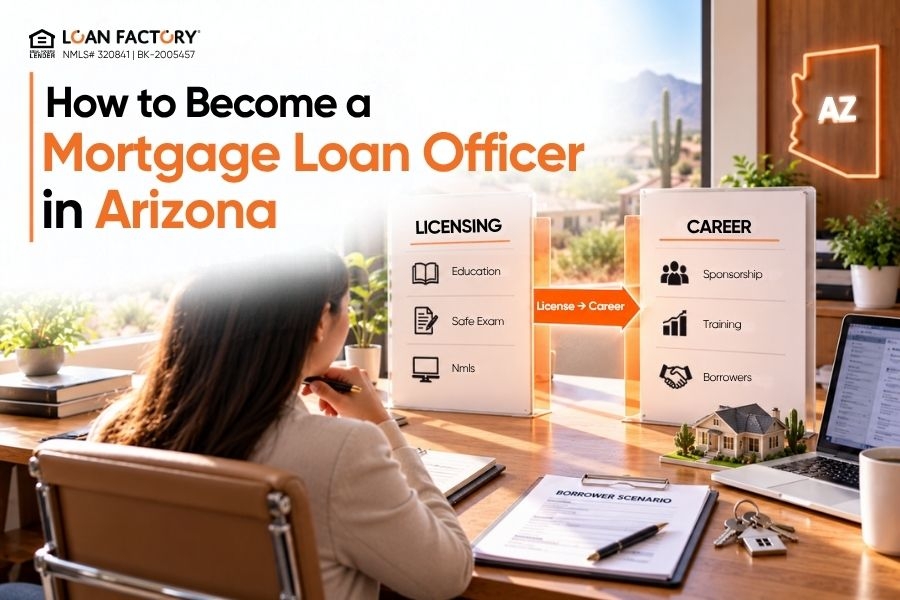
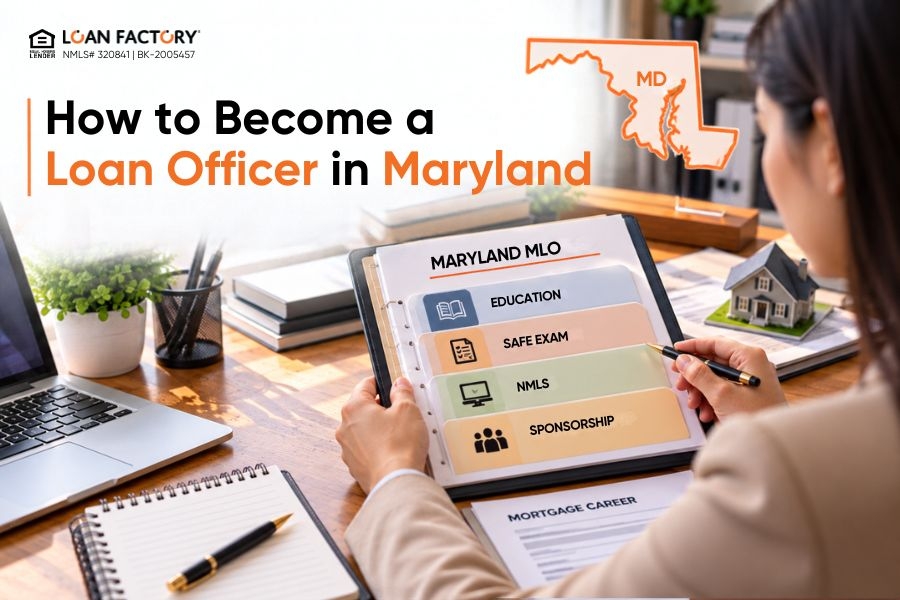
Create an individual NMLS account. Obtain an NMLS ID. Review requirements for the target state. Complete required pre-licensing education. Pass the SAFE MLO Test. Submit the individual MU4 application. Authorize fingerprint and criminal background checks. Authorize the required credit report. Submit state-specific documents and fees. Obtain company sponsorship where required. Receive approval from the state regulator. Complete company onboarding. Requirements and sequencing vary by jurisdiction. NMLS directs candidates to review the specific license checklist for each state and agency rather than assuming that one national process applies everywhere.
Candidates can review the complete NMLS license requirements for mortgage professionals .
Complete Pre-Licensing Education The federal SAFE Act minimum generally requires 20 hours of approved pre-licensing education for state-licensed MLOs.
The minimum includes:
3 hours of federal mortgage law 3 hours of ethics 2 hours of nontraditional mortgage lending 12 hours of electives States can require additional education or state-specific coursework. NMLS-approved education also follows defined course-delivery, participation, identity-verification, and completion standards.
Pass the SAFE MLO Test The SAFE MLO Test evaluates knowledge in five main areas:
Federal mortgage-related laws Uniform state content General mortgage knowledge Mortgage loan origination activities Ethics Candidates should understand the concepts rather than rely entirely on memorizing practice questions.
Loan Factory provides a free SAFE MLO exam preparation center with practice questions, answer explanations, progress tracking, mistake review, and timed exams.
The Exam Center supplements preparation. It does not replace NMLS-approved pre-licensing education or guarantee test passage, licensing, sponsorship, employment, or career results.
Complete the Application and Sponsorship Process Passing the test does not create an active mortgage license by itself.
Candidates still need to complete:
MU4 filing Background review Credit authorization State documentation Applicable fees Company relationship Sponsorship where required Regulatory approval The broader guide to how to become a Mortgage Loan Officer explains the process from career research through licensing and onboarding.
Stage 3: Begin as a Newly Licensed or Junior MLO A newly licensed Loan Officer has completed an important regulatory step, but licensing does not establish practical mortgage expertise.
New MLOs still need to learn how to:
Conduct borrower consultations Take complete applications Review income and assets Read credit reports Calculate debt-to-income ratios Compare loan programs Interpret automated underwriting findings Prepare preapproval scenarios Request documents Communicate disclosures Work with processors Address underwriting conditions Use CRM and loan-origination systems Follow advertising and compliance rules The first stage is less about immediately maximizing production and more about learning to handle mortgage files accurately and consistently.
Common Entry-Level Titles A new mortgage professional can begin as a:
Mortgage Loan Officer trainee Junior Mortgage Loan Officer Loan Officer Assistant Licensed Loan Officer Consumer-direct Loan Officer Bank Mortgage Loan Officer Inside Loan Officer Associate Loan Officer These titles are not standardized. One company’s junior MLO can perform different duties from another company’s junior MLO. For more information about junior mortgage loan officer salaries and career growth, see Junior Mortgage Loan Officer Salary: Career Outlook .
Loan Officer Assistant as an Entry Path Some candidates begin as Loan Officer Assistants before developing an independent book of business.
An LOA role can provide exposure to:
Applications Document collection Borrower communication Processing milestones Underwriting conditions Closing coordination Pipeline management Loan Officer workflow Whether an LOA needs an MLO license depends on the activities performed and applicable law. Administrative work does not automatically require licensing, but taking applications or discussing loan terms can trigger licensing requirements.
What New MLOs Should Prioritize During the first stage, focus on five areas:
Accuracy: Learn to collect complete and correct information. Communication: Set realistic expectations with borrowers and partners. Compliance: Understand what you can say, advertise, and promise. Product knowledge: Learn how common loan programs differ. Follow-up: Build a reliable system for staying connected with prospects and active borrowers. A new Loan Officer does not need to know every guideline from memory. The stronger skill is knowing what questions to ask, where to find reliable information, and when to request assistance.
Stage 4: Become a Consistent Producing Loan Officer The next stage is moving from isolated transactions to a repeatable mortgage business.
A producing Loan Officer consistently performs the core responsibilities of the role:
Generates borrower opportunities Conducts consultations Reviews initial eligibility Structures loan scenarios Maintains referral relationships Coordinates active files Communicates with borrowers Tracks applications through closing Follows up with past clients Maintains licensing and compliance Production consistency comes from systems rather than occasional bursts of activity.
Build a Repeatable Business Development System A producing MLO needs a dependable process for:
Lead intake Initial response Consultation scheduling Application follow-up Preapproval follow-up Real estate partner communication Database management Past-client outreach Referral requests Long-term nurture A CRM is useful only when the Loan Officer records contacts, schedules tasks, and follows the process consistently.
Improve Pull-Through Pull-through refers to the percentage of applications or active loans that reach closing and funding.
A Loan Officer can improve file quality by:
Asking complete questions during the initial consultation Reviewing documents early Identifying income or property issues before submission Selecting an appropriate lender and program Explaining conditions clearly Communicating problems early Working closely with processors and underwriters Not every loan will close, and no process eliminates all uncertainty. Strong preparation reduces avoidable surprises.
Develop Referral Relationships Long-term MLO career growth often depends on relationships with:
Real estate professionals Builders Past clients Community organizations Financial professionals Attorneys CPAs Insurance professionals Local business owners Effective relationship development is based on reliability, useful communication, scenario knowledge, and service—not prohibited payments or exaggerated promises.
Stage 5: Develop Advanced Mortgage Expertise An experienced Loan Officer can grow without changing job titles.
Advanced career growth can come from handling more complex scenarios and building deeper expertise.
Strengthen Core Mortgage Knowledge Experienced MLOs should continue developing knowledge of:
Conventional loans FHA loans VA loans USDA loans Jumbo loans Down-payment assistance Self-employed income Rental income Investment properties Non-QM programs Home equity products Refinance strategies Complex credit scenarios The goal is not to recommend every available product. It is to recognize which options deserve further review and to explain tradeoffs accurately.
Become More Efficient Experienced Loan Officers improve capacity by standardizing:
Consultation questions Document checklists Follow-up sequences File notes Referral-partner updates Preapproval procedures Post-closing communication Database segmentation A modern mortgage technology platform can bring CRM, pricing, applications, marketing, and loan workflow into a more coordinated system.
Technology supports career growth when it reduces repetitive work and helps the MLO respond consistently. It does not replace mortgage judgment, relationships, or compliance.
Stage 6: Choose a Mortgage Specialization An MLO does not need to serve every borrower type or loan category.
Specialization can help a Loan Officer build stronger referral relationships and communicate more clearly with a defined audience.
Possible MLO Specializations Specialization
Typical focus
First-time homebuyers Education, budgeting, low-down-payment programs, and process guidance VA lending Military borrowers, entitlement, residual income, and VA requirements FHA lending Flexible qualifying factors and FHA property requirements Self-employed borrowers Tax returns, bank statements, 1099 income, and business documentation Real estate investors DSCR, rental properties, cash flow, and portfolio financing Jumbo lending Higher loan amounts, assets, reserves, and complex income Refinance Equity, break-even analysis, loan-term changes, and debt restructuring Home equity HELOC and home-equity loan scenarios New construction Builder timelines, construction financing, and extended locks Multilingual markets Borrower education and communication in additional languages
Specialization does not remove the need for broad mortgage knowledge. It creates a clear market position while the Loan Officer continues serving eligible borrowers under company and lender guidelines.
“Senior Loan Officer” is usually an employer-defined title rather than a nationally regulated career level.
A senior MLO generally demonstrates:
Strong mortgage knowledge Consistent file quality Reliable borrower communication Established referral relationships Independent scenario management Compliance discipline Effective use of systems Professional judgment Ability to help less-experienced team members. A title alone does not establish expertise. Production, loan quality, service, and compliance history provide more meaningful evidence. Learn more about Senior Mortgage Loan Officer Salary & Benefits .
How Career Growth Affects Compensation MLO compensation can include:
Salary Salary plus commission Fixed basis points Commission split Flat-fee structure Team compensation Approved incentives Experience can help a Loan Officer build more consistent production, but it does not guarantee a higher income.
Compensation still depends on:
Funded loan volume Average loan amount Compensation agreement Company fees Business expenses Market conditions Referral activity Pull-through Employment classification The guide to Mortgage Loan Officer salary explains how wages, commissions, basis points, and expenses can affect total earnings.
Stage 8: Move Into Coaching or Team Leadership Experienced MLOs who enjoy teaching and problem solving can move into coaching or team-lead roles.
A coach or team leader can:
Review borrower scenarios Help structure files Explain loan guidelines Review preapprovals Support junior MLOs Reinforce compliance Identify documentation problems Train Loan Officers on systems Improve team processes Provide accountability Leadership requires more than high production. A strong coach needs patience, communication skills, sound judgment, ethical standards, and the ability to explain complex issues clearly.
Corporate Coach Career Path At Loan Factory, the Corporate Coach role supports developing Loan Officers through training, file-level assistance, operational guidance, and professional development.
Current Corporate Coach qualification standards include:
At least six years of industry experience At least six months with Loan Factory At least 15 loans closed with Loan Factory Management selection based on performance, compliance, and leadership standards These are current company-program criteria, not universal industry requirements.
Becoming a coach is one example of career growth that combines mortgage expertise with leadership rather than focusing only on personal production.
Stage 9: Build a Team or Pursue Branch Leadership Experienced Loan Officers can expand into team or branch leadership.
Possible titles include:
Senior Loan Officer Producing team lead Sales manager Branch manager Producing branch manager Area manager Regional sales leader Brokerage owner Responsibilities can expand to include:
Recruiting Training Production management File-quality oversight Compliance Business planning Team compensation Marketing Expense management Branch profitability Licensing Performance coaching Branch leadership involves additional legal and regulatory responsibilities. An effective individual producer does not automatically become an effective manager.
Candidates should evaluate whether they want to:
Originate loans personally Manage people Handle administrative responsibilities Monitor compliance Recruit and retain talent Manage branch expenses Resolve team conflicts Accept responsibility for other originators’ work Alternative Career Paths Beyond Personal Production Mortgage experience can lead to other roles within the industry.
Mortgage Operations Possible positions include:
Loan processor Processing manager Loan closer Post-closing specialist Disclosure specialist Quality-control reviewer Operations manager Credit and Underwriting Possible paths include:
Junior underwriter Mortgage underwriter Scenario desk specialist Credit policy specialist Underwriting manager Additional training, authority, or employer requirements apply to these roles.
Training and Education Experienced mortgage professionals can work as:
Company trainer Licensing educator Product trainer Technology trainer Compliance educator Corporate Coach Recruiting and Business Development A licensed Loan Officer with industry experience can transition into:
Loan Officer recruiting Branch development Strategic partnerships Account management Wholesale account executive roles Compliance and Licensing Career options can also include:
Licensing specialist Advertising reviewer Compliance analyst Quality assurance Audit support Complaint management Moving into an adjacent role does not represent a failure to grow as an originator. It can be a deliberate career decision based on skills, stability, interests, or leadership goals.
Does an MLO Need a College Degree? A college degree is not part of the federal SAFE Act minimum licensing standard for state-licensed MLOs.
However, employers set their own hiring preferences. Some banks, lenders, and mortgage companies prefer candidates with degrees in:
Finance Business Economics Accounting Real estate Communications The BLS states that loan officers typically have a bachelor’s degree, but it also notes that some candidates enter without one when they have relevant experience in banking, customer service, or sales. Mortgage Loan Officers must still satisfy applicable licensing or registration requirements.
Practical experience in sales, real estate, banking, customer service, or financial documentation can help a candidate enter and grow in the field.
How Long Does MLO Career Growth Take? There is no standard timeline.
One Loan Officer can develop a strong referral network quickly because of previous real estate, banking, or community relationships. Another can need more time to learn products, develop confidence, and create a consistent pipeline.
Career progress depends on:
Starting experience Licensing timeline Training quality Product knowledge Referral network Follow-up habits Company support Market conditions File quality Production Compliance Leadership opportunities A practical way to evaluate growth is by capability rather than title.
Early-Career Milestones Complete licensing Learn company systems Conduct accurate consultations Take complete applications Understand common loan programs Close initial transactions Establish referral relationships Developing-MLO Milestones Manage files more independently Improve application quality Build consistent follow-up Develop repeat and referral business Handle more complex scenarios Strengthen product knowledge Experienced-MLO Milestones Maintain a repeatable pipeline Develop a clear market specialization Improve operational efficiency Mentor less-experienced Loan Officers Build a team or expand leadership responsibilities Career growth is not determined only by how many years an MLO has held a license.
How Can an MLO Grow Faster Without Sacrificing Compliance? The goal is not simply to work faster. It is to reduce avoidable mistakes while improving borrower service and business development.
Build Strong Foundations Master:
Application accuracy Income and asset documentation Credit review Loan-program basics Disclosure responsibilities Fair lending Advertising rules Privacy Compensation restrictions Ask for File-Level Guidance New and developing MLOs should escalate uncertainty early.
Useful questions include:
Can this income be used? Which documents support the calculation? Does this property fit the program? Is this advertising statement compliant? What conditions are likely? Which lender guidelines should be reviewed? Create a Reliable Follow-Up System Do not rely on memory.
Use:
CRM tasks Calendar reminders Borrower milestones Referral-partner updates Document checklists Post-closing campaigns Past-client reviews Review Closed and Lost Loans After a transaction ends, evaluate:
What worked? Where did delays occur? Which questions should have been asked earlier? Why did the borrower choose another option? Which referral source produced the opportunity? What process should be improved? Our complete guide on How to Be a Successful Loan Officer provides a practical framework for follow-up, product knowledge, CRM discipline, referrals, and continuing improvement
Why Choose Loan Factory for an MLO Career? Loan Factory supports eligible newly licensed and experienced Loan Officers with technology, training, processing, underwriting resources, marketing support, and live Loan Officer support.
Career Development Resources Loan Factory provides training covering areas such as:
Foundational mortgage knowledge Loan products Loan processes Document review Borrower qualification DTI and credit evaluation Preapproval scenarios Referral development CRM and pipeline management Client retention The Loan Factory Academy organizes training across foundational knowledge, loan products, file processes, borrower qualification, and business development.
TERA Technology Platform Eligible Loan Officers receive access to TERA, which combines:
CRM Point-of-sale tools Loan origination Pricing Marketing Support Marketplace resources A connected platform helps Loan Officers manage borrowers, pricing, files, communication, and follow-up without relying on several unrelated systems.
Compensation and Support Current Loan Factory recruiting information includes:
100% commission on eligible self-generated closed and funded loans, minus a flat $595 fee $500 in-house processing 1099 and W-2 compensation structures up to 250 BPS No monthly desk or junk fee Free training for different experience levels Marketing and underwriting support Live Loan Officer support “Up to 250 BPS” does not mean every Loan Officer or transaction receives 250 BPS. Compensation follows the approved role, written plan, signed agreement, transaction eligibility, licensing, and applicable law.
Candidates can explore the Loan Factory Loan Officer platform or call 714-591-8143 to review current eligibility, compensation, technology, training, and onboarding.
Conclusion: Build an MLO Career One Capability at a Time A mortgage loan officer career path begins with education and licensing, but long-term growth comes from practical mortgage knowledge, borrower service, referral relationships, file quality, compliance, technology, and consistent follow-up.
An MLO can grow through several paths:
Stronger individual production Loan-program specialization Senior Loan Officer responsibilities Team leadership Coaching Branch management Recruiting Training Operations or compliance roles The strongest career path is not necessarily the one with the fastest title change. It is the path that builds durable skills, serves borrowers responsibly, and supports sustainable professional growth.
Qualified candidates who are ready to begin Loan Factory’s review process can register as a Loan Factory Loan Officer .
Registration does not guarantee acceptance, licensing, sponsorship, employment, contractor engagement, compensation, production, promotion, or system access.
Experience Note The stages, milestones, and advancement paths in this article are educational frameworks based on current NMLS licensing guidance, federal occupational information, common mortgage-industry roles, and Loan Factory training and recruiting information.
They do not represent a guaranteed promotion schedule, compensation result, licensing decision, or individual career outcome.
Sources About the Author Loan Factory Loan Officer Education and Recruiting Team
The Loan Factory Loan Officer Education and Recruiting Team develops resources to help aspiring, newly licensed, and experienced Loan Officers understand licensing, training, compensation, technology, compliance, business development, and career growth.
Licensing, compensation, support, leadership opportunities, employment structure, and program availability remain subject to current requirements, applicable agreements, and law.
Disclaimer This content is for educational purposes only and is not legal, tax, employment, licensing, compensation, or career advice. MLO career paths vary by employer, experience, production, state, market conditions, and applicable law.
Nothing in this article guarantees licensing, sponsorship, employment, compensation, promotion, loan production, closings, income, or career results.
Frequently Asked Questions