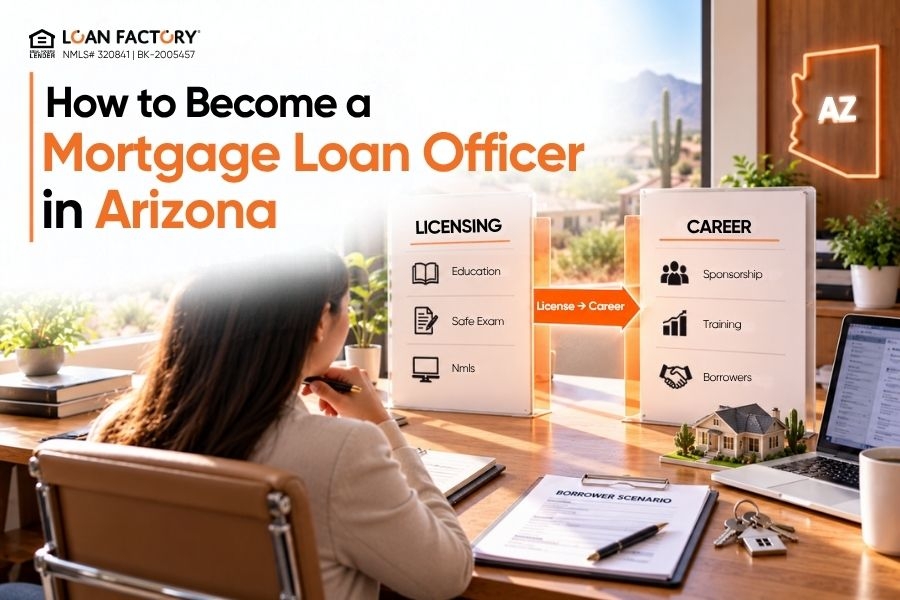
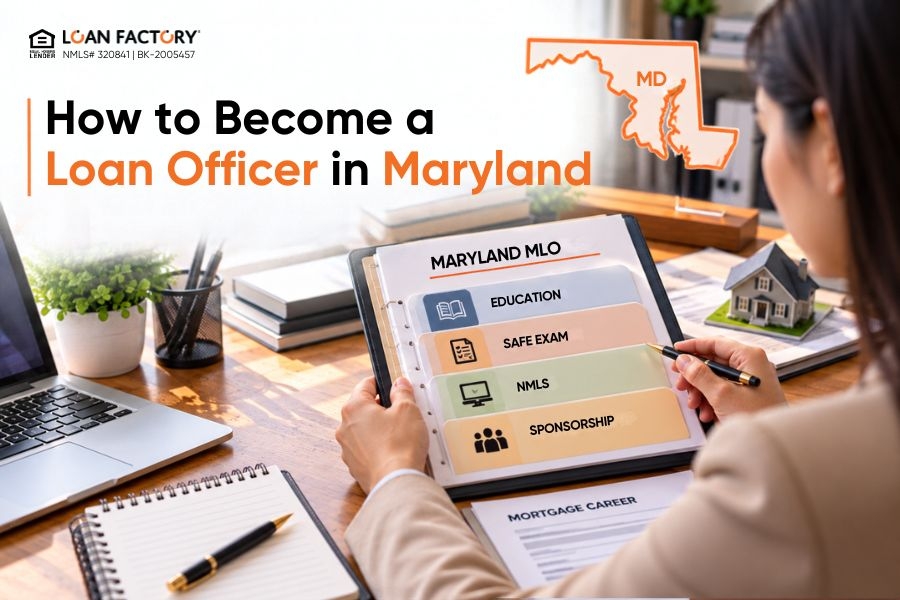
NMLS License Requirements: How to Become a Licensed Mortgage Loan Originator The primary NMLS license requirements for a state-licensed Mortgage Loan Originator generally include approved pre-licensing education, a passing SAFE MLO Test score, an Individual MU4 filing, criminal and credit checks, state-specific documentation, and company sponsorship where required.
NMLS is the system used to manage your licensing record. It does not independently issue one national mortgage license. The applicable state regulator reviews your application and decides whether to approve, deny, condition, or request additional information for the license.
Key Takeaways NMLS is a licensing and registration system; state regulators issue state MLO licenses. State-licensed MLOs generally complete at least 20 hours of NMLS-approved pre-licensing education. State agencies can require additional state-specific education. The SAFE MLO Test currently contains 120 questions, including 115 scored and five unscored questions. A score of at least 75% is required to pass. The Individual MU4 collects identity, residence, employment, business activity, and disclosure information. New state MLO applicants generally authorize a fingerprint-based criminal background check and a credit report. Sponsorship is required in most states before an MLO can originate under a mortgage company. Passing the SAFE MLO Test does not by itself create an active license. State-licensed MLOs generally renew their licenses annually and complete required continuing education. Important Note: Education hours, application procedures, licensing fees, documentation, sponsorship standards, remote-work rules, and renewal requirements vary by state and can change. Review the current state licensing checklist before purchasing education, scheduling the test, submitting fingerprints, or filing an application.
“NMLS license” is a commonly used phrase for a state Mortgage Loan Originator license managed through the Nationwide Multistate Licensing System & Registry.
NMLS provides the system through which you can:
Create an individual licensing record Obtain an NMLS ID Track education completion Enroll in the SAFE MLO Test File an Individual MU4 Authorize background and credit checks Request licenses in individual states Establish company relationships Manage sponsorship Update disclosures Submit annual renewals Monitor license status The state agency with jurisdiction over your application makes the licensing decision.
You do not receive one nationwide MLO license simply by creating an NMLS account or passing the national test.
State MLO Licensing vs. Federal NMLS Registration The type of authorization you need generally depends on where you work.
Work environment
Typical NMLS requirement
State-regulated mortgage brokerage Individual state MLO license State-regulated non-bank mortgage lender Individual state MLO license Other state-regulated mortgage company Individual state MLO license or registration, as applicable Federally regulated bank Federal NMLS registration Federally insured credit union Federal NMLS registration
State licenses or registrations generally apply to individuals working for state-regulated non-bank entities. Mortgage Loan Originators working for federally regulated banks and credit unions generally use the federal registration pathway.
The distinction matters because state licensing and federal registration do not necessarily use the same:
Pre-licensing education requirements SAFE testing requirements Application procedures Sponsorship process Continuing education standards Renewal process Before paying for a course or exam, confirm which pathway applies to your intended role.
NMLS License Requirements Checklist Most first-time state MLO applicants complete the following steps.
Requirement
What it generally involves
NMLS account and ID Create an individual record and receive a permanent NMLS ID Pre-licensing education Complete federal minimum education and any state-specific hours SAFE MLO Test Pass the national test with Uniform State Content Individual MU4 Submit identity, address, employment, business, and disclosure information Criminal background check Authorize the check and complete approved fingerprinting Credit report Authorize NMLS to obtain and send the report to applicable regulators Character and fitness review Meet federal minimum and state-specific standards Company relationship Connect your individual record with the mortgage company Sponsorship Obtain company sponsorship where the state requires it State documents Submit documents required outside or through NMLS Fees Pay education, testing, processing, background, and state charges Regulatory approval Respond to deficiencies and wait for the state’s decision
Completing every item does not guarantee approval.
The state can request:
Corrections Written explanations Court records Credit documentation Employment information Additional disclosures State-specific forms Other supporting documents Step 1: Create Your Individual NMLS Account Your first administrative step is to create an individual NMLS account and obtain an NMLS ID.
Your NMLS ID can remain connected to you throughout your mortgage career, including when you:
Apply for additional state licenses Change mortgage companies Update employment information Renew licenses Amend disclosures Maintain education records Move between state-licensed and federally registered roles Use your legal information consistently.
Before filing, review:
Legal name Previous names Social Security information Date of birth Address history Employment dates Email address Telephone number Inconsistencies can create delays when NMLS, a fingerprint vendor, a credit bureau, your company, and a state regulator attempt to match your records.
Step 2: Complete NMLS-Approved Pre-Licensing Education The SAFE Act generally requires at least 20 hours of NMLS-approved pre-licensing education for state MLO licensure.
The federal minimum includes:
Required subject
Minimum hours
Federal law and regulations 3 hours Ethics 3 hours Nontraditional mortgage lending 2 hours Mortgage-origination electives 12 hours Federal minimum 20 hours
The ethics portion includes subjects such as:
Fraud Consumer protection Fair lending States can add education requirements beyond the federal minimum. NMLS maintains state-specific PE and CE information because required hours, state-law content, expiration rules, and timing can differ by jurisdiction.
Use an NMLS-Approved Course Provider Your pre-licensing education must be completed through an NMLS-approved provider and properly reported to your NMLS record.
Before enrolling, confirm:
The provider is currently approved. The course satisfies the federal requirement. The course includes the state-specific education you need. The course format is permitted. Completion will be reported to NMLS. The education will remain valid for your planned application timeline. Can Pre-Licensing Education Expire? Federal pre-licensing education can need to be retaken when an individual does not obtain a valid state license or federal registration within the applicable three-year period, or remains outside licensure or registration for an extended period.
State agencies can also establish their own PE expiration requirements.
Plan your education, test, company search, and application timing together rather than completing a course without a licensing plan.
For a complete career roadmap, review how to become a Mortgage Loan Officer .
Step 3: Prepare for and Pass the SAFE MLO Test State MLO applicants generally must pass the SAFE Mortgage Loan Originator Test with a score of at least 75%.
The current national test contains:
120 multiple-choice questions 115 scored questions Five unscored questions The test uses five major content areas:
SAFE MLO Test category
Approximate percentage
Federal mortgage-related laws 24% Uniform State Content 11% General mortgage knowledge 20% Mortgage Loan Origination activities 27% Ethics 18%
The passing score is 75%, and the five unscored questions do not affect the result.
How to Prepare for the SAFE MLO Test Strong preparation involves understanding concepts—not only memorizing practice questions.
Study areas should include:
Federal mortgage laws Disclosure requirements Timing requirements Fair lending Mortgage products Government-backed loan basics Loan-to-value calculations Debt-to-income calculations Mortgage Loan Origination activities Ethics Uniform State Content A practical study process can include:
Review the official test outline. Complete one subject at a time. Create notes for laws and disclosure timelines. Practice mortgage calculations. Complete mixed-topic quizzes. Review every incorrect answer. Take timed full-length practice exams. Strengthen weak categories before scheduling the exam. You can use the free Loan Factory Exam Center for practice questions, explanations, progress tracking, mistake review, quick quizzes, and timed practice exams.
For a more structured study strategy, review our expert tips for passing the SAFE MLO Exam .
Exam Preparation Disclosure: The Loan Factory Exam Center and related study guides are supplemental educational resources. They do not replace required NMLS-approved education or guarantee exam passage, licensing, sponsorship, employment, compensation, or career results.
Passing the Test Is Not the Same as Becoming Licensed A passing SAFE MLO Test result satisfies one licensing requirement.
It does not by itself:
Approve an MLO license Create authority in every state Establish sponsorship Complete the MU4 Satisfy background requirements Satisfy state-specific education Complete company onboarding Authorize you to take mortgage applications Authorize you to quote or negotiate mortgage terms Before conducting licensed activity, verify your license status, company relationship, sponsorship, state authority, and onboarding status.
Step 4: Complete the Individual MU4 Application The Individual MU4 is the primary NMLS filing used by an individual applying for a new state license or registration.
It collects information about:
Legal identity Contact information Residential history Employment history Other business activities Criminal disclosures Civil judicial disclosures Regulatory actions Financial disclosures Existing licenses Background-check authorization Credit-report authorization NMLS requires the MU4 information to be complete and accurate. Incomplete or misleading information can delay the application or contribute to a denial.
Gather Your Information Before Filing Prepare:
Current legal name Previous legal names Residential history Employment dates Employer contact information Other business activities Court documents, when applicable Bankruptcy records, when applicable Regulatory records, when applicable Written disclosure explanations State-specific documents Do not guess at dates.
Do not omit information merely because:
The event occurred a long time ago. The case was dismissed. The debt was later paid. Another state approved a previous license. You believe an event is unimportant. Read each disclosure question carefully and respond to the question actually asked.
When a disclosure issue is complex, obtain guidance from qualified legal counsel rather than relying on assumptions.
Step 5: Complete the Criminal Background Check New individual MU4 license applications generally require a criminal background check through NMLS.
The current process includes:
Authorizing the criminal background check in NMLS Scheduling fingerprinting through the approved vendor Completing fingerprinting within the authorization period Monitoring the background-check status Responding to regulator requests, when applicable The current NMLS guidance states that the background check is fingerprint-based and that CBC authorization is valid for 180 days. Existing qualifying fingerprints can sometimes be reused under applicable conditions.
What Can Affect MLO Licensing Eligibility? Federal minimum licensing standards address issues including:
Previous revocation of an MLO license Certain felony convictions during the seven years before application Felony convictions involving fraud Felony convictions involving dishonesty Felony convictions involving breach of trust Felony convictions involving money laundering Financial responsibility Character and general fitness Certain fraud- and trust-related felony convictions receive stricter treatment than many other offenses. State law and the facts of the case can add further requirements or restrictions.
A criminal history does not always produce the same result in every jurisdiction.
Relevant issues can include:
Type of offense Felony or misdemeanor classification Date of conviction Conduct involved Court disposition Pardon or other recognized legal relief Prior licensing actions State law Completeness of your disclosures Before spending substantially on courses, testing, and application fees, review the licensing checklist for the state in which you plan to apply.
Step 6: Authorize an NMLS Credit Report New state MLO applicants generally authorize a credit report through NMLS.
NMLS sends the report to the relevant state regulator. The regulator applies its own standards when evaluating financial responsibility.
There is no single nationwide credit score that automatically approves or denies every MLO application.
A regulator can review matters such as:
Unpaid judgments Tax liens Collections Delinquent accounts Charge-offs Foreclosures Bankruptcies Child-support obligations Payment arrangements Patterns of unresolved obligations All new MLO license applicants generally authorize a credit report through the MU4 process, and first-time authorization currently includes identity verification.
Prepare Before Authorizing the Credit Report Review your credit information early enough to:
Dispute inaccurate accounts Gather proof of payment Document payment arrangements Obtain bankruptcy documents Prepare written explanations Demonstrate how an issue was resolved A past financial problem does not necessarily result in automatic denial.
However, failing to explain or document an unresolved issue can slow the review.
Step 7: Meet Character, Fitness, and Financial-Responsibility Standards Education and testing are only part of the licensing review.
The applicable state agency also evaluates whether you meet character, general fitness, and financial-responsibility standards.
The regulator can consider:
Criminal history Credit information Civil judgments Regulatory actions Previous licensing decisions Employment history Disclosures Supporting documentation Accuracy and completeness of the MU4 Whether explanations are consistent with available records Honest disclosure matters.
An underlying event can require explanation, but failing to report a required event can create a separate concern about the accuracy of the application.
A Practical Disclosure Approach Before submitting the MU4:
Read the complete question. Check your records. Confirm dates and dispositions. Gather supporting documents. Prepare a concise factual explanation. Avoid minimizing or exaggerating the event. Obtain legal guidance when necessary. Do not assume that information will remain undiscovered because it does not appear on a consumer credit report.
Most state-licensed MLOs need an eligible mortgage company to sponsor their license before they can originate under that company’s authority.
The NMLS sponsorship process generally follows three steps:
You grant the company access to your NMLS record. The company establishes a relationship with you in NMLS. The company submits a sponsorship request for the applicable license. The state regulator reviews the sponsorship request. Sponsorship is required in most states and connects your licensed activity with the company responsible for supervision and compliance.
Sponsorship Is Not the Same as Acceptance A company can review your information before deciding whether to:
Establish a relationship Request sponsorship Enter an employment agreement Enter a contractor agreement Complete onboarding Provide system access The state can also deny or delay the sponsorship or license status.
Before originating mortgage loans, confirm:
Your state license has been approved. The license status permits activity. The correct company relationship is active. Sponsorship has been approved where required. The license is associated with the correct location. Required company training is complete. Compliance and system onboarding are complete. Do not take applications, quote loan terms, or represent that you are authorized to originate before all required approvals are in place.
Step 9: Complete State-Specific Requirements The SAFE Act establishes federal minimum standards, but each state agency controls its own licensing requirements.
Additional requirements can include:
State-law education Additional PE hours State questionnaires Financial statements Surety-bond coverage Extra fingerprints State-specific disclosures Employment documentation Work-authorization documents Remote-work information Additional application fees Different sponsorship rules Different renewal deadlines The NMLS Checklist Compiler allows you to identify agency-specific requirements completed inside and outside NMLS. The applicant or licensee remains responsible for satisfying all requirements for the requested license.
Use the State Checklist Before You Apply For each state, verify:
License type Education hours Test requirements Application form Fees Fingerprints Credit report Required documents Sponsorship Company relationship Remote-work requirements Renewal requirements Do not rely on the checklist for another state.
Do You Need a Separate MLO License for Every State? Generally, you need the appropriate authority for every state in which you perform activity that requires a state MLO license.
One state license does not automatically authorize activity in another state.
A multistate MLO can need to:
Apply separately in each jurisdiction Complete additional state education Pay separate application fees Submit state-specific documents Obtain sponsorship for each applicable license Track separate approval statuses Complete state-specific continuing education Renew each license The SAFE MLO Test includes Uniform State Content, but passing it does not create a nationwide license.
How Much Does an NMLS License Cost? There is no single nationwide total for obtaining an MLO license.
Your total cost can include:
Cost category
What it can include
Pre-licensing education Federal and state-specific courses SAFE MLO Test Test enrollment and any retake costs Criminal background check Authorization and fingerprint processing Credit report NMLS credit-report authorization NMLS processing System processing charges State application Individual state licensing fee State documents Records, certifications, or additional submissions Company requirements Onboarding or other authorized costs Annual renewal NMLS and state renewal fees Continuing education Federal and state CE courses
The total increases when you apply in multiple states.
Before paying, determine:
Which expenses you are responsible for Which expenses the mortgage company pays Whether fees are refundable Whether the education covers your intended states Whether company sponsorship is available Whether a license application should be filed before or after joining a company Use the current state checklist and fee information rather than relying on an old estimate.
How Long Does It Take to Get an NMLS License? There is no guaranteed national licensing timeline.
The process depends on:
Course availability Education completion Test scheduling Passing the test Fingerprint processing Credit authorization MU4 accuracy Disclosure history State documents Company sponsorship State workload Responses to regulator requests A straightforward and complete file can move differently from one requiring:
Court records Bankruptcy documents Credit explanations Employment verification Regulatory records Corrected disclosures Additional fingerprints Neither a course provider nor a mortgage company controls the state regulator’s final review time.
How to Avoid Preventable Delays You can reduce avoidable delays by:
Using consistent legal information Gathering your history before filing Reviewing all MU4 answers Completing fingerprints promptly Responding to license items Uploading requested documents correctly Coordinating sponsorship with the company Checking the state checklist Monitoring your NMLS account Moving quickly does not mean rushing through disclosures.
Accuracy is more important than submitting an incomplete application a few days earlier.
Review the guide to getting a Mortgage Loan Officer license fast , but remember that neither a course provider nor an employer controls the regulator’s final processing time.
Common Reasons an NMLS Application Is Delayed Incomplete Address or Employment History Common issues include:
Missing months Overlapping employment dates Unexplained gaps Incorrect employer details Inconsistent addresses Prepare a complete timeline before starting the filing.
Inconsistent Identity Information Differences involving names, Social Security information, dates of birth, or previous names can create matching problems across the application, fingerprints, and credit report.
Missing Disclosures A regulator can identify an event through:
Criminal background information Credit information Court records Licensing databases Regulatory records Failing to disclose a required event can create an additional issue beyond the underlying event.
Rejected or Expired Fingerprints Delays can occur when:
Fingerprints cannot be processed The authorization expires The appointment is not completed Identity information does not match Credit Issues Without Documentation A regulator can request documentation for:
Judgments Tax obligations Collections Bankruptcy Foreclosure Payment plans Other unresolved obligations Missing Sponsorship In a state requiring sponsorship, the license can remain pending, approved-inactive, or otherwise unavailable for origination until the company relationship and sponsorship requirements are satisfied.
State Requirements Were Overlooked Completing the federal education minimum and national test does not satisfy every state requirement.
Check the applicable state licensing checklist before filing.
Do NMLS Licenses Need to Be Renewed? Yes. State-licensed individuals generally renew their licenses annually through NMLS.
The standard NMLS annual renewal window runs from November 1 through December 31. Missing the deadline can result in an inactive, terminated, or otherwise nonrenewed status, depending on the state and license. NMLS also provides a January–February reinstatement period for eligible licenses, but reinstatement is not guaranteed in every situation.
Renewal can require:
Continuing education Updated MU4 information Current disclosures Renewal fees Active company sponsorship State-specific requirements Resolution of license deficiencies Annual Continuing Education The SAFE Act generally requires at least eight hours of NMLS-approved continuing education each year.
The federal minimum generally includes:
Continuing education category
Minimum hours
Federal law and regulations 3 hours Ethics 2 hours Nontraditional mortgage lending 2 hours Mortgage-origination elective 1 hour Federal minimum 8 hours
States can require additional or state-specific CE.
Complete CE early enough for the provider to report it to your NMLS record before renewal.
Waiting until the final days can create problems when:
Course completion has not been reported. State-specific CE is missing. The license is not in a renewable status. Sponsorship is incomplete. A disclosure amendment is required. A payment or system issue occurs. Do You Need a College Degree for an NMLS License? A college degree is not listed among the SAFE Act’s federal minimum standards for state MLO licensing.
The federal standards focus on matters such as:
Pre-licensing education SAFE testing Criminal history Financial responsibility Character and general fitness Licensing history A state or mortgage company can still establish additional education, experience, or employment requirements for a particular license or position.
No college degree does not mean no training is needed.
Mortgage origination requires ongoing learning in:
Federal and state law Loan programs Income analysis Credit Assets Property requirements Disclosures Fair lending Privacy Advertising Processing Underwriting Borrower communication What Happens After Your MLO License Is Approved? License approval is the beginning of your work as a Mortgage Loan Officer—not the end of the learning process.
Before conducting activity, verify that the license is:
Approved Active Properly sponsored Connected to the correct company Connected to the correct licensed location Valid in the state where the borrower or property activity requires authority You will also need to learn how to operate within:
Company policies Federal mortgage law State mortgage law Lender guidelines Advertising rules Fair-lending requirements Privacy and cybersecurity standards Loan-program requirements Compensation rules File-documentation procedures Ongoing education requirements Practical Skills New Loan Officers Need Newly licensed Loan Officers also need practical development in:
Speaking with borrowers Asking effective discovery questions Reviewing income and assets Understanding credit reports Comparing mortgage programs Preparing loan scenarios Reading a Loan Estimate Requesting documents Working with processors Understanding underwriting conditions Managing follow-up Using a CRM Building referral relationships A license gives you legal authority when all required conditions are satisfied. It does not replace practical mortgage training.
How Loan Factory Supports You After Licensing At Loan Factory, we provide education, technology, processing, and operational resources for both newly licensed and experienced Loan Officers.
Our current support structure can include:
TERA mortgage technology Training for different experience levels Loan Factory Academy Live Loan Officer support Marketing resources Underwriting support In-house processing Corporate Coach resources 1099 and W-2 compensation options for eligible roles Access to 240+ wholesale lenders Availability depends on your licensing, role, state, onboarding, agreement, and current program terms.
TERA Technology TERA brings together:
CRM Point of sale Loan origination Pricing Marketing Compliance workflow File management Support resources A connected platform can help you organize borrowers, tasks, applications, communication, and loan activity while you build practical experience.
Technology does not replace your responsibility to understand the file, communicate accurately, and follow applicable requirements.
Training and Corporate Coach Support We provide training for newly licensed and experienced Loan Officers.
Under current Corporate Coach requirements, applicable coaches generally need:
At least six years of mortgage industry experience At least six months with Loan Factory At least 15 closed loans New Loan Officers can be required to obtain coach review before certain preapproval or loan-conversion activities.
Coaching can support your development and quality control. It does not replace lender underwriting, company compliance review, regulator approval, or your responsibility for the information you provide.
Starting the Loan Factory Review Process Ready to learn more about our technology, compensation, training, and support? Explore the Loan Factory platform for Loan Officers or call our recruiting team at 714-591-8143.
Loan Factory can review newly licensed Loan Officers and experienced Loan Officers who meet current eligibility requirements.
Registration, sponsorship, acceptance, compensation, and system access remain subject to:
Background review Licensing State availability Management approval Applicable agreements Compliance requirements Completed onboarding Conclusion: Meeting the NMLS License Requirements The core NMLS license requirements generally include:
NMLS-approved pre-licensing education A passing SAFE MLO Test score An accurate Individual MU4 filing Criminal background and credit checks Character and financial-responsibility review Company sponsorship where required State-specific documents and fees Regulatory approval Annual continuing education and renewal Completing one requirement does not satisfy the others.
Before beginning, identify the state where you plan to originate, review its current checklist, understand who will sponsor the license, and create a realistic timeline for education, testing, application, and onboarding.
Preparing for the exam? Begin with Loan Factory’s free Exam Center and structured SAFE MLO study resources.
After completing the applicable licensing steps, you can register to begin Loan Factory’s Loan Officer review process .
Registration begins the review process and does not guarantee license approval, sponsorship, employment, contractor engagement, compensation, production, or system access.
Experience Note The steps, checklists, and timelines in this article are educational frameworks based on current SAFE Act standards and NMLS licensing procedures.
They do not represent an individual state decision, licensing approval, sponsorship outcome, employment decision, compensation agreement, or Loan Factory onboarding result.
Sources NMLS Licensing Process Overview for Individuals NMLS Approved Education Policies and State-Specific Requirements NMLS MLO Testing Handbook and Test Content Outline NMLS Individual MU4 Filing Guidance NMLS Criminal Background Check and Credit Report Guidance NMLS Sponsorship Guidance NMLS State Licensing Checklist Compiler NMLS Annual Renewal Guidance SAFE Mortgage Licensing Act About the Author Loan Factory Loan Officer Education and Recruiting Team
We create practical resources to help aspiring, newly licensed, and experienced Loan Officers understand SAFE exam preparation, NMLS licensing, compensation, technology, compliance, training, and mortgage operations.
Our goal is to give you clear information you can use to prepare for licensing, evaluate your career options, and build a stronger foundation for your mortgage business.
Disclaimer This content is for educational purposes only and is not legal, licensing, regulatory, employment, tax, credit, financial, or career advice.
Education, testing, criminal history, financial-responsibility standards, fees, licensing procedures, sponsorship rules, state requirements, remote-work standards, and renewal obligations vary by jurisdiction and can change.
Loan Factory is a private mortgage company. We are not NMLS, a state licensing regulator, a test administrator, or a government agency. The Loan Factory Exam Center is a supplemental study resource and does not replace NMLS-approved education.
Nothing in this article guarantees SAFE MLO Test passage, state license approval, sponsorship, employment, contractor engagement, compensation, system access, loan production, closings, income, or career results.
Frequently Asked Questions