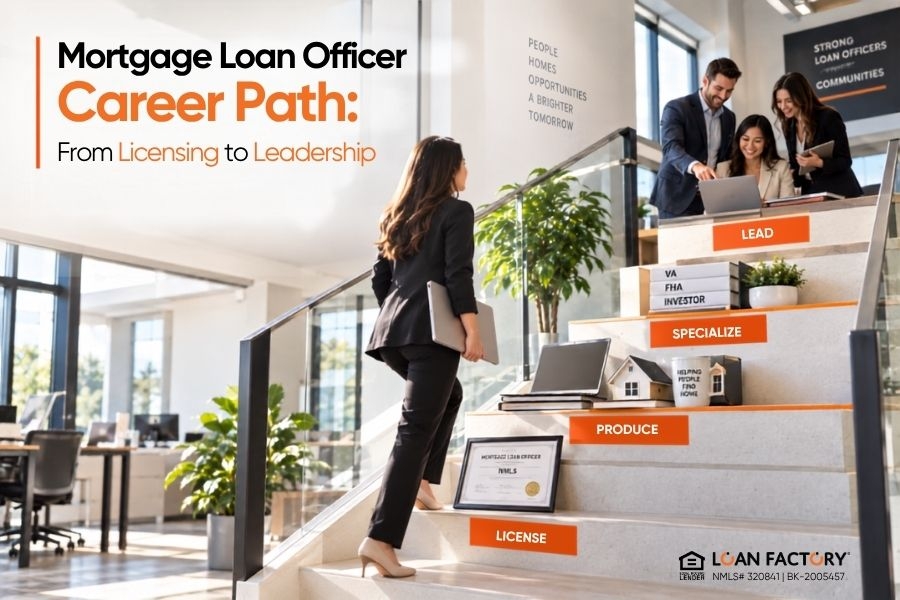
Mortgage Loan Officer Classes Online: How to Choose the Right Training Mortgage Loan Officer classes online can help you complete required pre-licensing education from home, but the course must be approved by NMLS and satisfy the requirements of the state where you plan to become licensed.
Most state-licensed Mortgage Loan Originators must complete at least 20 hours of NMLS-approved pre-licensing education. Some states require additional hours or state-specific coursework.
Before enrolling, confirm whether you need:
Pre-licensing education State-specific education SAFE MLO Test preparation Continuing education Practical employer training These forms of education support different stages of your career. They are not interchangeable.
Key Takeaways Online Mortgage Loan Officer classes can satisfy licensing education requirements when the specific course and provider are approved by NMLS. The federal minimum is generally 20 hours of pre-licensing education. States can require additional hours or specific state-law content. “Online” does not always mean fully self-paced. Online instructor-led PE requires active instructor and student interaction. A live webinar is not the same as a prerecorded course. SAFE MLO exam preparation does not replace required pre-licensing education. Completing a course does not automatically issue a mortgage license. Education providers report course completions to NMLS. Practical company training remains important after licensing. Important Note: Education formats, course approvals, licensing requirements, fees, state rules, and NMLS policies can change. Verify the current requirements for your intended state before enrolling or submitting a license application.
Can You Take Mortgage Loan Officer Classes Online? Yes. NMLS-approved mortgage education can be completed through several approved online formats.
Under the NMLS education specifications effective January 1, 2026, approved course formats include:
Classroom courses Classroom-equivalent webinars Online instructor-led courses Online self-study courses The permitted format depends on whether the course is pre-licensing education, continuing education, or a shorter state-specific course.
A course being delivered through the internet does not mean you can skip required instruction, participation, assessments, or course time.
Online Does Not Always Mean Self-Paced An online pre-licensing course can require:
A scheduled beginning and ending date Instructor participation Student discussions Daily or weekly assignments Knowledge checks Identity verification Minimum course time A final assessment Completion by a fixed deadline NMLS requires online instructor-led courses to include continual and visible instructor-to-student and student-to-student interaction. Students progress through the course according to its approved schedule and syllabus.
You can study from home while still having to follow a structured course calendar.
What Are Mortgage Loan Officer Classes Online? Online Mortgage Loan Officer classes are courses covering mortgage laws, licensing standards, consumer protection, ethics, products, and origination practices.
The phrase can refer to several different types of training.
Training type
Primary purpose
Counts toward licensing education?
Pre-licensing education Satisfies education required before a state MLO license application Yes, when NMLS-approved and applicable State-specific PE Satisfies additional state education requirements Yes, when approved for that state SAFE MLO exam prep Helps you prepare for the licensing test Usually no Continuing education Supports annual license renewal Yes, when NMLS-approved for CE Employer training Teaches systems, products, procedures, and business skills Usually no General mortgage education Builds knowledge or career awareness Only when specifically approved for PE or CE
A training company can offer several of these products at the same time.
Do not assume that every course on an NMLS-approved provider’s website provides licensing credit.
What Is the Required 20-Hour MLO Course? The SAFE Act generally requires a state-licensed MLO to complete at least 20 hours of NMLS-approved pre-licensing education.
The minimum curriculum includes:
Required content
Minimum hours
Federal mortgage law and regulations 3 hours Ethics, including fraud, consumer protection, and fair lending 3 hours Nontraditional mortgage lending 2 hours Mortgage Origination electives 12 hours Total minimum 20 hours
These are minimum federal requirements. Many state agencies impose state-specific education requirements in addition to, or as part of, the 20-hour structure.
Review the complete NMLS license requirements for mortgage professionals before selecting a course package or planning your licensing timeline.
What Does the 20-Hour Course Cover? Curriculum varies by provider, but common topics can include:
The SAFE Act Mortgage licensing and registration Truth in Lending Act and Regulation Z Real Estate Settlement Procedures Act and Regulation X Equal Credit Opportunity Act and Regulation B Fair lending Consumer privacy Mortgage advertising Loan Originator compensation Mortgage fraud Ethical conduct Conventional mortgages Government-backed loan programs Nontraditional mortgage products Applications Loan Estimates Closing Disclosures Income, assets, liabilities, and credit Debt-to-income calculations Loan-to-value calculations Loan Origination activities The course provides an important regulatory and mortgage foundation.
It will not teach every lender overlay, company procedure, income calculation, or borrower situation you will encounter after licensing.
Understanding the approved delivery format can prevent scheduling problems and unexpected course requirements.
Classroom-Equivalent Webinar A classroom-equivalent course is delivered through a live feed of an instructor presenting the material.
It is not a prerecorded lesson.
This format can be used for both pre-licensing and continuing education.
A webinar can require you to:
Attend at specific times Keep your camera or participation tools active Respond to polls Complete activities Remain present for the required course time This format can fit you well when you prefer real-time instruction and a fixed schedule.
Online Instructor-Led Course Online instructor-led, or OIL, courses provide greater location flexibility while maintaining a structured learning environment.
Under the current NMLS standards, the OIL format is reserved for pre-licensing education, except for qualifying state-specific PE courses of 10 hours or less.
OIL courses require:
Continual instructor involvement Student-to-student interaction Structured progression A defined course offering period Required activities and assignments This format can work well when you want schedule flexibility but still benefit from instructor feedback.
Online Self-Study The online self-study format is generally reserved for:
Continuing education State-specific PE courses of 10 hours or less It is not the standard approved format for a comprehensive 20-hour federal pre-licensing course.
Self-study courses can still include:
Required seat time Identity checks Knowledge assessments Course sequencing Completion deadlines Classroom Course An in-person classroom course can be a good fit when you prefer:
Face-to-face instruction A fixed learning environment Immediate questions and answers Fewer online distractions Direct interaction with other students The best format depends on how you learn, your schedule, and the requirements of the course.
Do All States Require the Same Course? No.
The federal 20-hour requirement creates a common foundation, but state agencies can require:
Additional PE hours State-law instruction A specific number of state-content hours A separate state course Education before application Education within a certain period Additional requirements for a particular license type NMLS maintains state-specific PE and CE information for participating licensing agencies.
Before paying for a course, identify:
The state where you intend to become licensed. The agency issuing the license. The exact license type. The required federal PE. Any state-specific PE. Whether the state has a sequencing requirement. Whether the state enforces a separate PE expiration rule. When you plan to originate in several states, you can need multiple state-specific courses.
Pre-Licensing Education vs. SAFE MLO Exam Prep Pre-licensing education and exam preparation support the same career goal, but they serve different purposes.
Pre-licensing education
SAFE MLO exam prep
Satisfies an education requirement Supports test preparation Must be NMLS-approved for licensing credit Does not usually provide PE credit Completion is reported to NMLS Practice activity is generally private Uses an approved delivery format Can use quizzes, videos, or mock exams Covers required SAFE Act subject areas Focuses on tested concepts and strategy Does not guarantee test passage Does not replace required PE
Exam preparation can include:
Practice questions Topic review Mortgage calculations Timed mock exams Mistake analysis Scenario-based practice Test-taking strategies Review our MLO exam preparation guide to build a structured study plan based on the official content outline, mortgage laws, calculations, scenario questions, mistake review, and timed practice.
Can You Take the SAFE MLO Test Before Completing PE? NMLS does not generally require you to complete a pre-licensing course before taking the SAFE MLO Test.
You must still complete the applicable PE before submitting a state license application. NMLS’s current applicant guidance also recommends completing required education before scheduling the exam, and individual states can impose their own sequence.
A practical sequence for many people is:
Complete pre-licensing education. Review the SAFE MLO Test outline. Complete focused exam preparation. Take realistic practice tests. Schedule the official exam. Complete the license application process. This gives you a stronger educational foundation before test day.
What Does the SAFE MLO Test Cover? The current SAFE MLO Test outline includes five major content areas:
Test category
Percentage
Federal mortgage-related laws 24% Uniform State Content 11% General mortgage knowledge 20% Mortgage Loan Origination activities 27% Ethics 18%
NMLS advises test takers to answer according to current statutes, regulations, and rules, even when a recent change has not yet been added to the published outline.
An online course can introduce these subjects, but you should still practice:
Disclosure deadlines Mortgage calculations Similar federal regulations Application scenarios Licensing distinctions Prohibited conduct Ethical decision-making The guide explaining how hard the NMLS exam is provides additional context about the test format, pass-rate data, difficult subject areas, practice strategy, and study planning.
How Do You Verify an NMLS-Approved Course? Verify both the course provider and the specific course.
Only NMLS-approved providers are authorized to deliver education used to satisfy MLO licensing requirements. The provider is responsible for reporting the completed course to NMLS.
Before enrolling, confirm:
Provider’s legal name NMLS provider ID Course ID Course category Number of approved hours Delivery format Federal or state-specific designation Intended licensing agency Course start date Course completion deadline Refund or transfer policy Completion-reporting process A provider appearing on the approved list does not mean every product it sells qualifies for NMLS credit.
Questions to Ask Before Paying Ask the provider:
Is this specific course currently NMLS-approved? Is it PE, CE, state-specific education, or exam prep? Does it satisfy my intended state? Are additional state hours included? What is the approved delivery format? Is live attendance required? How often must I participate? How long do I have to finish? What happens when I miss a required session? Is a final assessment required? When will my completion be reported? What happens when the credit does not appear? A legitimate provider should be able to provide the course ID and approved format.
How Long Do Online Mortgage Loan Officer Classes Take? The federal course is measured in approved instructional hours, but the calendar time depends on:
Delivery format Provider schedule State-specific coursework Required breaks Instructor interaction Assignments Assessments Daily participation limits Course completion window A 20-hour course should not be interpreted as a product that can always be completed in one uninterrupted 20-hour session.
The fastest available option is not automatically the best course for you.
You can benefit from additional study time when you are new to:
Mortgage terminology Federal laws Loan products Applications Disclosure timing Financial calculations Licensing concepts Choose a schedule that allows you to understand and retain the material.
How to Choose the Right Online MLO Course 1. Confirm It Satisfies Your Requirement Start with licensing credit.
Verify:
NMLS approval Current course status Correct number of hours Correct category Correct state coverage Approved delivery format Do not select a course solely because its marketing says “NMLS training.”
2. Choose a Format That Matches Your Learning Style Consider whether you learn best through:
Live instruction Structured online discussion Reading Videos Visual timelines Scenario exercises Calculation practice Short quizzes Instructor feedback A course that fits your schedule but not your learning style can make exam preparation more difficult.
3. Review Instructor and Technical Support Useful support can include:
Instructor availability Technical assistance Clear course instructions Explanations of incorrect answers Progress tracking Help with course reporting Support for missed or incomplete activities Support does not guarantee completion or test passage, but it can reduce avoidable confusion.
4. Examine the Learning Materials Look for material that goes beyond long lists of definitions.
Helpful features can include:
Borrower scenarios Disclosure timelines Mortgage calculations Product comparisons Ethical case studies Knowledge checks Explanations of incorrect answers Summaries of major laws 5. Review Completion Policies Confirm:
Attendance requirements Participation requirements Final assessment standards Course deadline Extension policy Transfer policy Refund policy Completion-reporting timeline Providers generally report course completions to NMLS, and education records typically appear within seven calendar days. Verify the credit in your NMLS account before submitting a license application.
Common Mistakes With Online MLO Classes Buying a Course Before Selecting a State A national package may not satisfy all requirements for your intended license.
Choose the state and licensing agency first.
Buying Exam Prep Instead of Pre-Licensing Education A program can contain thousands of practice questions without providing any licensing credit.
Confirm the course category before paying.
Assuming Every Online Course Is Fully Self-Paced A comprehensive online PE course can require scheduled interaction and active instructor participation.
Review the approved delivery format.
Verifying the Provider but Not the Course An approved provider can also sell:
General education Career coaching Exam prep Unapproved supplemental training Confirm the specific course ID.
Ignoring State-Specific Education The federal 20 hours might not complete your state’s requirement.
Check the applicable licensing agency.
Using a Different Name or NMLS ID Give the provider your name and NMLS ID exactly as they appear in your NMLS account.
Incorrect information can delay reporting.
Expecting Education to Guarantee a License Education is one licensing component.
You can also need:
The SAFE MLO Test An Individual MU4 filing Fingerprints Criminal background review Credit authorization State documents Fees Company sponsorship Regulator approval Does Pre-Licensing Education Expire? It can.
Under the NMLS PE expiration policy, you can be required to retake the federal 20 hours when you:
Do not obtain a valid state MLO license or federal registration within three years of completing the federal PE requirement; or Do not obtain a valid state license or federal registration within three years after your last period of MLO licensing or registration. State implementation of the policy can vary, so review the requirements of the applicable agency.
Do not complete PE years before you realistically expect to continue the licensing process without checking expiration implications.
What Happens After You Complete the Course? Completing pre-licensing education does not automatically authorize you to originate mortgages.
A common state-licensing path includes:
Identify state requirements. Create or maintain your NMLS record. Complete the required PE. Verify that the education was reported. Prepare for the SAFE MLO Test. Pass the test. Submit the Individual MU4 application. Complete applicable fingerprints and background review. Authorize the required credit report. Provide state-specific documents. Establish a company relationship. Obtain sponsorship where required. Receive regulator approval. Complete company onboarding and training. You should not take applications or offer or negotiate residential mortgage terms until the required licensing, authority, sponsorship, and company conditions are satisfied.
For broader education throughout the licensing and early-career process, explore Loan Factory’s Loan Officer education resources .
Prepare With the Loan Factory SAFE MLO Exam Center At Loan Factory, we offer a free supplemental exam-preparation resource for aspiring Mortgage Loan Originators.
The current Loan Factory SAFE MLO Exam Center includes:
A question bank with more than 10,000 practice questions National and state-related coverage Explanations after answers Progress tracking Mistake review Quick quizzes Five full-length timed exams These tools are designed to support review and test practice.
You can begin practicing through the free Loan Factory SAFE MLO Exam Center .
The Exam Center is not:
An NMLS-approved pre-licensing course NMLS A state regulator The official SAFE MLO Test A replacement for PE A guarantee that you will pass A guarantee of licensing or employment Use it together with your approved education, the official test outline, current regulations, and detailed mistake review.
What Training Do Loan Officers Need After Licensing? Pre-licensing education provides foundational legal and mortgage knowledge.
It does not fully prepare you to manage real borrowers and active loan files.
After licensing, practical training can include:
Borrower consultations Mortgage applications Credit review Income analysis Asset documentation Debt-to-income calculations Loan products Pricing Preapproval procedures Loan Estimates Processing Underwriting conditions Mortgage fraud prevention CRM use Marketing Referral relationships Compliance Technology systems Review the guide explaining Mortgage Loan Officer duties to understand how licensing education translates into borrower consultations, applications, documentation, processing, underwriting communication, compliance, and pipeline management.
Employer training supplements licensing education.
Unless a particular employer course is expressly identified as NMLS-approved, it should not be used to satisfy PE or CE requirements.
How Loan Factory Supports Continued Training At Loan Factory, we provide eligible newly licensed and experienced Loan Officers with practical education, technology, and operational resources.
Loan Factory Academy Loan Factory Academy provides self-paced training across areas such as:
Loan Officer onboarding Roles and responsibilities Mortgage fundamentals Income, assets, credit, and DTI Loan programs Processing Disclosures and fees Compliance Sales and marketing AI and technology Lender-specific education The Academy also includes newly joined Loan Officer modules covering applications, compensation, pricing, loans, and mortgage-fraud prevention.
Academy courses are practical company training. They do not replace NMLS-approved PE or CE unless a particular course is expressly approved for that purpose.
TERA and Technology Training Eligible Loan Factory Loan Officers can receive access to TERA, our integrated mortgage platform.
TERA brings together:
CRM Point of sale Loan Origination System Pricing engine Marketing Support Marketplace resources A complete mortgage technology platform for Loan Officers should help connect borrower relationships, applications, pricing, lender comparison, loan workflow, marketing, compliance, and support.
Loan Factory also provides training on how to use technology within the mortgage workflow. Our guide to AI mortgage technology for Loan Officers explains how connected tools can support follow-up, pricing, communication, workflow organization, and file management without replacing professional judgment.
Technology can help you organize the work, but it does not replace:
Licensing Mortgage knowledge Professional judgment Accurate borrower communication Underwriting Company supervision Compliance responsibility Live Training and Support Depending on your role, onboarding, licensing, and current program requirements, support can include:
Live Loan Officer assistance Scenario guidance Marketing resources Underwriting support Processing Corporate Coach resources Departmental training When evaluating a mortgage company, compare the complete combination of Loan Officer support and technology , not only the advertised commission percentage.
Training and coaching do not guarantee applications, loan approval, closings, commission, or income.
What Should a Newly Licensed Loan Officer Compare? After completing education and licensing, compare more than the compensation headline.
A supportive platform should address:
Practical onboarding Mortgage and product training Scenario assistance CRM and pipeline management Pricing and lender comparison Processing Underwriting support Marketing resources Compliance procedures Live support Technology expenses Company and transaction fees The guide to choosing the best platform for new Loan Officers provides a structured framework for comparing training, technology, lender access, processing, support, costs, worker classification, and business-development expectations.
Why Evaluate Loan Factory After Licensing? Loan Factory can be worth evaluating when you want a platform that combines:
TERA technology Loan Factory Academy Live training Mortgage Exam Center Lender access Marketing support Underwriting resources In-house processing Live Loan Officer support Corporate Coach resources The platform supports your professional development, but you remain responsible for:
Licensing Learning Relationship development Accurate applications Follow-up Borrower communication Compliance You can review the current Loan Factory Loan Officer platform or call 714-591-8143 to learn about licensing, training, technology, compensation, and onboarding.
Acceptance remains subject to background review, licensing eligibility, management approval, state availability, applicable agreements, and completed onboarding.
Conclusion: Choosing Mortgage Loan Officer Classes Online The right Mortgage Loan Officer classes online should:
Come from an NMLS-approved provider Satisfy the requirements of your intended state Use an approved delivery format Fit your schedule and learning style Provide clear completion and reporting rules Help you understand—not only memorize—the material Before enrolling, determine whether you need:
Federal pre-licensing education State-specific PE SAFE MLO exam prep Continuing education Practical career training Completing the required course is an important step, but it is only part of becoming a licensed and effective Mortgage Loan Officer.
After completing your education, exam, and applicable licensing requirements, you can register to begin Loan Factory’s Loan Officer review process .
Registration begins the review process and does not guarantee licensing, sponsorship, acceptance, employment, contractor engagement, compensation, production, or system access.
Experience Note The course comparisons, selection criteria, licensing roadmap, and training recommendations in this article are educational frameworks based on current NMLS guidance and common MLO licensing considerations.
They do not represent approval of a specific course or provider, a test result, licensing decision, sponsorship outcome, employment decision, or Loan Factory onboarding result.
Sources NMLS Education FAQ — Pre-Licensure Education NMLS Approved Education Policies and Course Formats, effective January 1, 2026 NMLS State-Specific Education Requirements NMLS Approved Course Provider List NMLS PE Expiration Policy SAFE MLO National Test Content Outline Loan Factory SAFE MLO Exam Center Loan Factory Academy Loan Factory Loan Officer Platform About the Author Loan Factory Loan Officer Education and Recruiting Team
We create practical resources to help aspiring, newly licensed, and experienced Loan Officers understand mortgage education, SAFE exam preparation, licensing, technology, compliance, training, and business operations.
Our goal is to give you clear information you can use to select appropriate education, prepare for licensing, and build a stronger foundation for your mortgage career.
Disclaimer This content is for educational purposes only and is not legal, licensing, regulatory, employment, tax, compensation, or career advice.
Education requirements, approved providers, course formats, state-specific hours, reporting procedures, expiration rules, fees, testing procedures, and licensing requirements can change. Verify current information through NMLS and the appropriate state regulator.
Loan Factory is a private mortgage company. We are not NMLS, a state regulator, a test administrator, or a government agency.
Loan Factory Academy and the Loan Factory SAFE MLO Exam Center do not replace required NMLS-approved education unless a particular course is expressly identified as approved for that purpose.
Nothing in this article guarantees course completion, SAFE MLO Test passage, licensing, sponsorship, employment, contractor engagement, compensation, production, income, or career results.
Frequently Asked Questions