Getting a mortgage with irregular income may be possible even when your earnings change from month to month. For borrowers with variable earnings, the key question is usually not whether every paycheck is identical, but whether the income can be properly documented and meets applicable requirements for history, stability, and expected continuance.
That means freelancers, gig workers, commission-based employees, seasonal workers, independent contractors, self-employed borrowers, and people with multiple jobs still have viable mortgage options.
Key Takeaways Irregular income does not automatically disqualify you: Qualification depends on documentation, history, stability, and continuity. History over snapshots: Lenders evaluate your income trend over time rather than relying on a single high or low paycheck. Multiple income streams count: Income from multiple jobs or sources can be combined if each meets program requirements. Declining trends require analysis: A downward trend in earnings may affect how much qualifying income can be used. Loan options exist: Programs range from conventional and government-backed loans to Non-QM and bank statement programs. Important: Mortgage requirements vary by loan program, lender, income type, property, and individual borrower circumstances. Having a particular type of income does not guarantee that it can be used for qualification.
What Is Considered Irregular Income for a Mortgage? Irregular income is income that does not remain exactly the same from one pay period or month to the next.
The borrower may still earn substantial income over the course of a year, but the amount, timing, hours worked, or source of that income may fluctuate.
Examples may include, but are not limited to:
Commission income Bonuses Overtime Tips Seasonal employment Freelance income Gig work Contract or 1099 income Self-employment income Variable hourly income Multiple part-time jobs Rental income Other eligible recurring income sources Irregular income is not limited to self-employed borrowers.
For example, a W-2 employee may have a fixed hourly rate but work a different number of hours each week. Another borrower may receive a base salary plus commissions that change significantly from month to month.
Fannie Mae distinguishes between fixed and variable base income. Variable base income can include situations where hours fluctuate, or the hourly rate varies.
The underwriting question is therefore generally not whether every paycheck is identical, but whether the applicable income can be documented, analyzed, and reasonably relied upon for qualification.
Can You Get a Mortgage With Irregular Income? Yes, potentially.
Federal Ability-to-Repay requirements generally require creditors making covered mortgages to make a reasonable and good-faith determination that a consumer can repay the loan.
That assessment may consider factors such as
Current or reasonably expected income or assets Employment status when employment income is being relied upon Proposed mortgage payments Other mortgage-related obligations Existing debt obligations Debt-to-income ratio or residual income Credit history Mortgage rules recognize many potential income sources, including wages, self-employment income, commissions, bonuses, tips, rental income, retirement income, interest, dividends, and other qualifying sources.
The challenge for borrowers with irregular income is often documenting and calculating usable qualifying income, rather than simply proving that income exists.
How Do Lenders Evaluate Irregular Income? A lender generally needs to determine how much income can reasonably be used when evaluating your mortgage application.
For variable income, that can involve looking beyond your latest paycheck.
Depending on the income type and loan program, the review may include several factors.
1. Income History Past income can help establish whether the income source has a reliable history.
For example, Fannie Mae generally requires lenders to evaluate employment history when employment-related income is being used. Specific history requirements differ depending on the type of income.
A longer history does not necessarily mean every year must show exactly the same earnings.
Instead, the lender may need to understand the pattern.
2. Income Stability An income stream that changes from month to month is not necessarily unusable.
The lender may analyze whether the income demonstrates a sufficiently stable pattern under the applicable guidelines.
This distinction is important:
Variable does not automatically mean unstable.
A salesperson might receive different commissions every month but have a documented history of earning commission income over time.
3. Income Trend The direction of your earnings may also matter.
Suppose your qualifying income history looks like this:
Year
Income
Year 1 $72,000 Year 2 $84,000 Current annualized pace $88,000
That pattern is different from:
Year
Income
Year 1 $88,000 Year 2 $72,000 Current annualized pace $60,000
A lender should not necessarily assume that an earlier, higher income level still represents what you currently earn.
Declining income may require additional analysis, depending on the income type and applicable underwriting requirements.
4. Expected Continuance Qualifying income generally must meet applicable requirements regarding its expected continuance.
Fannie Mae, for example, describes stable and predictable income as a foundational component of underwriting and requires lenders to evaluate whether qualifying income can reasonably be expected to continue.
This is one reason documentation matters so much for borrowers whose income comes from several sources.
How Is Irregular Income Calculated for a Mortgage? There is no single calculation that applies to every type of irregular income.
Depending on the program and income source, the lender may review historical earnings, current earnings, the length of time the income has been received, and whether the income is increasing, stable, or declining.
An average may be appropriate in some circumstances, but borrowers should not assume that a lender will simply add two years of income together and divide by 24.
The applicable calculation depends on the income type and underwriting guidelines.
Why Two Borrowers With Similar Income May Qualify Differently In mortgage lending, two borrowers with similar annual earnings can have different qualifying income because the source, history, documentation, and trend of those earnings may differ.
That is why irregular-income scenarios are generally best evaluated using the borrower's complete financial picture rather than a single paycheck, bank deposit, or annual income number.
Example: Base Salary Plus Commission Income Consider a borrower who earns a base salary plus commissions.
Assume the borrower received:
Base salary: $4,000 per month Previous-year commissions: $24,000 Most recent-year commissions: $30,000 The lender would first determine whether the commission income satisfies the applicable history and documentation requirements.
If it does, the lender would calculate the amount of commission income that can be used according to the applicable guidelines and review the income trend.
The lender would then combine eligible qualifying income with other applicable income before evaluating the borrower's debts and mortgage payment.
The important point is that the borrower cannot necessarily take the highest recent commission month and multiply it by 12.
Mortgage-qualifying income and actual cash received during a strong month are not necessarily the same thing.
This example is for illustration only and does not represent a specific loan approval or underwriting calculation.
What Documents Are Needed for a Mortgage With Irregular Income? Required documents depend on your income type, mortgage program, underwriting method, and personal circumstances.
You may be asked for documents such as:
Recent pay stubs W-2 forms 1099 forms Personal federal income tax returns Business tax returns Bank statements Verification of employment Profit-and-loss statements Documentation of commissions, bonuses, overtime, or tips Documentation supporting other qualifying income Documentation for assets or reserves Letters of explanation when additional clarification is needed Not every borrower will need every document on this list.
For example, the documentation required for a salaried employee receiving variable bonuses may be different from the documentation required for a self-employed business owner.
The best approach is to determine early which income sources you want the lender to consider and what documentation is required for each. For a broader preparation guide, see our mortgage application document checklist .
How Does DTI Work With Irregular Income? Debt-to-income ratio , or DTI, compares qualifying monthly debt obligations with gross monthly income used for qualification.
A simplified formula is:
DTI = Total monthly debt obligations ÷ Gross monthly qualifying income × 100
For example, suppose a borrower has:
Gross monthly qualifying income: $8,000 Monthly debts included in the calculation: $3,200 The simplified DTI calculation would be:
$3,200 ÷ $8,000 = 40%
The key phrase for borrowers with irregular earnings is qualifying income.
You may actually receive $10,000 during a strong month, but if underwriting determines that $8,000 is the appropriate monthly qualifying income, the DTI calculation would generally be based on the qualifying amount.
DTI requirements can vary by mortgage program and individual loan circumstances.
Can You Use Multiple Sources of Income to Qualify for a Mortgage? Having several income sources does not automatically create a problem.
A borrower might have:
A full-time job plus a part-time job Salary plus commission Salary plus bonus or overtime Employment plus self-employment Multiple part-time positions Employment plus eligible rental income The lender may potentially consider more than one income source, but each source generally needs to meet the applicable requirements for that particular income type.
For example, Fannie Mae's current guidance addresses borrowers qualifying with multiple employment sources and notes that requirements apply to each specific income type.
This is another reason borrowers should avoid assuming that every dollar deposited into a bank account will automatically become qualifying mortgage income.
Mortgage Options for Borrowers With Irregular Income Borrowers with irregular income are not necessarily limited to one type of mortgage.
Potential options depend on eligibility and may include:
Conventional Loans A conventional mortgage may be possible when the borrower's income can be documented and meets the applicable underwriting requirements.
Variable income itself does not automatically rule out conventional financing.
FHA Loans Some borrowers may qualify for FHA financing depending on their complete financial profile and compliance with FHA loan requirements .
Income documentation and calculation requirements still apply.
VA Loans Eligible veterans, active-duty service members, and certain surviving spouses may consider a VA home loan .
Eligibility for the VA program does not eliminate income, credit, underwriting, or lender requirements.
USDA Loans Eligible borrowers purchasing qualifying properties may consider USDA financing, subject to program requirements, including household and property eligibility rules.
Non-QM Loans Some borrowers whose income profile does not fit traditional agency underwriting may explore Non-QM loans .
Depending on the lender and program, these may use alternative approaches to documenting or evaluating income.
However, Non-QM does not mean “no qualification. ”
Borrowers still need to meet the requirements of the specific program, and rates, fees, down-payment requirements, reserves, and other terms can differ from conventional financing.
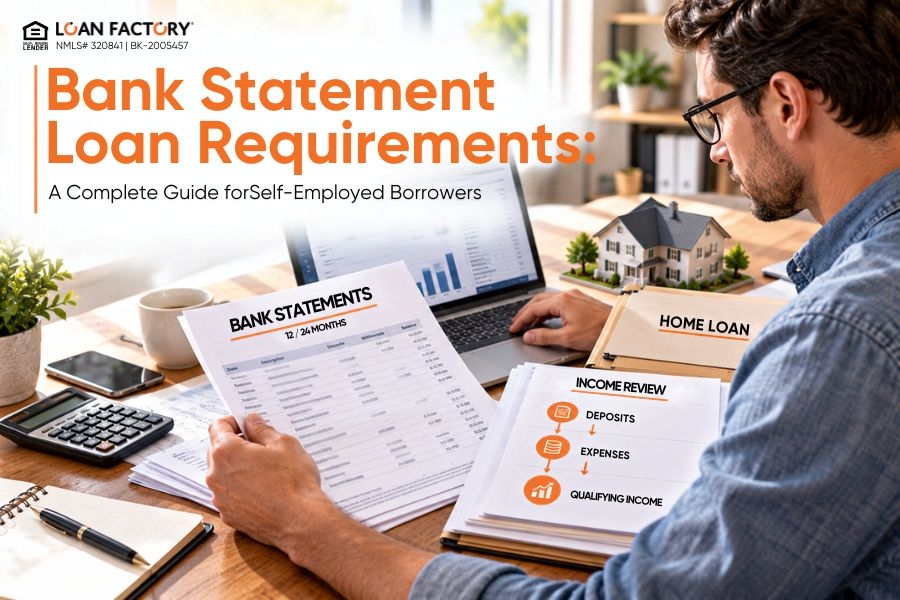
Bank Statement Loans Bank statement loans may be worth exploring for certain self-employed borrowers.
Instead of relying solely on traditional tax-return income calculations, certain programs may evaluate eligible deposits or cash flow using bank statements according to the program's guidelines.
This can potentially help borrowers whose tax returns do not fully reflect the cash flow of their business.
The lender may review factors such as:
Personal or business bank statements Eligible versus ineligible deposits Business expenses Ownership percentage Credit profile Down payment Reserves Property type Program requirements vary considerably among lenders.
What Can Help You Qualify With Irregular Income? Irregular income may still support mortgage qualification when you have sufficient documentation to show your income history, current earnings, and the stability of the income being used to qualify.
Factors that may strengthen your overall financial profile include:
A documented history of receiving the income Stable or increasing earnings Organized income and employment records Manageable monthly debt obligations Sufficient funds for the transaction Required reserves, when applicable A credit profile that meets program requirements Multiple income sources that meet applicable requirements You do not necessarily need to earn the same amount every month to qualify for a mortgage. What matters is whether your income can be documented and how much of it can be used as qualifying income under the requirements of the selected mortgage program.
How to Apply for a Mortgage With Irregular Income Applying for a mortgage with irregular income starts with understanding how lenders evaluate your earnings and choosing a loan program that fits your financial situation.
Step 1: Identify Your Income Sources List your income sources, such as salary, commissions, bonuses, freelance earnings, or self-employment income. Each source must meet the applicable qualification requirements.
Step 2: Gather Your Financial Documents Prepare relevant pay stubs, W-2s, 1099s, tax returns, bank statements, and employment records. Required documents vary by income type and loan program.
Step 3: Review Your Qualifying Income Work with a lender to determine how much of your irregular income may be used for qualification. Review your monthly debt obligations and available assets.
Step 4: Compare Mortgage Programs Explore eligible conventional, government-backed, and alternative-documentation loans. Compare interest rates, APR, closing costs, down payments, and reserve requirements.
Step 5: Submit Your Application Complete your mortgage application and provide the requested financial information. Be prepared to explain income fluctuations or supply additional documentation.
Step 6: Complete Underwriting and Closing The lender reviews your income, credit, assets, and other eligibility factors. If approved and all closing conditions are satisfied, review your final loan terms before closing.
Important Note: Irregular income does not automatically prevent mortgage approval. Eligibility depends on documented qualifying income and the requirements of the selected mortgage program.
Common Challenges With Irregular Income Some situations may require additional review or reduce the amount of income available for qualification.
Examples may include:
A recent significant decline in earnings Very limited history of receiving a particular income source Income that cannot be adequately documented Recent major changes in employment or business structure Unexplained deposits when documentation is required Income that does not satisfy applicable continuance requirements High debt obligations relative to qualifying income A borrower can have substantial annual cash flow and still encounter mortgage qualification challenges if the income cannot be documented or used under the applicable loan guidelines.
Affordability Note : Qualifying for a mortgage and comfortably affording one are not exactly the same thing. If your income fluctuates, consider whether the mortgage payment would remain manageable during lower-income months after accounting for property taxes, homeowners insurance, HOA dues if applicable, maintenance, repairs, and other recurring debts.
How to Compare Mortgage Options With Irregular Income Start by comparing programs using the same financial scenario.
Consider:
How will my qualifying income be calculated? Which income sources can be considered? How much income history is needed for my specific income type? How would a recent increase or decrease in income be treated? Can income from my second job be considered? What documentation will I need? Does the program require reserves? What down payment is required? What are the interest rate and APR? Are discount points involved? What lender or broker fees apply? What is the estimated monthly payment? What are the estimated cash-to-close requirements? Do not compare mortgages based only on the interest rate.
Loan structure, APR, points, credits, fees, mortgage insurance, and documentation requirements can materially affect the overall comparison.
Common Mistakes When Applying With Irregular Income One common mistake is assuming that your highest recent month represents the income a lender will use.
Another is waiting until underwriting to organize tax returns, bank statements, employment records, or business documents.
Borrowers should also be careful about:
Assuming every income source automatically qualifies Making large undocumented deposits before applying Opening significant new debt during the mortgage process Changing jobs or business structures without understanding the potential underwriting impact Comparing only monthly payments instead of overall loan terms Assuming Non-QM means no documentation Assuming a prequalification or preapproval guarantees final approval Understanding the documentation requirements early can reduce surprises later in the process. Learn what mortgage pre-approval is before beginning your home search.
How Loan Factory Can Help Irregular income may make mortgage qualification more complicated because lenders may evaluate income history, documentation, and qualifying income differently depending on the loan program and income source.
Loan Factory helps homebuyers compare mortgage options from 240+ wholesale lenders using technology designed to make the loan process clearer, faster, and more transparent.
If you earn commission, work multiple jobs, receive 1099 income, are self-employed, or have another type of variable income, Loan Factory can help you review your income sources, debts, credit profile, assets, and available documentation to identify mortgage options that may fit your situation.
What Loan Factory Offers Borrowers With Irregular Income Access to 240+ wholesale lenders Side-by-side mortgage options to compare rate, APR, payment, fees, and cash-to-close TERA technology platform to support pricing, loan comparison, document flow, and loan review Loan advisor support to review commission, bonus, overtime, 1099, self-employment, multiple-job, and other variable-income scenarios Access to Conventional, FHA, VA, USDA, Jumbo, Non-QM, and other available programs depending on eligibility Alternative income-documentation options that may be available for certain borrowers No application fee to start reviewing your options Guidance on the documents that may be needed based on your income type and loan program Loan Factory does not guarantee that every income source can be used for mortgage qualification or that a particular loan program will be available to every borrower.
But comparing lenders and loan programs can help you understand how your income may be evaluated, what documentation may be required, and which available mortgage structure fits your financial situation.
Have irregular or variable income?
Compare mortgage options: LoanFactory.com/quote
Apply online: LoanFactory.com/apply
Estimate your payment: LoanFactory.com/mortgage-calculator
Set up a rate alert: LoanFactory.com/mortgage-rate-alert
Call or text: (660) 333-3333
Conclusion You can potentially get a mortgage even when your income changes from month to month.
The central issue is whether the income being used to qualify can be documented and meets the applicable requirements for history, stability, calculation, and expected continuance.
Your income is also only one part of the mortgage decision. Debts, credit history, assets, employment, property, down payment, loan program, and proposed housing expenses may all affect the outcome.
If your income is irregular, start by organizing your financial records and determining which income sources may be used for qualification. Then compare mortgage programs based on the same borrower and property scenario.
Sources Disclaimer This article is for educational purposes only and is not a commitment to lend or a guarantee of loan approval. Mortgage programs, underwriting requirements, interest rates, APRs, fees, down-payment requirements, income calculations, and documentation requirements vary by lender, loan program, property, and borrower circumstances and may change without notice. Additional conditions and restrictions may apply.
Loan Factory, Inc. | NMLS #320841 | Equal Housing Lender
About the Author Written by: Loan Factory Mortgage Education TeamReviewed by: Loan Factory Licensed Mortgage Professionals
Loan Factory is a mortgage brokerage that helps borrowers compare mortgage options from a broad network of wholesale lenders. Our mortgage professionals work with borrowers across a variety of financial and income situations, including traditional employment, self-employment, investment properties, and other qualifying scenarios.
Frequently Asked Questions About Mortgages With Irregular Income