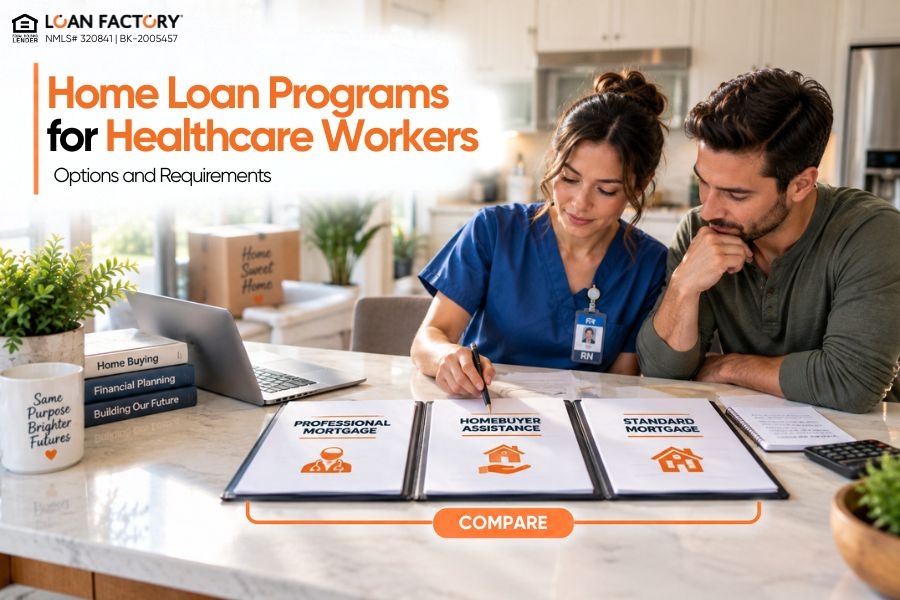
Buying a home in California can be challenging for teachers. Home prices are high in many school districts, and even teachers with stable income may struggle with down payment, closing costs, student loans, or affordability.
The good news is that there are several home loan programs for teachers in California worth reviewing. Some are statewide programs. Some are available through local cities or counties. Others are not teacher-only programs, but teachers may still qualify based on income, first-time buyer status, occupation, or property location.
The key is not just finding a program with a big headline benefit. The right option should fit your income, credit, county, school employment, home price, loan type, and long-term plan.
Quick Answer: What Home Loan Programs Can California Teachers Review? California teachers may want to compare these options:
Program
Best For
What It May Offer
CalHFA MyHome Assistance Program First-time buyers using eligible CalHFA first mortgage programs Deferred-payment assistance for down payment or closing costs CalHFA FHA, VA, USDA, or Conventional first mortgage Buyers who meet CalHFA income, credit, property, and education requirements 30-year fixed-rate mortgage options GSFA Platinum Program California buyers who need down payment or closing cost assistance DPA that may include a second mortgage and/or gift component California Dream For All Eligible first-time, first-generation buyers when funding/application windows are available Shared appreciation loan assistance HUD Good Neighbor Next Door Full-time Pre-K–12 teachers buying eligible HUD homes 50% discount on eligible HUD homes in revitalization areas Local city or county teacher assistance Teachers buying in specific California markets Grants, silent seconds, deferred loans, or employer-linked assistance FHA, VA, USDA, Conventional loans Teachers who qualify through standard mortgage programs Core mortgage financing options
Teachers should compare both the mortgage and the assistance structure. A program may help with upfront cash, but it can also affect your rate, monthly payment, refinance options, or repayment later.
Is There a Special California Teacher Home Loan Program? California used to have teacher-focused assistance tied to CalHFA’s School Teacher and Employee Assistance Program. However, buyers should be careful with outdated articles because program names and rules have changed over time.
Today, many California teachers should start by reviewing:
CalHFA first mortgage programs CalHFA MyHome Assistance Program GSFA down payment assistance HUD Good Neighbor Next Door Local county, city, school district, or employer housing programs Standard FHA, VA, USDA, and Conventional loan options Some current assistance options may still treat school employees favorably, but teachers should verify details with an approved lender before relying on an old program name.
1. CalHFA MyHome Assistance Program The CalHFA MyHome Assistance Program is one of the most important statewide assistance options for California homebuyers.
MyHome may provide a deferred-payment junior loan to help with down payment and/or closing costs when paired with eligible CalHFA first mortgage programs.
This program may help teachers who:
Are first-time homebuyers Meet CalHFA income limits Occupy the property as a primary residence Complete required homebuyer education Use an eligible CalHFA first mortgage Meet credit, property, and lender requirements The assistance is not the same as free money. Because it is a subordinate loan, repayment may be due when the home is sold, refinanced, transferred, or the first mortgage is paid off.
Teachers should ask:
How much assistance may I qualify for? Is the assistance deferred or repayable? Does interest accrue? When is it due? Can I refinance later without paying it off? How does it affect my monthly payment and closing cost? 2. CalHFA First Mortgage Programs CalHFA offers several first mortgage options that may pair with assistance programs.
These may include:
CalHFA Loan Type
Who It May Fit
CalHFA FHA Buyers who need flexible credit or down payment options CalHFA VA Eligible veterans, active-duty service members, or surviving spouses CalHFA USDA Buyers purchasing eligible rural properties CalHFA Conventional Buyers who qualify under conventional guidelines CalPLUS options Buyers who may need closing cost support, depending on program structure
For teachers, CalHFA may be useful because it combines a first mortgage structure with assistance options. However, every program has rules for income, property type, homebuyer education, occupancy, and approved lenders.
3. GSFA Platinum Down Payment Assistance The Golden State Finance Authority, often called GSFA, offers down payment and closing cost assistance programs for California homebuyers.
The GSFA Platinum Program may be worth reviewing because it is not only for first-time buyers and can be used for an owner-occupied primary residence in California.
Depending on the option available, assistance may include a second mortgage, a gift component, or a combination. Terms can vary by program, market conditions, lender, and borrower profile.
This may help teachers who:
Are not first-time buyers Need help with down payment or closing costs Want to compare alternatives to CalHFA Are buying a primary residence in California Meet income, credit, loan type, and program guidelines Teachers should ask a loan advisor to compare GSFA with CalHFA because one may offer better total cost depending on the rate, assistance amount, repayment terms, and buyer profile.
The California Dream For All Shared Appreciation Loan is a powerful but limited-availability program for eligible California buyers.
This program is not teacher-specific, but teachers may qualify if they meet the program’s requirements.
Dream For All may be useful for eligible buyers who:
Are first-time homebuyers Meet first-generation homebuyer rules Meet income limits Complete required education Work with an approved lender Apply during an open registration period Are selected through the program process Because Dream For All is a shared appreciation loan, it should be reviewed carefully. It may help reduce upfront cash needed, but repayment can include the original loan amount plus a share of appreciation when the home is sold, transferred, refinanced, or otherwise due under program rules.
Teachers should not treat this as a standard grant. It is a more complex assistance structure that needs a full explanation before moving forward.
5. HUD Good Neighbor Next Door for Teachers The Good Neighbor Next Door program is a federal HUD program that may help eligible full-time Pre-K through 12th grade teachers buy certain HUD-owned homes in revitalization areas.
The program may offer a 50% discount from the list price of an eligible HUD home. In exchange, the buyer must live in the property as their principal residence for 36 months.
This can be a strong opportunity, but there are limits:
Homes are only available in eligible revitalization areas. Inventory is limited. Listings may only be available for a short period. Buyers must meet teacher eligibility rules. The buyer must satisfy occupancy requirements. A silent second mortgage is typically used for the discount amount. Good Neighbor Next Door can be helpful when the right property is available, but it should not be the only plan because inventory is limited and location-specific.
6. Local California Teacher Housing Programs Some cities, counties, school districts, or local housing agencies may offer assistance for educators or public employees.
These programs can vary widely by location.
Examples of local assistance may include:
Down payment grants Deferred second loans Silent second mortgages Employer-assisted housing City or county first-time buyer assistance Workforce housing programs Below-market-rate homeownership programs Teachers in high-cost areas such as Los Angeles County, Orange County, San Diego County, the Bay Area, Sacramento, or Santa Clara County should ask about local programs early.
Local assistance may have limited funding, income limits, property restrictions, application windows, or waitlists.
7. Standard Loan Options for California Teachers Teachers do not always need a teacher-specific program. Many teachers qualify through standard mortgage options.
Loan Type
When It May Fit
FHA loan Flexible credit and lower down payment options Conventional loan Stronger credit profiles and possible lower long-term cost VA loan Eligible veterans, active-duty service members, or surviving spouses USDA loan Eligible rural-area properties and qualifying borrowers Jumbo loan Higher-priced California homes above conforming limits
The best loan program depends on credit, income, debts, property location, home price, savings, and long-term goals.
A teacher with strong credit may do better with a conventional option. A teacher with limited savings may compare FHA plus assistance. A veteran teacher may want to review VA options. A teacher buying in an eligible rural area may compare USDA.
→ Read more: Which Mortgage Type Is Right for Me?
Teacher Home Loan Program Comparison Here is a simple comparison:
Option
Teacher-Specific?
First-Time Buyer Required?
Key Benefit
CalHFA MyHome No Usually yes Deferred assistance for down payment/closing costs CalHFA first mortgage No Depends on program State-supported mortgage options GSFA Platinum No Not always DPA for California primary residence buyers Dream For All No Yes, plus first-generation rules Shared appreciation assistance when available Good Neighbor Next Door Yes No, but strict rules apply 50% discount on eligible HUD homes Local educator housing programs Sometimes Varies Location-specific assistance FHA/VA/USDA/Conventional No Varies Core mortgage financing
The best program is the one that fits the teacher’s real situation, not just the one with the most attractive name.
What California Teachers Should Check Before Applying Before applying, teachers should prepare:
Item
Why It Matters
Employment verification Some programs may need proof of teacher or school employment Pay stubs and W-2s Helps verify income Credit score Affects loan options and assistance eligibility Monthly debts Impacts debt-to-income ratio Savings available Needed for earnest money, inspections, appraisal, or reserves Target county Income limits and program availability may vary First-time buyer status Important for CalHFA and Dream For All First-generation status Important for Dream For All Homebuyer education certificate Required by many assistance programs Property type Some programs restrict condos, manufactured homes, or multi-unit homes
The earlier these details are reviewed, the easier it is to match the right program.
Common Mistakes Teachers Should Avoid Mistake 1: Relying on Outdated Teacher Program Names Some articles still reference older California teacher-specific programs. Teachers should verify current availability with an approved lender.
Mistake 2: Looking Only at Down Payment Help Assistance can help upfront, but the interest rate, payment, repayment terms, and refinance restrictions matter too.
Mistake 3: Waiting Until After Making an Offer Some programs require approved lenders, education courses, reservation steps, or funding availability. Waiting too long can delay closing.
Mistake 4: Ignoring Local Programs California has many local programs. A city or county program may be more useful than a statewide program depending on where you buy.
Mistake 5: Assuming Teacher Status Is Enough Most programs still review income, credit, property type, occupancy, homebuyer status, and lender guidelines.
Best First Step for California Teachers The best first step is to compare multiple options before choosing a loan.
A teacher should ask:
Am I a first-time buyer? Am I a first-generation buyer? Which county am I buying in? What is my estimated home price? Do I qualify for CalHFA? Do I qualify for GSFA? Is there a local teacher or workforce housing program? Should I use FHA, Conventional, VA, USDA, or another loan? What is the full monthly payment after taxes, insurance, HOA, and assistance terms? This helps avoid choosing a program that sounds good but does not fit the real purchase.
→ Read more: government programs for first time home buyers
Why Choose Loan Factory for California Teacher Home Loan Programs If you are looking for home loan programs for teachers in California, Loan Factory can help you compare available mortgage and assistance options based on your income, employment, credit, down payment, property location, and budget.
Instead of relying on one lender or one program, Loan Factory helps California teachers review multiple paths side by side.
Here is how Loan Factory helps:
Compare 240+ lenders through one platform. Review teacher home loan options alongside CalHFA, GSFA, FHA, VA, USDA, Conventional, Jumbo, and eligible local assistance programs. Zero application or junk fees to get started. Local loan advisors can help review your cash-to-close needs, monthly payment comfort, and program eligibility. Tera AI technology helps speed up pricing, document review, and loan matching. Transparent comparison of rate, payment, mortgage insurance, closing costs, lender credits, and assistance terms. For California teachers, affordability is not only about getting approved. It is about choosing a loan structure that fits your payment, cash to close, assistance options, and long-term homeownership plan.
Ready to Compare California Teacher Home Loan Programs? Experience Line Based on real California teacher homebuyer, assistance program, FHA, VA, USDA, Conventional, Jumbo, cash-to-close, and mortgage comparison scenarios reviewed by Loan Factory’s lending team.
Disclaimer This content is for informational purposes only and is not a commitment to lend. Loan approval, assistance eligibility, rates, terms, and program availability depend on borrower qualifications, lender guidelines, property details, funding availability, and applicable program rules. Loan Factory is not a government agency and is not affiliated with HUD, CalHFA, GSFA, or any state, local, or federal housing agency.
FAQ: Home Loan Programs for Teachers in California