Good Neighbor Next Door: How the HUD Program Works Good Neighbor Next Door is a U.S. Department of Housing and Urban Development property-sales program for qualifying full-time law enforcement officers, pre-K through grade 12 teachers, firefighters, and emergency medical technicians.
Eligible participants may purchase certain HUD-owned homes in designated revitalization areas at a 50% discount from the list price. In return, the buyer must occupy the property as a sole principal residence for 36 months and comply with HUD’s employment, ownership, financing, and annual certification requirements.
Key Takeaways Good Neighbor Next Door is a HUD property-discount program, not a mortgage product by itself. Only qualifying full-time law enforcement officers, teachers, firefighters, and EMTs are eligible. The 50% discount applies only to designated HUD-owned homes in eligible revitalization areas. Eligible properties are generally listed exclusively through the program for seven days. If more than one eligible buyer submits an offer, HUD may select the buyer through a random lottery. The buyer must sign a silent second mortgage for the discount amount. No interest or monthly payments are required on the silent second while the buyer satisfies the program requirements. The buyer must own and occupy the home as a sole principal residence for 36 months. The buyer does not have to be a first-time homeowner, but the buyer and spouse generally cannot have owned another home during the preceding year. Eligible participants using qualifying FHA financing may be able to purchase with a $100 down payment, but closing costs, prepaid expenses, repairs, reserves, and other funds may still be required. Important Note: Program eligibility, property inventory, financing, mortgage approval, credit standards, employment verification, appraisal, repairs, insurance, title, closing costs, and occupancy compliance vary by borrower, lender, property, and HUD requirements. This article is for informational purposes only and is not a commitment to lend.
What Is the Good Neighbor Next Door Program? Good Neighbor Next Door, commonly abbreviated as GNND, is a HUD initiative that encourages eligible public-service professionals to purchase and live in designated revitalization areas.
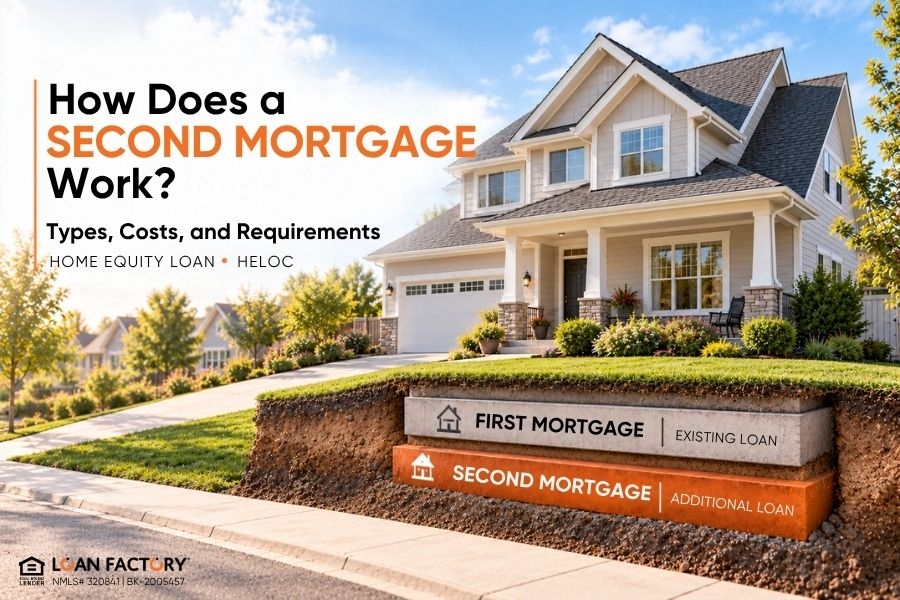
HUD offers qualifying participants a 50% discount from the list price of an eligible property. The buyer finances or otherwise pays the discounted purchase amount and signs a second mortgage and note covering the remaining discount.
The second mortgage is commonly called a silent second because:
It does not require monthly payments. It does not accrue interest while the program requirements are met. It secures HUD’s interest in the discount during the occupancy period. It may become payable if the buyer does not fulfill the required conditions. Good Neighbor Next Door replaced the older Teacher Next Door and Officer Next Door programs. HUD now administers the covered professions under one program.
Is Good Neighbor Next Door a First Responder Home Loan Program? Good Neighbor Next Door is frequently described as a first responder home loan program, but that description is incomplete.
GNND does not directly provide every participant with a complete first mortgage. It provides an occupationally restricted opportunity to purchase an eligible HUD-owned property at a discount. The buyer still needs acceptable financing or other approved funds for the discounted purchase amount.
A more accurate description is:
Component
What it provides
HUD program Access to an eligible home at a 50% discount Buyer’s lender Financing for the discounted purchase amount, when a mortgage is used Silent second mortgage Secures the discount during the required occupancy period Buyer Down payment, closing funds, documentation, and program compliance
An eligible buyer may finance the purchase through an available mortgage that works for the property and transaction. HUD specifically states that eligible GNND participants may use qualifying FHA-insured financing with a down payment of only $100. FHA 203(k) financing may also be available when the property requires eligible repairs.
$100 Down Payment Disclosure: The $100 down payment is a program feature for qualifying GNND transactions using eligible FHA financing. It is not a guarantee of approval or an indication that the buyer needs only $100 at closing. Closing costs, prepaid taxes and insurance, escrow deposits, inspections, repairs, reserves, and other expenses may apply.
Who Qualifies for Good Neighbor Next Door? HUD limits participation to four occupational categories:
Law enforcement officers Pre-K through grade 12 teachers Firefighters Emergency medical technicians Eligibility depends on more than the borrower’s job title. HUD applies specific employment, duty, employer, and service-area rules to each category.
Law Enforcement Officer Requirements A law enforcement officer generally qualifies when the person:
Is employed full time by a federal, state, local, or tribal government law enforcement agency. Is sworn to uphold applicable laws. Has authority to make arrests for violations of those laws. Directly serves the locality where the eligible property is located. Potentially eligible roles may include certain:
Municipal police officers Sheriff’s deputies State law enforcement officers Federal law enforcement officers Tribal law enforcement officers A government or public-safety job does not automatically satisfy HUD’s definition.
The following roles may not qualify unless their duties meet all HUD requirements:
Civilian police employees Emergency dispatchers Private security officers Administrative personnel Probation or parole employees Correctional employees without qualifying arrest authority Campus security officers Volunteer personnel Part-time officers A law enforcement applicant should obtain written employment verification describing full-time status, agency, sworn authority, arrest authority, and the locality served.
Teacher Requirements A teacher generally qualifies when the person:
Is employed full time by a state-accredited public or private school. Provides direct services to students in pre-kindergarten through grade 12. Serves students from the locality where the eligible home is located. Potentially eligible educators include qualifying full-time:
Public-school teachers Private-school teachers Charter-school teachers Pre-kindergarten teachers Elementary-school teachers Middle-school teachers High-school teachers The program does not automatically include everyone employed by a school or educational institution.
The following roles may not qualify solely through their employment:
College professors University instructors Adjunct faculty Substitute teachers Part-time teachers Administrators Counselors School nurses Librarians Coaches without qualifying teaching duties Office or district employees Bus drivers Custodial or food-service employees Teachers can review the broader guide to teacher home loan programs when GNND inventory or occupational rules do not fit their situation.
Firefighter Requirements A firefighter generally qualifies when the person:
Is employed full time as a firefighter. Works for a fire department operated by a federal, state, local, or tribal government. Directly serves the locality where the eligible home is located. Volunteer, seasonal, part-time, industrial, or privately employed firefighters should not assume that they meet HUD’s definition.
The program administrator may request:
Employment verification Full-time status Department information Job description Service-area verification Confirmation that the department is operated by an eligible government entity Emergency Medical Technician Requirements An EMT generally qualifies when the person:
Is employed full time as an emergency medical technician. Works for a fire department or emergency medical services responder unit operated by a federal, state, local, or tribal government. Directly serves the locality where the home is located. A certification alone does not necessarily establish eligibility.
The following workers should verify their exact status:
Paramedics Hospital-based EMTs Private ambulance employees Contract emergency personnel Volunteer EMTs Flight medical personnel Emergency-room technicians Nurses performing emergency duties A registered nurse, physician, medical assistant, or other healthcare professional does not qualify solely through healthcare employment. The employee must meet HUD’s specific EMT definition.
First responders who do not meet GNND requirements may still compare first responder home loan programs , employer assistance, state housing programs, and standard mortgages.
Employment Continuation Requirement HUD requires eligible buyers to certify that they intend to continue working in the qualifying profession for at least one year after closing.
This requirement should be considered carefully by applicants who expect to:
Retire Change professions Move to another agency Leave full-time employment Transfer outside the locality Begin unpaid leave Change from government to private employment A planned employment change should be discussed before the buyer submits a bid.
Do You Have to Be a First-Time Homebuyer? No. Good Neighbor Next Door does not require the participant to be a first-time homebuyer.
However, the buyer and the buyer’s spouse generally cannot have owned another residential property during the one-year period before submitting a GNND bid. The buyer also must satisfy HUD’s other ownership and participation restrictions.
This one-year rule is different from the three-year definition often used by other first-time homebuyer programs.
Program concept
Common ownership lookback
GNND prior-ownership rule Generally one year Many first-time buyer programs Often three years Program-specific assistance Varies by administrator
Buyers should not apply a general first-time buyer definition to GNND without reviewing HUD’s rules.
Those who do not qualify for GNND may still explore first-time homebuyer home loan programs .
What Homes Are Eligible? Good Neighbor Next Door cannot be used to buy any home on the open market.
The property must be:
Owned by HUD. A qualifying single-family property. Located in a HUD-designated revitalization area. Listed specifically through the GNND sales program. Available during the exclusive program listing period. HUD acquires homes through foreclosure on FHA-insured mortgages. Only a limited portion of HUD’s inventory is designated for GNND.
What Is a Revitalization Area? A revitalization area is a geographic area designated by HUD under applicable statutory and regulatory criteria.
HUD considers factors related to:
Household income Homeownership rates FHA-insured mortgage foreclosure activity The fact that a neighborhood needs investment does not automatically make every property in it eligible. The home must appear as a GNND listing.
Inventory Is Limited HUD states that:
The number of available GNND properties is limited. The list changes regularly. Eligible homes are made available through the program for seven days. A buyer may find:
No properties in the preferred ZIP code No properties in the state at a particular time Homes that do not meet the household’s needs Properties requiring repairs Multiple eligible buyers competing for one listing GNND should therefore be considered a targeted opportunity rather than an on-demand mortgage program.
How Does the 50% Discount Work? HUD offers an eligible home at 50% of its listed price to the qualifying participant.
For example, suppose an eligible home has a HUD list price of $300,000.
Transaction component
Illustrative amount
HUD list price $300,000 GNND discount $150,000 Discounted purchase amount $150,000 Silent second mortgage $150,000
The buyer would generally finance or pay the discounted purchase amount, while HUD records a second mortgage for the discount.
The silent second does not require monthly payments or interest while the participant fulfills the 36-month occupancy requirement.
Illustrative Example Disclosure: This example is educational and does not represent an available property, appraisal, Loan Factory borrower, mortgage approval, rate, APR, payment, closing cost, or funded transaction.
The Discount Is Not Cash Paid to the Buyer The buyer does not receive the discount as cash.
Instead, the benefit reduces the amount the participant pays for the property. HUD protects the discount through the silent second mortgage during the required occupancy period.
Appraisal and Financing Still Matter A 50% discount does not eliminate:
Mortgage underwriting Appraisal review Property-condition requirements Title review Homeowners insurance Credit qualification Income verification Closing costs Repair costs Required reserves The lender must determine whether the buyer and property qualify for the proposed first mortgage.
What Is the Silent Second Mortgage? The silent second mortgage is a lien covering the value of the GNND discount.
It is called “silent” because the participant generally does not make monthly principal or interest payments on it while complying with the program.
The second mortgage helps HUD enforce the three-year occupancy obligation.
During the Occupancy Period The participant must:
Own the property. Use it as the sole principal residence. Avoid renting or abandoning the property. Complete annual occupancy certifications. Comply with HUD servicing and program requirements. After Completing the Occupancy Period After the participant successfully completes the 36-month requirement and satisfies HUD’s program obligations, the silent second can be released under HUD’s servicing procedures.
The participant should retain all occupancy certifications and correspondence until HUD confirms that the obligation has been satisfied.
Leaving Early If the participant sells, moves, rents the property, or otherwise violates program requirements before completing the occupancy period, HUD may require repayment of some or all of the discount.
Do not assume that a job transfer, family change, military move, or financial hardship automatically eliminates the obligation. Contact HUD and the loan servicer before taking action affecting occupancy or title.
Annual Occupancy Certifications HUD monitors GNND properties after closing.
Participants are required to certify annually that they continue to own and live in the property as their sole residence. HUD generally sends the certification near the anniversary of the purchase.
The homeowner should:
Read the certification carefully. Sign and return it by the stated deadline. Keep a copy. Retain proof of delivery. Update the servicer when contact information changes. Respond promptly to follow-up requests. Failing to return the certification can create a compliance issue even when the owner still lives in the home.
How the Seven-Day Listing and Lottery Work Eligible GNND homes are offered through an exclusive seven-day listing period.
The participant works with a HUD-registered real estate broker to submit an offer according to the listing instructions.
If only one eligible offer is submitted and all requirements are satisfied, that buyer may proceed. If multiple qualified participants submit offers, HUD may use a random lottery to select the purchaser.
Why Preapproval Matters The listing period is short. Buyers should prepare before a suitable property appears.
A documented mortgage preapproval can help identify:
Available financing Income and employment documentation Credit issues Estimated cash needed Property-condition limitations Missing documents The budget for repairs and closing costs Preapproval does not guarantee that the buyer will win a lottery or receive final loan approval.
How to Apply for Good Neighbor Next Door The process involves both HUD program requirements and mortgage underwriting.
Step 1: Confirm Occupational Eligibility Verify that you satisfy the exact HUD definition for:
Law enforcement officer Teacher Firefighter EMT Do not rely only on your job title.
Step 2: Review Prior Ownership Confirm whether you or your spouse owned another home during the one-year period before the planned bid.
Step 3: Prepare Employment Verification Gather documentation showing:
Employer Full-time status Job duties Qualifying authority or certification Locality served Intention to continue qualifying employment Step 4: Review Credit, Income and Assets Prepare:
Identification Paystubs W-2 forms Employment verification Bank statements Debt information Student loan records Gift or assistance documentation Explanations for relevant credit events Use the first-time homebuyer document checklist to organize the broader financial records a lender may request.
Step 5: Obtain Mortgage Preapproval Compare the financing structures available for the property and your qualifications.
Review:
Interest rate APR Mortgage insurance Loan term Down payment Closing costs Cash to close Repair financing Required reserves Step 6: Locate Eligible HUD Properties Monitor current GNND listings for the state and preferred areas.
Inventory can change weekly, and there may be periods when no suitable properties are available.
Step 7: Work With a HUD-Registered Broker A qualified broker submits the bid under HUD’s sales procedures.
The real estate professional should understand:
HUD contracts Listing deadlines Bid submission Earnest money Property disclosures Inspection timelines Closing requirements Step 8: Submit the Bid Follow the listing instructions and submit all required information before the exclusive period ends.
More than one offer may result in random selection.
Step 9: Complete Financing and Property Review If selected, the buyer must satisfy:
Mortgage underwriting Employment verification Appraisal requirements Title review Insurance requirements Property-condition requirements HUD documentation Closing deadlines Step 10: Sign the Silent Second and Occupancy Documents At closing, the participant signs the required mortgage, note, certifications, and program documents.
Step 11: Occupy and Certify Annually Move into the home, maintain it as the sole principal residence for 36 months, and respond to HUD’s annual certification requests.
What Financing Can Be Used? Good Neighbor Next Door provides the property discount, but the buyer normally needs a first mortgage or other approved funds for the discounted purchase amount.
Possible financing depends on:
Property condition Loan amount Credit Income Debts Occupancy Appraisal Mortgage-program rules Lender requirements FHA Financing Eligible GNND participants may apply for FHA-insured financing with a down payment of only $100.
FHA financing also involves:
Upfront mortgage insurance Annual mortgage insurance FHA property requirements County loan limits Credit and income underwriting Closing and prepaid expenses Review the FHA loan requirements before treating the down payment as the only qualifying factor.
FHA 203(k) Renovation Financing HUD states that an eligible participant may use FHA Section 203(k) financing when a GNND home requires repairs.
An FHA 203(k) loan may combine eligible acquisition and renovation costs into one mortgage, subject to:
Property eligibility Repair scope Contractor documentation Cost estimates Appraisal requirements Consultant requirements when applicable Draw and inspection procedures Lender approval A renovation loan can be helpful, but it adds documentation, property review, construction oversight, and timing considerations.
VA Financing An eligible Veteran, active-duty Servicemember, qualifying National Guard or Reserve member, or eligible surviving spouse may explore VA financing when the property, transaction, and lender requirements permit it.
VA eligibility comes from qualifying military service—not first responder or teacher employment.
The buyer should compare:
Down payment VA funding fee Property condition Appraisal requirements Closing costs Mortgage payment GNND contract deadlines Review the VA home loan guide when military eligibility may apply.
Conventional Financing Conventional financing may also be evaluated, depending on the property condition and lender requirements.
The buyer should compare conventional financing with FHA by reviewing:
Down payment Private mortgage insurance Credit requirements Appraisal and property condition Interest rate and APR Closing costs Repair options Cash reserves The $100 GNND down payment feature described by HUD is connected to qualifying FHA financing, not a general feature of every mortgage type.
Can Down Payment Assistance Be Combined With GNND? Additional assistance may sometimes be combined with a GNND purchase when the first mortgage, assistance provider, HUD requirements, lien structure, and transaction all permit it.
Potential assistance sources include:
State housing agencies Cities and counties Employers Unions Nonprofit organizations Approved housing programs Assistance may be:
A grant Forgivable second mortgage Deferred-payment second mortgage Repayable subordinate loan Closing-cost assistance Combining multiple liens can be complex because GNND already includes HUD’s silent second mortgage.
Review state and local down payment assistance programs and obtain written confirmation that the proposed assistance can be used.
Good Neighbor Next Door Benefits The program can provide a significant opportunity for an eligible buyer who finds a suitable property and can meet the long-term requirements.
50% Purchase-Price Discount The principal benefit is the ability to purchase an eligible HUD property for half of its list price.
Potentially Low FHA Down Payment Eligible buyers using qualifying FHA financing may be able to purchase with $100 down.
No Monthly Payment on the Discount The silent second mortgage does not require monthly principal or interest payments while program requirements are met.
Potential Repair Financing An eligible FHA 203(k) mortgage may help finance qualifying repairs.
Community Connection The program encourages qualifying professionals to live in the communities they teach, protect, or serve.
Good Neighbor Next Door Disadvantages and Risks The discount is substantial, but GNND is not a practical fit for every eligible professional.
Limited Inventory There may be few or no eligible homes in the desired area.
Restricted Locations The home must be in a designated revitalization area.
Short Listing Period Eligible homes are generally available exclusively for seven days, requiring buyers to prepare in advance.
Random Lottery A qualified buyer may lose the opportunity when multiple eligible participants bid.
Property Condition HUD-owned properties may require repairs or improvements. Buyers should obtain appropriate inspections and review the cost and feasibility of necessary work.
Three-Year Occupancy Commitment The buyer must plan to remain in the property as a sole principal residence for 36 months.
This can be difficult for professionals facing:
Transfers Promotions Department changes School assignments Family relocation Career changes Retirement Military orders Unexpected hardship Silent Second Lien The HUD second mortgage can complicate a sale, refinance, title change, or early move during the occupancy period.
Financing Is Still Required A 50% discount does not guarantee mortgage approval. The borrower and property must still meet the selected lender’s requirements.
Time-Sensitive Closing HUD contracts and mortgage underwriting may have strict deadlines. Delayed employment, appraisal, insurance, repairs, title, or financing documentation can affect the transaction.
GNND vs. Other First Responder Programs Not every first responders home loan program is Good Neighbor Next Door.
The market includes private programs advertised using terms such as:
Hero home loan program Heroes home program loan benefit First responder home mortgage Homes for heroes Teacher or nurse next door Public servant homebuyer program These terms are not interchangeable with HUD’s official GNND program.
A private hero program may offer:
Real estate rebates Lender credits Closing-service discounts Agent referral benefits Access to standard mortgages Program matching Employer assistance It may not offer a HUD property discount or special mortgage underwriting.
Questions to Ask a Private Hero Program Before enrolling, ask:
Is this a government program? Is the organization a mortgage lender? What is the exact financial benefit? Is the benefit a grant, credit, rebate, or loan? Is repayment required? Must I use a designated lender or real estate agent? Is the benefit available in my state? Can it be combined with other assistance? Are there minimum purchase prices or service fees? Which disclosures explain the program? GNND should be described as a HUD program. Private hero benefits should be identified by the actual organization providing them.
GNND vs. State and Local First Responder Assistance State and local programs may offer more property flexibility than GNND because they are not always limited to HUD-owned homes.
However, they may impose:
Income limits Purchase-price limits First-time buyer requirements Geographic restrictions Homebuyer education Minimum credit standards Employment requirements Repayment conditions Limited annual funding A local first responder benefit might be more practical when the buyer needs to purchase near work but cannot find a suitable GNND listing.
Compare the complete assistance and mortgage structure—not only the amount offered.
Which Option May Fit? Buyer situation
Options to investigate
Eligible professional and suitable GNND property available Good Neighbor Next Door Eligible GNND buyer needing repair financing FHA 203(k), subject to eligibility Eligible Veteran GNND financing plus potential VA option, when permitted No GNND inventory nearby Standard mortgage and local assistance Volunteer or part-time first responder Local programs and standard mortgages Nurse or healthcare worker who is not a qualifying EMT Healthcare professional programs and standard mortgages College professor or school employee who is not a qualifying teacher Educator benefits and standard mortgages Buyer expecting to relocate within three years Standard mortgage without GNND occupancy restriction Buyer needing broad property selection Conventional, FHA, VA, USDA, or local DPA Buyer with limited upfront savings FHA, VA, USDA, low-down-payment conventional, or DPA
Use the Loan Factory mortgage calculator to estimate taxes, insurance, mortgage insurance, HOA dues, and the payment on the discounted purchase amount.
Questions to Ask Before Using GNND Ask the Loan Officer, HUD-registered broker, and program contact:
Does my exact occupation qualify? Does my employment directly serve the property’s locality? Can my employer complete the required certification? Have I or my spouse owned a home during the previous year? Is the property formally listed under GNND? When does the seven-day period end? How will a lottery be handled? What financing can be used? Is the property eligible for FHA financing? Does the home require repairs? Would FHA 203(k) financing be needed? How much cash may be required beyond the down payment? How will closing costs be paid? What annual certifications are required? What happens if I transfer or change jobs? What happens if I need to sell or refinance early? When and how will HUD release the silent second? Which deadlines apply after bid acceptance? Common Good Neighbor Next Door Mistakes Assuming Every First Responder Qualifies HUD uses narrow occupational definitions. Many dispatchers, volunteers, private-sector workers, healthcare employees, and support personnel do not qualify.
Assuming the Discount Applies to Any Home Only designated HUD-owned properties qualify.
Waiting for a Listing Before Preparing Financing The exclusive period lasts only seven days. Waiting to organize credit, employment, and income documentation may cause the buyer to miss the opportunity.
Believing $100 Is the Total Cash Needed The FHA down payment feature does not eliminate closing costs, prepaid expenses, repairs, insurance, reserves, or other transaction expenses.
Skipping the Property Inspection A large discount does not mean repair costs should be ignored.
Ignoring the Occupancy Commitment A buyer who may relocate soon should carefully evaluate the 36-month requirement.
Forgetting Annual Certifications HUD requires participants to certify occupancy each year.
Confusing GNND With Private Hero Programs Private programs may offer useful benefits, but they do not provide HUD’s 50% property discount unless the transaction independently qualifies for GNND.
Assuming Preapproval Is Final Approval Final approval depends on updated income, employment, assets, debts, credit, appraisal, title, insurance, property condition, and HUD compliance.
Review the Loan Factory loan process to understand the general stages from application and underwriting through signing and closing.
How Loan Factory Helps GNND Buyers Loan Factory is a technology-powered mortgage platform helping borrowers compare mortgage options through a broad wholesale lender network.
A licensed Loan Officer can help an eligible buyer:
Review the financing needed for the discounted purchase amount Evaluate FHA, conventional, VA, and renovation options that may be available Prepare income, employment, asset, and debt documentation Review the estimated down payment and total cash to close Compare mortgage insurance, rates, APRs, points, credits, and payments Identify property-condition or appraisal concerns Evaluate available down payment assistance Coordinate mortgage milestones with HUD contract deadlines Prepare before an eligible property is listed TERA supports online applications, secure document uploads, e-signing, communication, and loan-status tracking. Technology can support the mortgage process but does not guarantee GNND eligibility, mortgage approval, property selection, closing, or funding.
Learn more about Loan Factory and its technology-supported mortgage process.
Is Good Neighbor Next Door Worth It? Good Neighbor Next Door may be worth considering when the buyer:
Clearly meets HUD’s occupational definition. Can find a suitable property in an acceptable location. Can satisfy mortgage and property requirements. Plans to remain in the home for at least 36 months. Understands the silent second mortgage. Is prepared for possible repairs. Can meet HUD’s deadlines and annual certification requirements. It may be less practical when:
The buyer needs a home immediately. No eligible inventory is available. The household needs a specific school district or property type. The buyer expects to relocate soon. Repair costs exceed the available budget. Another mortgage or local assistance program offers a better overall fit. When you are ready, compare mortgage options , apply for a mortgage online , or call or text (660) 333-3333 to discuss your employment, available funds, and home-purchase plans with a Loan Factory mortgage professional.
Experience Note The eligibility examples, financing comparisons, silent-second explanation, property scenarios, and application steps in this article are educational illustrations based on HUD’s published GNND requirements and common mortgage considerations.
They do not represent a specific Loan Factory borrower, HUD property, lottery result, appraisal, mortgage approval, quote, closing, or funded transaction.
Sources About the Author Loan Factory Mortgage Education Team
Loan Factory is a technology-powered mortgage platform helping borrowers compare mortgage options through a broad wholesale lender network.
The Loan Factory Mortgage Education Team helps teachers, law enforcement officers, firefighters, EMTs, and other buyers understand occupation-based housing programs, mortgage financing, property requirements, assistance, documentation, and the home-purchase process.
Disclaimer This content is for educational and informational purposes only and is not financial, legal, tax, credit, accounting, employment, real estate, appraisal, insurance, investment, or housing-counseling advice. It is not a commitment to lend or a guarantee of GNND eligibility, mortgage approval, property availability, lottery selection, discount, financing, rate, APR, payment, appraisal, repairs, closing, or funding.
HUD rules, property inventory, occupational definitions, employment certifications, FHA requirements, financing options, mortgage insurance, rates, fees, credits, documentation, property condition, closing deadlines, occupancy requirements, and assistance availability may change and vary by borrower, employer, agency, lender, property, location, underwriting, investor, and program administrator.
Loan Factory is a private mortgage company and is not affiliated with or acting on behalf of HUD, FHA, VA, USDA, Fannie Mae, Freddie Mac, FHFA, CFPB, a public-safety agency, school district, housing authority, or private hero program.
Frequently Asked Questions