3 down home loan programs may allow qualified buyers to purchase a home with only 3% down, depending on the loan program, credit profile, income, property type, and underwriting approval. These programs can be especially helpful for first-time buyers who have stable income but limited upfront savings.
A 3 down payment mortgage is usually a conventional loan option, not an FHA loan.
FHA loans may allow low down payments, but FHA’s common minimum down payment is 3.5%, not 3%. The Consumer Financial Protection Bureau explains that FHA loans may allow down payments as low as 3.5% and require mortgage insurance.
Important note: This article is for informational purposes only and is not a commitment to lend. Loan approval, down payment requirements, rates, APR, credits, fees, mortgage insurance, and terms depend on credit, income, property eligibility, occupancy, underwriting, investor guidelines, and lender requirements.
Key Takeaways 3 down home loan programs may allow qualified buyers to purchase with 3% down, usually through conventional low down payment options. Common 3% down options include Conventional 97, HomeReady, and Home Possible. A first time home buyer loan 3 down may be a strong alternative to FHA if the buyer qualifies for conventional financing. The Minimum Down Payment Options for Buying a House may be 0% for eligible VA or USDA buyers, but 3% down may be available to a broader group of qualified conventional borrowers. Buyers should compare down payment, PMI, mortgage insurance, closing costs, monthly payment, credit requirements, and cash left after closing. What Are 3 Down Home Loan Programs? 3 down home loan programs are mortgage options that may allow eligible borrowers to buy a home with a 3% down payment. These are usually conventional loan programs designed to reduce the upfront cash barrier for qualified buyers.
For example, on a $400,000 home, a 3% down payment would be $12,000 before closing costs, prepaid expenses, reserves, and other purchase-related costs.
These programs are often searched as:
3 down payment mortgage First time home buyer loan 3 down 3% down home loan Conventional 3 down mortgage Minimum Down Payment Options for Buying a House The main benefit is simple: buyers may not need to wait until they have saved 10% or 20% down.
However, a 3% down mortgage still requires qualification.
A lender may review:
Credit score Credit history Income stability Employment history Debt-to-income ratio Assets and reserves Property type Occupancy Mortgage insurance Appraisal and underwriting approval A 3% down payment can make buying more accessible, but buyers still need to qualify for the loan and afford the full monthly payment.
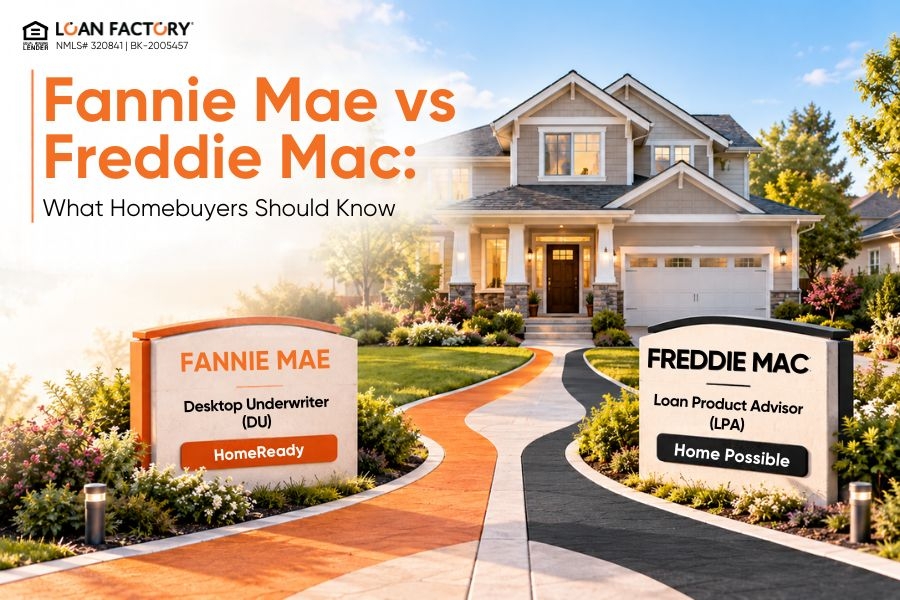
Common 3 Down Payment Mortgage Options The most common 3 down payment mortgage options include Conventional 97, Fannie Mae HomeReady, and Freddie Mac Home Possible. Each program may allow qualified buyers to purchase with 3% down, but eligibility rules and borrower fit can be different.
Here is a practical comparison:
3% Down Program
Down Payment Feature
Best For
Important Notes
Conventional 97 As low as 3% down Qualified first-time buyers At least one borrower may need to meet first-time buyer rules HomeReady As low as 3% down Eligible low- to moderate-income borrowers Income and program rules may apply Home Possible As low as 3% down Eligible very low- to moderate-income borrowers Homebuyer education may apply in certain cases HomeOne As low as 3% down Qualified first-time buyers Program and lender rules apply FHA Loan As low as 3.5% down Buyers needing flexible credit guidelines Not a 3% down loan; FHA mortgage insurance required
Fannie Mae’s 97% loan-to-value options are designed to expand access to sustainable homeownership for first-time home buyers through low down payment mortgage programs.
Freddie Mac states that Home Possible offers a down payment as low as 3%, and Fannie Mae states that HomeReady requires a down payment as low as 3% for eligible borrowers.
The right 3% down program depends on your income, credit, first-time buyer status, property type, and total monthly payment.
Buyers can also compare first time home buyer home loan programs to understand how conventional, FHA, VA, USDA, and assistance options may fit different borrower profiles.
Conventional 97: A First Time Home Buyer Loan With 3 Down Conventional 97 is a conventional low down payment option that may allow qualified first-time buyers to purchase with 3% down. It can be useful for buyers with solid credit who want a conventional mortgage path instead of FHA.
Fannie Mae describes its 97% LTV options as low down payment mortgage programs designed to expand access to homeownership for first-time home buyers.
Conventional 97 May Fit Buyers Who: Are first-time buyers or have at least one borrower who qualifies Want a conventional loan Have limited down payment savings Can qualify based on income and credit Are buying a primary residence Want to compare PMI against FHA mortgage insurance What to Review Before choosing Conventional 97, buyers should compare:
PMI cost Interest rate APR Monthly payment Closing costs Cash reserves after closing Property eligibility Homebuyer education requirements, if applicable Conventional 97 can be a strong 3% down path, but buyers should compare it against HomeReady, Home Possible, FHA, VA, USDA, and assistance options.
If you are leaning toward this specific path, take a deeper dive into the Conventional 97 loan guidelines to fully understand eligibility, first-time buyer rules, PMI, property requirements, and how it directly compares with FHA.
HomeReady: 3% Down With Flexible Features HomeReady is a Fannie Mae low down payment mortgage option that may allow eligible borrowers to purchase with as little as 3% down. It is designed to help creditworthy borrowers with lower or nontraditional incomes access homeownership.
Fannie Mae states that HomeReady requires a down payment as low as 3% for borrowers with lower or nontraditional incomes.
HomeReady May Fit Buyers Who: Have limited savings Meet income eligibility rules Want a conventional mortgage May use approved gifts, grants, or assistance Want a low down payment alternative to FHA Are buying a primary residence What to Review HomeReady buyers should compare:
Income limits PMI cost Homebuyer education requirements Gift fund rules Assistance program compatibility Total monthly payment Cash to close HomeReady may be helpful for eligible buyers who need a 3% down option with more flexibility than a standard conventional loan.
To see if you qualify for these benefits, check out our detailed breakdown of the Fannie Mae HomeReady loan to understand exact income limits, down payment rules, gift funds, homebuyer education, and overall program fit.
Home Possible: Another 3% Down Conventional Option Home Possible is a Freddie Mac low down payment mortgage option that may allow eligible borrowers to purchase with 3% down. It is designed to support very low- to moderate-income borrowers who meet program and lender requirements.
Freddie Mac states that Home Possible offers a down payment requirement as low as 3% and provides credit flexibilities to help very low- to moderate-income borrowers attain homeownership.
Home Possible May Fit Buyers Who: Have limited down payment savings Meet income and program requirements Want conventional financing Are first-time buyers or eligible repeat buyers Can complete homeownership education if required Want to compare conventional PMI against FHA mortgage insurance What to Review Home Possible buyers should compare:
Income limits PMI cost Credit profile Homebuyer education requirements Property type Cash to close Monthly payment Home Possible can be a strong option for buyers who want a 3% down conventional loan and meet Freddie Mac program rules.
Is FHA a 3 Down Home Loan Program? FHA is not usually a 3 down home loan program because FHA’s common minimum down payment is 3.5%, not 3%. However, FHA remains one of the most popular low down payment mortgage options, especially for buyers who need more flexible credit guidelines.
The CFPB explains that FHA loans may allow down payments as low as 3.5%, may allow lower credit scores than many conventional loans, and require mortgage insurance.
FHA May Fit Buyers Who: Need more flexible credit guidelines Have limited savings Are buying a primary residence Can afford FHA mortgage insurance Want a widely available low down payment option Do not qualify for conventional 3% down financing FHA vs. 3% Down Conventional Feature
FHA Loan
3% Down Conventional
Minimum Down Payment Often 3.5% Often 3% if eligible Mortgage Insurance FHA mortgage insurance required PMI may apply under 20% down Credit Flexibility Often more flexible Usually stronger credit profile preferred Loan Type Government-insured Conventional May be a good fit Flexible credit borrowers Qualified conventional borrowers
FHA may require slightly more down than 3%, but it may still be the better fit depending on your credit, payment comfort, and underwriting.
Still unsure which route is best? We highly recommend reviewing the FHA first-time home buyer loan requirements before making a final choice between FHA mortgage insurance and conventional PMI.
What Are the Minimum Down Payment Options for Buying a House? The Minimum Down Payment Options for Buying a House may be 0% for eligible VA or USDA borrowers, 3% for certain conventional programs, or 3.5% for FHA. The available down payment option depends on the buyer’s eligibility, loan program, property qualification, monthly payment, and cash-to-close needs.
Here is a simple comparison:
Loan Option
Down Payment Feature
Who It May Help
VA Loan Often 0% down Eligible Veterans, service members, and surviving spouses USDA Loan May allow 0% down Eligible buyers in approved rural/suburban areas Conventional 97 As low as 3% down Qualified first-time buyers HomeReady As low as 3% down Eligible low- to moderate-income borrowers Home Possible As low as 3% down Eligible very low- to moderate-income borrowers FHA Loan As low as 3.5% down Buyers needing flexible credit guidelines
The VA states that nearly 90% of VA-backed loans are made with no down payment, while USDA states that qualifying individuals and families may have the opportunity to purchase or build a single-family home with no money down.
The right down payment is not always the right mortgage. Buyers should compare monthly payment, fees, mortgage insurance, eligibility, and cash left after closing.
Who May Qualify for a First Time Home Buyer Loan 3 Down? When exploring the minimum down payment for first-time home buyers , a 3% down loan is a popular option that may fit borrowers who meet conventional loan requirements, have qualifying income and credit, and are purchasing an eligible primary residence. Some programs may require first-time buyer status, income limits, or homebuyer education.
A lender may review:
First-time buyer status Credit score and credit history Income and employment Debt-to-income ratio Assets for down payment and closing costs Property type Occupancy PMI eligibility Appraisal Underwriting approval Fannie Mae defines first-time buyer status for 97% LTV options as at least one borrower not having owned any residential property in the past three years, according to its FAQ summary.
Documents Buyers May Need Common documents may include:
Pay stubs W-2s or tax returns Bank statements Photo ID Asset statements Gift fund documentation, if applicable Purchase contract Homebuyer education certificate, if required Loan Factory Experience Note: In real first-time buyer reviews, many borrowers qualify for 3% down on paper but need help comparing the full monthly payment. PMI, property taxes, insurance, HOA dues, and cash reserves after closing can change which loan feels affordable.
How Much Cash Do You Need With a 3% Down Loan? A 3% down loan reduces the down payment, but buyers may still need cash for closing costs, prepaid expenses, escrow reserves, inspection, appraisal, and moving costs. The down payment is only one part of the total cash-to-close estimate.
Example: 3% Down Payment Amounts Home Price
3% Down Payment
$300,000 $9,000 $400,000 $12,000 $500,000 $15,000 $600,000 $18,000
This example is for illustration only and does not include closing costs, prepaids, mortgage insurance, taxes, homeowners insurance, HOA dues, or lender fees.
Common additional costs may include:
Earnest money deposit Home inspection Appraisal Title and escrow fees Closing costs Prepaid property taxes Homeowners insurance Escrow reserve setup HOA fees, if applicable Moving expenses Emergency savings after closing Before making an offer, ask for an estimated cash-to-close breakdown — not just the 3% down payment amount.
Buyers should also understand closing costs on a mortgage because a 3% down payment is only one part of the total cash needed to close.
You can use the Loan Factory mortgage calculator to estimate how home price, down payment, loan amount, taxes, insurance, and loan term may affect monthly payment.
Can Down Payment Assistance Help With a 3 Down Payment Mortgage? Down payment assistance may help eligible buyers reduce the cash needed for a 3 down payment mortgage. Assistance may come from state housing agencies, local governments, nonprofits, employers, or approved community programs.
Assistance may be structured as:
Grant Forgivable second loan Deferred-payment second loan Low-interest second mortgage Closing cost assistance Matched savings program Assistance programs may consider:
First-time buyer status Household income Property location Home price Occupancy Credit profile Homebuyer education Repayment terms What Buyers Should Ask Before relying on assistance, ask:
Is the assistance a grant or loan? Does it need to be repaid? Can it be used with conventional 3% down? Can it be used for closing costs? Are there income limits? Is first-time buyer status required? Does the property location qualify? Does the lender allow the program? Down payment assistance can be helpful, but buyers should understand the terms before choosing a loan.
If you are looking for help with these upfront expenses, take some time to browse through state and local down payment assistance programs to discover grants, forgivable loans, deferred-payment assistance, income limits, and funding availability in your area.
3 Down Home Loan Programs vs. 20% Down A 3 down home loan program may help buyers purchase sooner with less cash upfront, while 20% down may reduce the loan amount and potentially avoid PMI on many conventional loans. The better choice depends on cash savings, monthly payment, and long-term goals.
Option
Potential Benefit
Potential Tradeoff
3% Down Less cash upfront, buy sooner PMI may apply; higher loan amount 10% Down Lower loan amount than 3% down More cash needed upfront 20% Down May avoid PMI on many conventional loans Requires much larger savings 0% Down May preserve cash if VA/USDA eligible Program and property rules apply
A larger down payment may lower the monthly payment.
A smaller down payment may help buyers preserve cash for:
Emergency reserves Repairs Moving costs Furniture Home maintenance Post-closing stability Putting every dollar into the down payment can create risk if you have little savings left after closing.
Case Study: 3% Down vs. FHA vs. Zero Down A buyer comparing 3 down home loan programs should review more than the down payment. PMI, FHA mortgage insurance, VA funding fee, USDA guarantee fees, closing costs, and monthly payment can change which option is best.
Hypothetical Buyer Scenario A first-time buyer wants to purchase a $400,000 primary residence.
Loan Option
Estimated Down Payment
What the Buyer Should Review
Conventional 3% Down $12,000 PMI, credit profile, monthly payment HomeReady $12,000 Income limits, PMI, assistance options Home Possible $12,000 Income limits, education requirements FHA 3.5% Down $14,000 FHA mortgage insurance, credit flexibility VA Loan $0 if eligible COE, funding fee, occupancy, appraisal USDA Loan $0 if eligible Property location, income limits, guarantee fee
In this example, 3% down conventional options require less down payment than FHA.
But FHA may still be a better option for a buyer who needs more flexible credit guidelines.
VA or USDA may allow no down payment if the borrower and property qualify.
Loan Factory Experience Note: In real purchase scenarios, buyers often focus on the smallest down payment first. But a strong loan comparison should also show PMI, mortgage insurance, rate, APR, cash to close, payment comfort, and cash left after closing. A 3% down loan may be ideal for one buyer, while FHA, VA, USDA, or assistance may work better for another.
How to Apply for 3 Down Home Loan Programs To apply for 3 down home loan programs, start with a pre-approval review. A loan advisor can compare Conventional 97, HomeReady, Home Possible, FHA, VA, USDA, and assistance options based on your credit, income, property goals, and available cash.
Step 1: Review Your Eligibility Ask:
Am I a first-time buyer? Do I meet income limits? Is the home a primary residence? Do I qualify for conventional financing? Would FHA be better? Am I eligible for VA or USDA? Is assistance available? Step 2: Compare the Full Payment Review:
Principal and interest PMI or mortgage insurance Property taxes Homeowners insurance HOA dues Guarantee fees, if applicable Step 3: Compare Cash to Close Look at:
Down payment Closing costs Prepaids Escrow reserves Inspection and appraisal Seller credits Lender credits Gift funds Assistance programs Step 4: Compare Loan Estimates A Loan Estimate can help you compare:
Loan amount Interest rate APR Monthly payment Estimated cash to close Origination charges Third-party fees Escrow details Step 5: Get Pre-Approved Before Shopping A pre-approval helps you understand your realistic homebuying range before making offers.
Start by checking your options through Loan Factory’s mortgage quote tool or begin your application at Loan Factory online application .
The goal is not only to find the Minimum Down Payment Options for Buying a House. The goal is to find the most sustainable loan structure for your budget.
Common Mistakes to Avoid With 3 Down Payment Mortgages The biggest mistake with 3 down payment mortgage options is assuming every buyer qualifies automatically. Buyers should also avoid ignoring PMI, closing costs, income limits, homebuyer education, and the difference between minimum down payment and total cash to close.
Mistake 1: Assuming 3% Down Is Available to Everyone Some programs require first-time buyer status, income limits, or specific eligibility rules.
Mistake 2: Forgetting PMI Conventional loans with less than 20% down often include PMI.
Buyers should compare PMI cost against FHA mortgage insurance.
Mistake 3: Ignoring Closing Costs A 3% down payment does not include all purchase costs.
Buyers should review total cash to close.
Mistake 4: Choosing 3% Down Without Comparing FHA FHA may require 3.5% down, but it may still be more suitable for certain credit profiles.
Mistake 5: Using All Savings for the Down Payment Buyers should keep emergency reserves when possible.
A home purchase is only the beginning of homeownership expenses.
Loan Factory helps homebuyers compare mortgage options from 240+ wholesale lenders using technology designed to make the home loan process clearer, faster, and more transparent.
If you are exploring 3 down home loan programs, Loan Factory can help review available options based on your credit, income, property type, first-time buyer status, location, and homebuying goals.
What Loan Factory Offers Homebuyers Compare options from 240+ wholesale lenders Review Conventional 3% down, FHA, VA, USDA, Jumbo, and specialty loan options through lender partners Explore HomeReady, Home Possible, and other low down payment mortgage options Compare estimated payment, APR, fees, and cash-to-close side by side Use TERA technology for faster loan comparison Work with local loan advisors Review seller credits, gift funds, and assistance options Get guidance before making an offer Ready to compare 3% down and low down payment mortgage options?
Check your mortgage options: LoanFactory.com/quote LoanFactory.com/apply Loan Factory Mortgage Calculator
Author Box Written by: Loan Factory Mortgage Education Team
Loan Factory is a technology-powered mortgage platform helping homebuyers compare mortgage options from 240+ wholesale lenders. Our mortgage education content is designed to help buyers understand low down payment mortgage programs, affordability, qualification factors, and the mortgage process before applying.
Compliance Disclaimer This article is for informational and educational purposes only and is not a commitment to lend. Loan programs, down payment options, grants, lender credits, rates, APR, fees, private mortgage insurance, mortgage insurance, guarantee fees, and approval are subject to credit approval, underwriting, investor guidelines, property eligibility, income limits, occupancy requirements, assets, appraisal, and program availability. Not all applicants will qualify. Terms may change without notice.
Loan Factory is not affiliated with or acting on behalf of any government agency. FHA, VA, USDA, Conventional, Jumbo, and other loan programs are offered through participating lender partners, subject to eligibility and underwriting approval.
FAQ: 3 Down Home Loan Programs