A loan term is the length of time you have to repay a loan under the loan agreement. For a mortgage, the loan term tells you how long the home loan is scheduled to last if you make payments as agreed and do not refinance, sell, recast, or pay it off early.
For example, many homebuyers compare mortgage terms such as 15 years and 30 years. The Consumer Financial Protection Bureau notes that many buyers choose a 30-year loan because payments can be lower, while a 15-year loan is typically paid off faster and may have a lower total loan cost.
Your loan term can affect:
Monthly payment Total interest paid over time How quickly you build equity How long the mortgage lasts Your loan maturity date Your refinance or payoff strategy A shorter loan term may help you pay off the mortgage faster, while a longer loan term may create a lower monthly payment. The right option depends on your budget, loan program, homeownership goals, and long-term financial comfort.
Important note : This article is for informational purposes only and is not a commitment to lend. Mortgage payment estimates, loan approval, rates, APR, fees, terms, and program availability depend on credit, income, debts, assets, property details, loan program, underwriting guidelines, and lender requirements.
Key Takeaways A loan term is the scheduled length of time to repay a loan. For mortgages, common loan terms include 15-year and 30-year options, though other terms may be available depending on the lender and loan program. A loan maturity date is the date when the loan is scheduled to be fully repaid if payments are made according to the loan agreement. Loan term and amortization are related, but they are not always the same. A longer mortgage term may lower the monthly payment, while a shorter term may reduce total interest over time. Loan Factory can help homebuyers compare mortgage options from 240+ wholesale lenders based on payment goals, loan term, and long-term affordability. What Is a Loan Term? A loan term is the period of time between the loan start date and the date the loan is scheduled to be fully repaid. For a mortgage, the loan term is usually stated in years, such as 15, 20, or 30 years.
The CFPB’s Regulation Z disclosure rules describe “Loan Term” as the term to maturity of the credit transaction, stated in years or months.
In simple terms:
Loan term = how long the loan is scheduled to last.
For a mortgage, your loan term can affect the monthly payment because the loan balance is spread across the repayment period.
A longer term spreads repayment over more years.
A shorter term spreads repayment over fewer years.
That difference can significantly change the monthly payment and total interest paid over time.
How Long Are Mortgages? Mortgages can have different lengths, but many homebuyers compare 30-year and 15-year loan terms. The CFPB explains that 30-year loans are commonly chosen because payments can be lower, while 15-year loans are paid off faster and may have a lower total cost.
Common mortgage term examples may include:
Mortgage Term
General Meaning
10-year mortgage Shorter payoff period, usually higher monthly payment 15-year mortgage Faster payoff than a 30-year loan 20-year mortgage Middle option between 15 and 30 years 30-year mortgage Longer repayment period, often lower monthly payment
Some lenders may offer other term options depending on loan type, investor guidelines, and borrower qualifications.
For adjustable-rate mortgages, the term can be different from the initial fixed-rate period. The CFPB explains that a 5/1 ARM has an initial five-year fixed-rate period, then the rate adjusts after that based on the loan terms.
The loan term tells you how long the loan lasts. The rate structure tells you whether the rate is fixed or can change.
How Long Do Home Loans Last? A home loan generally remains in effect until the outstanding balance is paid off or otherwise satisfied. This may happen through scheduled payments, early payoff, refinancing, or repayment of the mortgage balance when the property is sold. If you make all scheduled payments as agreed and do not refinance or pay early, the home loan usually lasts until the end of the loan term.
For example:
A 30-year mortgage is scheduled to last 30 years. A 15-year mortgage is scheduled to last 15 years. A 20-year mortgage is scheduled to last 20 years. But many homeowners do not keep the same mortgage for the full term.
A loan may end earlier if the borrower:
Sells the home Refinances into a new loan Pays extra toward principal Pays off the mortgage early Uses a recast option, if available Reaches final payoff at maturity A mortgage term is the scheduled timeline.
Your actual payoff timeline may be shorter or different depending on what happens after closing.
How Long Is a Mortgage Loan? A mortgage loan can be short-term or long-term depending on the loan structure, but many traditional home loans are structured around 15-year or 30-year repayment periods. Other terms may be available depending on the loan program and lender.
When choosing a mortgage length, buyers should compare:
Monthly payment Total interest over time Budget flexibility Cash flow after closing Equity-building goals Refinance plans How long they expect to keep the home The CFPB notes that borrowers may be able to negotiate different loan terms, such as 20 years, 7 years, or even longer than 30 years, depending on the lender and product.
This means the “right” mortgage length is not always the same for every buyer.
A buyer who wants a lower monthly payment may prefer a longer term.
A buyer who wants faster payoff may prefer a shorter term.
The loan term should fit both your monthly budget and your long-term homeownership plan.
What Is a Loan Maturity Date? A loan maturity date is the date when the loan is scheduled to be fully repaid according to the loan agreement. For a mortgage, it is usually the final scheduled payment date if the borrower makes payments as required and does not refinance or pay off the loan early.
Loan term and maturity date are closely related.
Term
Meaning
Loan term The length of time the loan is scheduled to last Maturity date The date the loan is scheduled to be fully repaid Amortization The process of paying down the loan over time Payoff date The actual date the loan is fully paid off
For example, a 30-year mortgage generally has a scheduled maturity date approximately 30 years after the repayment period begins, as specified in the loan documents.
But the actual payoff date may be earlier if the borrower sells, refinances, or pays extra toward the loan.
Your maturity date is the scheduled endpoint. Your actual payoff date may be different.
Loan Term vs. Amortization Loan term and amortization are related, but they are not exactly the same. The loan term is how long the loan is scheduled to last. Amortization is how the loan balance is paid down over time through regular payments.
The CFPB explains that amortization means paying off a loan with regular payments over time so that the amount owed decreases with each payment.
Most traditional mortgages are amortizing loans.
That means each payment usually includes:
At the beginning of the loan, a larger part of the payment may go toward interest.
Over time, more of the payment may go toward principal.
Simple Comparison Concept
What It Means
Loan term How long the loan is scheduled to last Amortization How the loan balance is paid down Maturity date When the loan is scheduled to be fully repaid Monthly payment The regular payment made under the loan terms
For many fully amortizing mortgages, the loan is scheduled to be paid off by the end of the term.
However, some loans may not fully amortize. The CFPB notes that some mortgage loans may not fully amortize, meaning money could still be owed after making all scheduled payments.
That is why borrowers should understand both the term and the amortization structure before choosing a loan.
How Loan Term Affects Monthly Payment Loan term affects monthly payment because the repayment period determines how quickly the loan balance must be paid back. A longer term usually spreads the balance across more payments, while a shorter term spreads it across fewer payments.
In general:
Loan Term
Monthly Payment Impact
Total Interest Impact
Shorter term Usually higher monthly payment May reduce total interest over time Longer term Usually lower monthly payment May increase total interest over time
The CFPB explains that 30-year loans can have lower payments, while 15-year loans are paid off faster and may have lower total cost.
This does not mean one option is automatically better.
A shorter term may help reduce total interest, but the higher monthly payment may not fit every budget.
A longer term may provide more monthly flexibility, but the loan may cost more over time.
To better understand how loan length, interest rate, and loan amount affect your monthly costs, learn how to calculate your mortgage payment .
The right loan term should balance monthly affordability with long-term cost.
How Loan Term Affects Total Interest Loan term can affect total interest because interest has more time to accumulate on a longer mortgage. A shorter mortgage term may reduce total interest because the loan balance is paid down faster.
For example, a 15-year mortgage generally pays off faster than a 30-year mortgage.
But it usually requires a higher monthly payment.
A 30-year mortgage may create a lower monthly payment, which can help some buyers qualify or preserve cash flow.
But because the loan lasts longer, total interest may be higher.
Before choosing a term, compare:
Monthly payment Total interest Cash flow Emergency savings Other debts Retirement goals Expected time in the home Refinance plans A lower monthly payment can be helpful, but it should be considered alongside long-term cost.
Loan Term vs. Interest Rate Structure Loan term is not the same as interest rate structure. The loan term is how long the loan is scheduled to last. The interest rate structure explains whether the rate is fixed or adjustable.
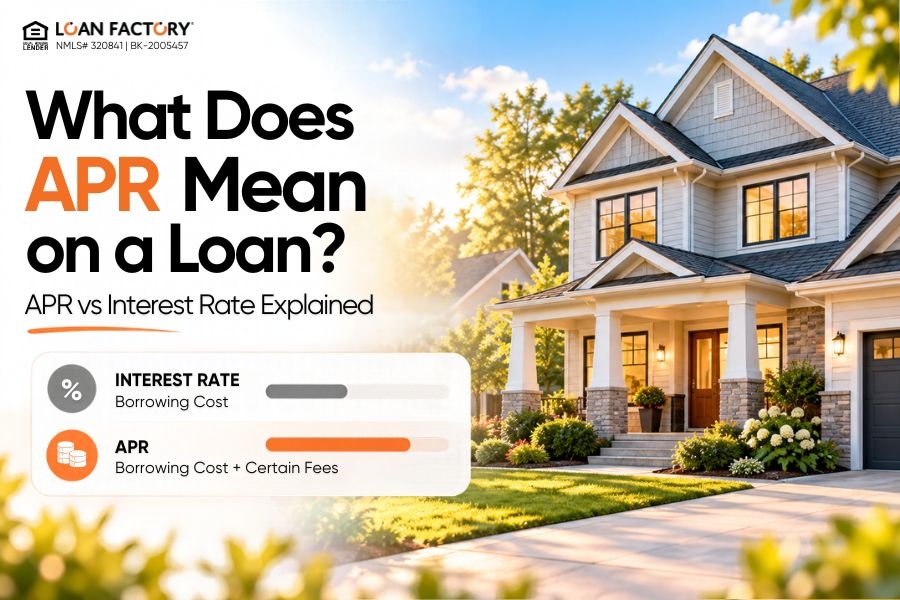
When comparing mortgage offers, it is also important to understand what APR means on a loan , since APR reflects the interest rate plus certain borrowing costs.
Feature
What It Means
Loan term How long the loan lasts Fixed-rate mortgage Interest rate stays the same during the loan term Adjustable-rate mortgage Interest rate may adjust after an initial fixed period Initial fixed period The period before an ARM begins adjusting Maturity date Scheduled final repayment date
For example, a 5/1 ARM may have a 30-year loan term but only a 5-year initial fixed-rate period. The CFPB explains that the “5” in a 5/1 ARM refers to the initial fixed-rate period, and the “1” refers to how often the rate adjusts after that period ends.
This distinction matters.
A borrower may think the loan “lasts five years,” when the actual loan term may be longer.
Always review both the loan term and the rate adjustment structure.
Common Mortgage Loan Term Options Mortgage loan terms vary by lender, loan product, and borrower profile. Common fixed-rate loan terms may include 15-year, 20-year, and 30-year mortgages, while adjustable-rate mortgages may have initial fixed periods before the rate can adjust.
30-Year Mortgage A 30-year mortgage spreads payments across a longer period.
Potential advantages may include:
Lower monthly payment compared with shorter terms More monthly cash flow flexibility More room in the budget for other expenses Potential trade-offs may include:
More interest over time Slower equity buildup Longer repayment period 15-Year Mortgage A 15-year mortgage pays off faster.
Potential advantages may include:
Faster equity buildup Less total interest over time Shorter path to owning the home free and clear Potential trade-offs may include:
Higher monthly payment Less monthly budget flexibility Possible qualification challenges if payment is too high 20-Year Mortgage A 20-year mortgage can be a middle option.
It may offer:
Faster payoff than a 30-year loan Lower payment than a 15-year loan in many cases A balance between monthly payment and interest savings Adjustable-Rate Mortgage An adjustable-rate mortgage may have an initial fixed-rate period, then adjust according to the loan terms.
Buyers should review:
Initial fixed period Adjustment frequency Rate caps Index and margin Payment changes Long-term plans An ARM may not fit every borrower, especially if the payment could increase beyond the borrower’s comfort level.
What Happens at the End of a Loan Term? At the end of a fully amortizing mortgage term, the loan is scheduled to be paid off if all payments were made as required. After payoff, the borrower no longer owes the mortgage balance.
The servicer may complete final payoff steps, which can include:
Processing final payment Releasing the lien Providing payoff documentation Updating escrow accounts, if applicable Sending final account information If the loan is not fully amortizing, a balance may remain at maturity. The CFPB notes that some home loans do not fully amortize, meaning money may still be owed after making all scheduled payments.
That is why borrowers should understand whether the mortgage is fully amortizing.
A traditional fixed-rate mortgage is often designed to pay off by the end of the term, but borrowers should still review their loan documents.
Can You Change Your Loan Term Later? You may be able to change your mortgage term later through a refinance, but refinancing creates a new loan and depends on qualification, available rates, property details, and lender guidelines.
A borrower may refinance to:
Shorten the loan term Lower the monthly payment Change from an ARM to a fixed-rate loan Change from a longer term to a shorter term Access available refinance options Adjust long-term payoff strategy Refinancing is not automatic.
It may involve:
New application Credit review Income review Appraisal or property valuation, if required Closing costs New loan terms Underwriting approval A borrower should compare the payment, closing costs, break-even period, and long-term interest impact before refinancing.
If you are considering a shorter or longer repayment period, understanding when you should refinance your mortgage can help you evaluate the timing and potential costs.
Can You Pay Off a Mortgage Before the Loan Term Ends? Many borrowers may pay off a mortgage before the scheduled loan term ends by selling the home, refinancing, or making extra principal payments. Whether extra payments make sense depends on your loan terms, budget, and financial goals.
Before paying extra toward principal, review:
Whether the loan has any prepayment restrictions Emergency savings Other high-interest debt Retirement contributions Long-term financial goals Whether extra payments reduce interest enough to justify the cash use Extra principal payments may help reduce the loan balance faster.
However, they may not always be the right priority for every borrower.
A loan advisor can help compare payment scenarios, but borrowers should also consider broader financial planning needs.
How to Choose the Right Loan Term Choosing the right loan term depends on monthly payment comfort, long-term interest cost, expected time in the home, cash reserves, debt profile, and homeownership goals.
Ask yourself:
What monthly payment feels comfortable? Do I want a lower payment or faster payoff? How long do I plan to keep the home? Do I expect income changes? Do I need flexibility for family expenses? Do I have emergency savings? Am I planning to refinance later? Would a shorter term strain my budget? Would a longer term create too much long-term interest? A longer loan term may help with payment affordability.
A shorter loan term may help reduce interest and build equity faster.
Learning how to shop for a mortgage can also help you compare different loan terms, interest rates, and closing costs across lenders.
The right loan term is the one that fits both your payment comfort and your long-term plan.
Example: Same Loan, Different Loan Term A shorter loan term and a longer loan term can create very different monthly and long-term results.
Hypothetical example only: This is for informational purposes only and not a commitment to lend. Actual payment, APR, rate, taxes, insurance, mortgage insurance, fees, terms, and approval depend on credit, loan program, property details, underwriting, and lender guidelines.
A buyer compares two loan term options:
Loan Feature
Shorter Term
Longer Term
Monthly payment Usually higher Usually lower Time to payoff Faster Slower Total interest May be lower May be higher Budget flexibility Less flexible More flexible Equity buildup Usually faster Usually slower
The shorter term may be attractive for faster payoff.
The longer term may be attractive for monthly flexibility.
Neither option is automatically right for every buyer.
Loan Factory Experience Note: In real mortgage reviews, buyers often focus on the monthly payment first. But loan term also affects long-term interest, equity growth, and future refinance strategy. A side-by-side comparison can help buyers see the trade-off more clearly.
Loan Term and Mortgage Calculators A mortgage calculator can help you compare how different loan terms may affect monthly payment and total interest. Loan term is one of the key inputs in payment estimates.
Fannie Mae’s mortgage calculator includes loan term, interest rate, down payment, property taxes, insurance, PMI, and HOA as payment estimate inputs.
You can use the Loan Factory Mortgage Calculator to compare scenarios such as:
15-year vs. 30-year mortgage Different down payment amounts Different estimated rates Different home prices Different tax and insurance estimates Different monthly payment goals A calculator can help you start.
A mortgage review can help compare real loan options based on your income, debts, credit, down payment, property details, and available loan programs.
Loan Factory helps homebuyers compare mortgage options from 240+ wholesale lenders using technology designed to make the home loan process clearer, faster, and more transparent.
If you are asking “what is a loan term ?” or comparing how long a mortgage should last, Loan Factory can help you review payment scenarios and loan options based on your budget and long-term goals.
What Loan Factory Offers Homebuyers Access to 240+ wholesale lenders Transparent side-by-side mortgage options to review rate, APR, payment, fees, and cash-to-close TERA technology platform to support pricing, loan comparison, document flow, and loan review Local loan advisor support to help explain loan term, payment options, and mortgage structure No application fee to start reviewing your options Guidance for first-time buyers, repeat buyers, FHA, VA, Conventional, USDA, Jumbo, and other available programs depending on eligibility Support before you shop, make an offer, refinance, or compare loan terms Loan Factory can help you compare not only the rate, but also the loan term, monthly payment, total cost, and available options.
Ready to compare mortgage terms and payment options?
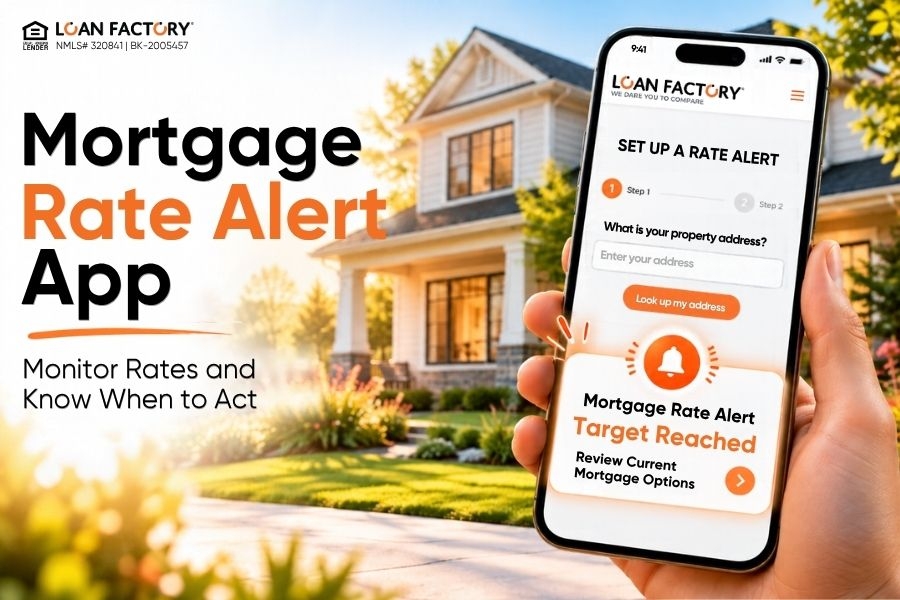
Estimate your payment: Loan Factory Mortgage Calculator LoanFactory.com/quote LoanFactory.com/apply Loan Factory Mortgage Rate Alert
Author Box Written by: Loan Factory Mortgage Education Team
Loan Factory is a technology-powered mortgage platform helping homebuyers compare mortgage options from 240+ wholesale lenders. Our mortgage education content is designed to help buyers understand loan terms, mortgage payments, amortization, affordability, refinance decisions, and the home loan process before applying.
Compliance Disclaimer This content is for informational and educational purposes only and is not a commitment to lend. Mortgage estimates, loan approval, program availability, rates, APR, fees, payment estimates, loan terms, amortization, refinance options, and maturity dates depend on borrower qualifications, income, debts, credit, assets, property details, lender guidelines, underwriting, appraisal, and applicable program rules. Not all applicants will qualify. Terms may change without notice.
Loan Factory is not affiliated with or acting on behalf of any government agency. FHA, VA, USDA, Conventional, Jumbo, and other loan programs are offered through participating lender partners, subject to eligibility and underwriting approval.
Equal Housing Opportunity.
FAQ: What Is a Loan Term?