Refinancing with little equity can feel frustrating. Many homeowners assume they must wait years to build 20% equity before refinancing. In reality, certain high-LTV refinance programs may still allow rate-and-term refinancing even when equity is limited.
However, high-LTV refinancing is more nuanced than standard refinancing. Appraisal values, mortgage insurance, and break-even timing all play a bigger role.
This guide explains how high-LTV refinances work, when they may make sense, and what experienced homeowners evaluate before moving forward.
What Is a High-LTV Refinance? LTV (Loan-to-Value) compares your loan balance to your home’s current market value.
Low LTV: 80% or below (strong equity position) High LTV: Above 80% (limited equity cushion) A high-LTV refinance typically refers to a refinance where:
You have less than 20% equity, or Your loan balance is close to your home’s current value While traditional refinances often price best below 80% LTV, some programs are specifically designed to accommodate higher LTV scenarios.
Why Homeowners Consider Refinancing with Little Equity From real-world refinance reviews, homeowners in high-LTV situations often want to:
Lower their interest rate Reduce monthly principal and interest payments Switch from adjustable to fixed rate Improve loan structure without waiting years to build equity Transition from FHA to conventional (when eligible) In most cases, high-LTV refinances focus on rate-and-term improvements, not cash-out access.
The Role of Appraisal in High-LTV Refinances When equity is tight, appraisal becomes critical.
Because LTV is calculated using current home value, a lower-than-expected appraisal can:
Increase your LTV beyond program limits Trigger higher mortgage insurance costs Limit available lender options In fluctuating markets, appraisal risk is often the deciding factor in whether refinancing makes sense now—or later.
Some streamline programs may not require a full appraisal, but eligibility depends on loan type and borrower profile.
Common High-LTV Refinance Options 1. Conventional High-LTV Refinance Certain conventional programs allow higher LTV refinances, especially for:
Rate-and-term refinances Borrowers with strong payment history Eligible conforming loan scenarios Private mortgage insurance (PMI) may still apply until sufficient equity is reached.
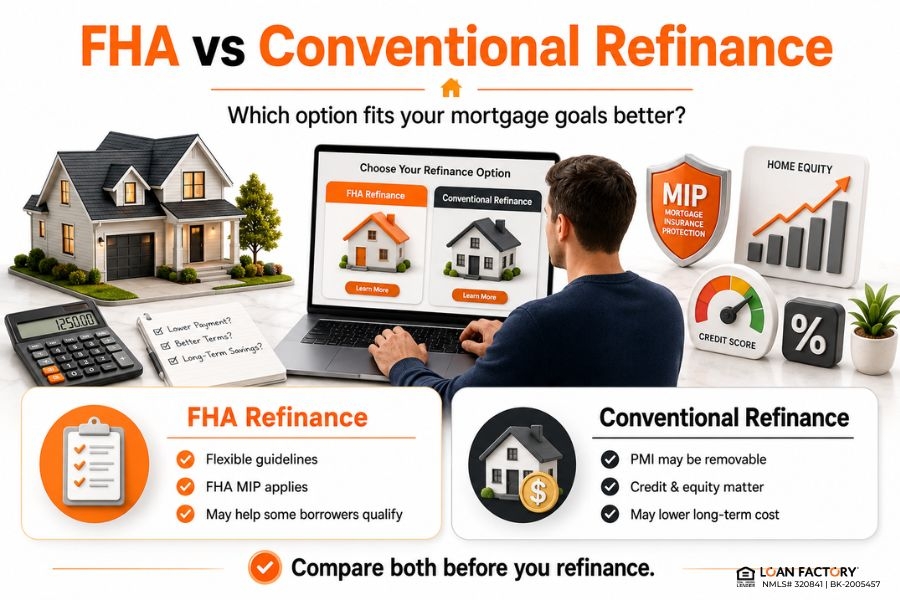
2. FHA Refinance FHA loans are commonly used for high-LTV refinances because they:
Allow higher LTV thresholds Offer streamlined refinance options in some cases Provide flexibility in certain credit scenarios However, mortgage insurance may remain for the life of the loan depending on structure.
→ Read more: FHA Streamline Refinance vs FHA Cash-Out: Which Is Right for You?
For eligible veterans:
VA IRRRL programs may allow very high LTV refinancesNo monthly mortgage insurance Designed primarily for rate reduction Eligibility and occupancy requirements apply.
4. Non-QM or Portfolio Options In select cases, some lenders may offer:
Alternative underwriting approaches Higher risk-based pricing Flexible qualification structures These are highly scenario-specific and require careful cost analysis.
High-LTV Refinance vs Cash-Out Refinance Feature
High-LTV Refinance
Cash-Out Refinance
Equity Required Low Higher Primary Goal Improve loan terms Access home equity Risk Profile Moderate Higher Pricing Often more favorable Typically higher Cash Received No Yes
High-LTV refinances are typically structured as rate-and-term transactions, not equity extraction tools.
Break-Even Analysis: The Most Overlooked Factor One of the most important questions in high-LTV refinancing is:
Will the long-term savings outweigh the upfront costs?
Even if a lower rate is available, closing costs and mortgage insurance changes must be considered.
A refinance often makes the most sense when:
The break-even timeline aligns with how long you plan to stay in the home Payment reduction meaningfully improves cash flow The structure reduces long-term interest exposure Without a cost comparison, refinancing at high LTV can look appealing—but may not deliver meaningful benefit.
Pros and Considerations of High-LTV Refinancing Potential Benefits Refinance without waiting to reach 20% equity Stabilize adjustable-rate loans Improve payment structure Address long-term affordability Important Considerations Mortgage insurance may remain Lender options can be narrower Appraisal sensitivity Short-term cost vs long-term savings trade-offs High-LTV refinancing requires more precision than standard refinances.
Who May Benefit Most? High-LTV refinances may make sense if you:
Purchased recently with a low down payment Have strong payment history Want to reduce rate exposure Plan to stay in the home beyond the break-even period Understand mortgage insurance implications They are generally not ideal for borrowers seeking large cash-out proceeds.
Why Choose Loan Factory for a High-LTV Refinance? Because high-LTV refinances involve tighter guidelines and more appraisal sensitivity, lender comparison becomes more important than in standard refinance scenarios.
Why Homeowners Choose Loan Factory Zero application or junk fees Transparent comparison across 242+ wholesale lenders Clear analysis of PMI impact and long-term cost structure AI-powered MOSO platform for real-time pricing Local loan advisors focused on strategy—not pressure Trusted guidance led by Thuan Nguyen (#1 Loan Officer in the U.S.) We help homeowners evaluate whether refinancing now—or waiting—makes the most financial sense.
Check Your High-LTV Refinance Options Apply online: https://www.LoanFactory.com/apply https://www.LoanFactory.com/quote www.loanfactory.com/mortgage-rate-alert
Based on real-world refinance scenarios reviewed by Loan Factory’s lending team across multiple market cycles.
This content is for informational purposes only and not a commitment to lend. Loan availability, rates, and approval depend on credit, income, property value, underwriting, and investor guidelines.
FAQ: High-LTV Refinances