DSCR Loans for Investment Properties: A Guide for Rental Investors DSCR loans for investment properties allow eligible real estate investors to qualify primarily through the rental property’s expected income rather than traditional personal-income documentation.
The lender compares qualifying monthly rent with the property’s required monthly housing obligation. A stronger debt service coverage ratio may improve the available loan structure, but credit, equity, reserves, property type, rental documentation, and lender guidelines still matter.
Key Takeaways A rental property DSCR loan evaluates whether qualifying rent can support the property’s monthly debt obligation. Many DSCR programs do not use employment income or personal tax returns as the primary qualification method. A DSCR above 1.00 generally indicates that qualifying rent exceeds the measured housing obligation. Down payment, credit, reserves, property eligibility, and lender-specific overlays still affect approval and pricing. Important Note: DSCR calculations, required ratios, acceptable rent sources, down payments, reserves, property types, prepayment terms, rates, fees, and eligibility vary by lender and investor guidelines. This article is informational and is not a commitment to lend.
What Is a DSCR Loan for an Investment Property? A DSCR loan is a business-purpose mortgage used to purchase or refinance an eligible rental property. Instead of qualifying primarily through the investor’s wages or tax-return income, the lender evaluates the property’s rental income in relation to its required debt obligation.
DSCR stands for debt service coverage ratio.
Mortgage lenders offering these programs commonly describe them as Non-QM loans or investor cash-flow loans. Angel Oak and United Wholesale Mortgage, for example, describe their DSCR products as loans that use rental-property cash flow or prospective rent instead of the borrower’s personal income for qualification.
A DSCR investment property mortgage may be used for:
Purchasing a rental property Refinancing an existing investor loan Completing a cash-out refinance Financing a long-term rental Financing certain short-term rentals Holding qualifying property in an eligible business entity These uses are program-specific. A lender may allow one transaction or property type while another does not.
Why DSCR Loans Are Usually Business-Purpose Loans Credit used to acquire, improve, or maintain a non-owner-occupied rental property is generally treated as business-purpose credit under the CFPB’s official interpretation of Regulation Z.
The CFPB specifically identifies a single-family house rented to another person as an example of non-owner-occupied rental property acquired for a business purpose.
Because DSCR financing is generally intended for investment properties, it should not be presented as a mortgage for a primary residence.
Personal use can also affect the analysis. Under CFPB guidance, a property expected to be occupied by the owner for more than 14 days during the coming year is not treated as non-owner-occupied under that particular special rule.
How Does a Rental Property DSCR Loan Work? A rental property DSCR loan works by comparing eligible monthly rent with a defined monthly property obligation. The lender then evaluates that ratio together with the investor’s credit, down payment or equity, reserves, property condition, and transaction details.
The basic process is:
The investor identifies a rental property. The lender estimates or verifies eligible rental income. The proposed mortgage payment and property expenses are calculated. The lender divides qualifying rent by the measured debt obligation. Credit, assets, reserves, appraisal, title, insurance, and entity documents are reviewed. The loan is approved only when the complete file satisfies the selected program. Rental cash flow may replace traditional income qualification, but it does not replace underwriting.
Quick Answer: A DSCR loan may reduce reliance on W-2 income, employment verification, or personal tax returns. The lender still evaluates the property, rental income, collateral, credit, assets, reserves, and the source of closing funds.
How Is DSCR Calculated? DSCR is generally calculated by dividing qualifying rental income by the property’s monthly debt obligation. A result above 1.00 indicates that the measured rent exceeds the expenses included in the lender’s denominator.
A common residential DSCR calculation is:
Qualifying monthly rental income ÷ monthly PITIA = DSCR
PITIA may include:
Principal Interest Property taxes Homeowners insurance Association dues Angel Oak’s current calculator describes its method as rent divided by PITIA and includes principal, interest, taxes, insurance, and HOA fees in the measured mortgage debt.
The exact formula can vary. Some lenders may use an interest-only payment when the proposed loan has an interest-only period, while others may apply additional adjustments or program-specific calculations.
If you need to break down the payment components first, review our guide on how to calculate your mortgage payment .
Example of a 1.25 DSCR Illustrative Example: A rental property produces $3,000 in qualifying monthly rent. The lender calculates monthly PITIA at $2,400.
DSCR component
Amount
Qualifying monthly rent $3,000 Monthly PITIA $2,400 DSCR 1.25
A 1.25 ratio means the qualifying rent equals 125% of the measured monthly property obligation.
It also suggests a $600 monthly difference before maintenance, vacancy, utilities, management, repairs, capital expenditures, income taxes, and other costs that may not be included in the lender’s DSCR calculation.
Example of a DSCR Below 1.00 Assume the qualifying rent is $2,200 and PITIA is $2,400.
DSCR component
Amount
Qualifying monthly rent $2,200 Monthly PITIA $2,400 DSCR 0.92
The ratio is approximately 0.92, meaning measured rent does not fully cover PITIA.
Some current lender programs advertise options for ratios below 1.00 or even no-ratio structures. Those options may require stronger credit, more equity, additional reserves, or different pricing, and their availability can change.
Illustrative Example Disclosure: These examples are simplified and are not commitments to lend. Actual rental income, PITIA, DSCR, rates, APRs, payments, fees, and qualifications depend on lender guidelines and the completed transaction.
What Is Considered a Good DSCR? A DSCR above 1.00 generally means the qualifying rental income exceeds the property obligation included in the calculation. A higher ratio provides a larger measured cash-flow cushion, but lenders do not use one universal minimum.
A lender may organize options around ranges such as:
DSCR range
General interpretation
Above 1.25 Stronger measured coverage 1.00–1.24 Rent covers the measured obligation Below 1.00 Measured rent does not fully cover the obligation No-ratio option Qualification does not require a minimum DSCR under that program
This table is an educational framework rather than a universal underwriting standard.
A lender may offer preferable pricing or leverage when the ratio exceeds a stated threshold. A&D Mortgage, for example, currently identifies a pricing credit for DSCR above 1.25 while also advertising programs with ratios below 1.00.
Investors should not rely solely on the lender’s minimum.
A property may technically satisfy a loan program while having limited room for:
Vacancy Repairs Property-management expenses Insurance increases Property-tax changes Association assessments Turnover costs Major replacements What Rental Income Can Be Used? Qualifying rental income may come from an existing lease, an appraisal’s market-rent analysis, or another lender-approved rental valuation method. The acceptable source depends on whether the property is occupied, vacant, newly acquired, or operated as a short-term rental.
Angel Oak states that rental income for its DSCR program may be determined through an appraisal market-rent analysis or an automated rental valuation model. Its program also identifies separate analysis for certain short-term rentals.
Possible documentation includes:
Current lease agreement Rent roll Appraisal with market-rent schedule Form 1007 or comparable rent schedule Short-term rental analysis Rental-income valuation report Evidence of recent rent receipts Property-management agreement Operating history, when required The lender may use the lower of actual lease rent and market rent, or apply another program-specific method.
Existing Long-Term Rental For a tenant-occupied property, the lender may review the current lease and compare it with appraiser-supported market rent.
The lender may also verify:
Lease term Monthly rent Security deposit Related-party tenancy Payment history Whether the lease transfers with the sale A signed lease does not automatically establish the final qualifying rent.
Vacant or Newly Purchased Rental When the property is vacant, qualifying income may be based on market rent estimated through an appraisal or approved rental valuation.
The investor should still evaluate how long it may take to:
Complete repairs Advertise the property Screen tenants Execute a lease Collect the first payment The loan’s qualifying rent is not a guarantee that the property will immediately lease for that amount.
Short-Term Rental Property Some DSCR lenders offer options for short-term rental properties, but the accepted income method varies substantially.
A lender may consider:
Long-term market rent Short-term rental market analysis Historical booking statements Third-party rental data A percentage of projected gross revenue Property-management records Angel Oak currently identifies AirDNA analysis and automated short-term rental reporting as features available under its program.
Short-term rental eligibility also depends on local ordinances, licensing, zoning, association rules, and lender requirements.
What Does PITIA Include in a DSCR Loan? PITIA commonly includes principal, interest, property taxes, homeowners insurance, and association dues. Depending on the property and program, additional recurring obligations may also affect the calculation.
A lender may account for:
Principal and interest Interest-only payment, when applicable Property taxes Homeowners insurance Flood insurance HOA or condominium dues Other recurring property assessments Taxes and insurance estimates matter.
An investor using outdated tax records or a homeowner-occupied insurance estimate may overstate the property’s projected coverage.
For a purchase, property taxes can change after transfer. Insurance for a non-owner-occupied rental may also differ from coverage for a primary residence.
The Loan Factory Mortgage Calculator may be helpful for estimating mortgage payments under different loan scenarios. You can then consider the estimated payment alongside potential rental income when evaluating an investment property.
Common Mistake: Calculating DSCR using principal and interest only can materially overstate coverage when taxes, insurance, and HOA dues are significant.
What Are Common DSCR Loan Requirements? Common DSCR loan requirements include an eligible investment property, sufficient rental coverage, acceptable credit, a qualifying down payment or equity position, adequate reserves, and complete appraisal and asset documentation.
There is no universal DSCR guideline.
Current lender programs illustrate how significantly terms can differ. Angel Oak advertises several LTV, credit, entity-vesting, short-term rental, and no-ratio options, while A&D publishes different minimum credit and leverage parameters.
A lender may review:
Qualification area
What may be evaluated
DSCR Qualifying rent compared with the required obligation Credit Score, mortgage history, late payments, and major events Down payment or equity Loan-to-value and combined loan-to-value Reserves Funds available after closing Property Type, condition, value, marketability, and rent Experience Ownership or property-management history Entity Individual, LLC, corporation, partnership, or trust Transaction Purchase, rate-and-term refinance, or cash-out Liquidity Funds for closing, reserves, and required repairs
Credit Requirements DSCR financing reduces reliance on traditional income documents, but credit remains important.
The lender may consider:
Credit score Mortgage-payment history Housing history Foreclosure or bankruptcy seasoning Outstanding judgments or liens Recent credit inquiries Number of financed properties A stronger DSCR does not automatically offset serious credit issues.
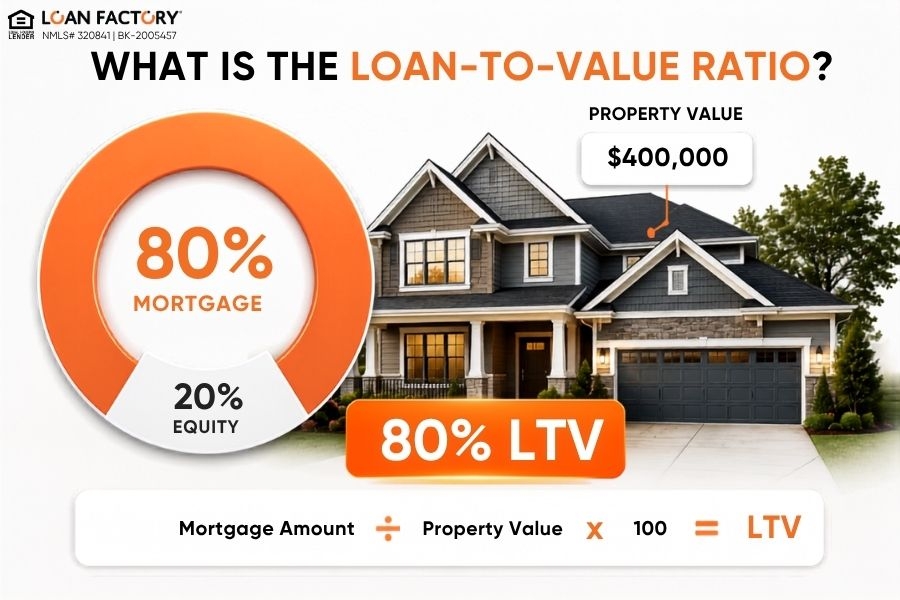
Down Payment and Loan-to-Value DSCR loans commonly require more equity than primary-residence mortgages. The permitted loan-to-value ratio depends on credit, DSCR, property type, loan size, transaction purpose, and whether the loan is fully amortizing or interest-only.
Current lender offerings demonstrate that some programs may reach 80% or higher LTV under selected scenarios, while other files require larger contributions.
Do not assume that the maximum advertised LTV applies to every borrower or property.
Reserve Requirements Reserves are funds the investor retains after closing.
They may be measured as a number of months of PITIA and can vary based on:
DSCR Credit score Number of properties Loan amount Cash-out proceeds Property type Investor experience The lender may require bank, brokerage, or retirement-account statements to verify reserves.
Cash needed for future repairs should be considered separately from lender-required reserves.
Can You Qualify Without Tax Returns? Many DSCR programs do not require personal tax returns to establish qualifying income because underwriting focuses on the rental property’s cash flow. However, the lender may still require other financial, identity, asset, and business-purpose documents.
Angel Oak describes its DSCR program as requiring no personal income or employment information for qualification. UWM similarly describes its Investor Flex program as using prospective rental income instead of borrower income.
An investor may still need to provide:
Bank or investment statements Identification Entity documents Purchase contract Insurance information Lease or rental documentation Appraisal Title records Explanation of deposits Evidence of reserves Business-purpose certification “No tax returns” does not mean “no documentation.”
Can a DSCR Loan Be Made to an LLC? Some DSCR programs allow title to be vested in an eligible LLC, corporation, partnership, or trust. The individual owners may still be required to sign personal guarantees and satisfy credit and ownership requirements.
Angel Oak currently identifies LLC, S corporation, C corporation, and certain trust vesting as available under its DSCR program, subject to complete qualification.
Entity documentation may include:
Articles of organization Operating agreement Employer Identification Number Certificate of good standing Ownership schedule Borrowing resolution Personal guarantee Entity bank statements Entity vesting can affect title, insurance, taxes, and legal liability.
Investors should obtain appropriate legal and tax guidance before selecting an ownership structure.
What Properties May Be Eligible? DSCR loans are generally designed for non-owner-occupied rental properties. Depending on the lender, eligible collateral may include single-family homes, condominiums, townhomes, two- to four-unit properties, and certain short-term rentals.
Some specialized programs may also consider:
Non-warrantable condominiums Condotels Five- to eight-unit properties Mixed-use buildings Rural investment properties Properties owned by eligible entities These categories are highly lender-specific.
Angel Oak’s current program identifies several condominium, condotel, and two- to four-unit options. A&D also advertises broader property categories under selected DSCR programs.
A property may be declined because of:
Deferred maintenance Safety or habitability issues Unpermitted additions Zoning problems Excessive commercial use Condotel restrictions Short-term rental prohibitions Low marketability Insufficient rental support DSCR Loan vs. Conventional Investment Property Loan A DSCR loan qualifies primarily through property cash flow, while a conventional investment loan commonly evaluates the borrower’s personal income, debts, and agency underwriting requirements.
Feature
DSCR investment property loan
Conventional investment loan
Main income approach Property rental cash flow Borrower income plus eligible rental income Tax returns Often not used for income qualification May be required depending on income type Employment review Often reduced or not used for qualification Commonly reviewed Debt-to-income ratio May not be the primary measure Common qualification factor Entity vesting May be available More limited Property use Business-purpose investment Investment property Guidelines Private lender or investor-specific Agency and lender requirements Pricing Reflects Non-QM and property risk Based on conventional investment guidelines
A DSCR loan is not automatically preferable because it requires fewer income documents.
A conventional loan may provide a more favorable rate-and-cost combination when the investor can qualify through traditional underwriting.
A DSCR loan may be useful when:
Taxable income does not reflect available cash flow. The investor has variable or complex personal income. The property’s rent is strong relative to PITIA. The investor owns several financed properties. Entity vesting is important. Traditional debt-to-income qualification is restrictive. What Are the Benefits of DSCR Loans? The primary benefit is the ability to qualify through rental-property performance rather than depending mainly on personal employment income. This may simplify income analysis for investors with complex tax returns or multiple businesses.
Potential advantages include:
Reduced reliance on personal tax returns Qualification based on rental cash flow Potential LLC or corporate vesting Options for multiple financed properties Purchase, refinance, and cash-out structures Possible short-term rental programs Potential interest-only options Less focus on personal debt-to-income ratio Program features vary and may change.
An advertised feature should not be treated as available until the lender reviews the specific borrower, property, and transaction.
What Are the Tradeoffs and Risks? DSCR loans can provide flexibility, but they may involve larger down payments, higher rates or fees, stronger reserve requirements, business-purpose terms, and prepayment penalties where permitted.
Investors should review:
Interest rate and APR disclosures, when applicable Origination charges Discount points Prepayment penalty Interest-only period Balloon features Adjustable-rate terms Late-payment provisions Personal guarantees Entity requirements Cash-out restrictions Reserve requirements Business-purpose loans may not receive every protection associated with consumer-purpose mortgage credit. The CFPB states that the federal ability-to-repay requirements in Regulation Z do not apply to credit primarily extended for business, commercial, or agricultural purposes.
That distinction does not eliminate lender underwriting or other applicable federal and state requirements.
A Lender’s DSCR Is Not the Property’s Complete Cash Flow The lender’s ratio usually does not capture every ownership expense.
An investor should separately budget for:
Vacancy Repairs Property management Leasing commissions Utilities paid by the owner Landscaping and snow removal Pest control Legal and accounting costs Capital expenditures Replacement reserves Short-term rental platform fees Furniture replacement A property with a 1.10 lender-calculated DSCR could still produce weak or negative operating cash flow after these expenses.
How Should Investors Analyze a Property Before Applying? Investors should complete both the lender’s DSCR calculation and a more conservative operating analysis. The loan test answers whether the property fits the mortgage program; the investor analysis tests whether the property supports the owner’s financial objectives.
Lender Qualification Review Calculate:
Expected qualifying rent Proposed principal and interest Property taxes Insurance HOA dues Lender-calculated DSCR Investor Cash-Flow Review Also estimate:
Vacancy allowance Maintenance Property management Capital expenditures Utilities Licensing costs Turnover expenses Legal and accounting expenses Contingency reserve Decision Checklist Before proceeding, ask:
Is the rent estimate supported by the local market? Will taxes change after the purchase? Is the insurance estimate for a rental property? Are short-term rentals legally allowed? Does the HOA restrict leasing? How much cash remains after closing? Can the property absorb several months of vacancy? What happens when an interest-only period ends? Is there a prepayment penalty? Does the refinance strategy remain workable if values decline? Practical Rule: Underwrite the property to realistic expenses, not only to the lender’s minimum DSCR requirement.
Not sure how different lenders may calculate rental income and PITIA? Compare mortgage options or call or text (660) 333-3333 to review a potential investment property with a Loan Factory mortgage professional.
How Do You Apply for a DSCR Investment Property Mortgage? The application process begins with the property and proposed rental income, followed by a review of the investor’s credit, assets, transaction, entity structure, and collateral.
1. Define the Transaction Identify whether the request is for:
Purchase Rate-and-term refinance Cash-out refinance Delayed financing Long-term rental Short-term rental The selected purpose affects leverage, documentation, and available terms.
Investors refinancing a rental through alternative underwriting can also review how a Non-QM refinance works
2. Estimate Rent and PITIA Provide the property address and expected rent.
The Loan Officer can build a preliminary calculation using:
Estimated loan amount Proposed interest rate Taxes Insurance HOA dues Market or lease rent Final qualification will depend on underwriting and approved documentation.
3. Review Credit, Assets, and Reserves Prepare:
Identification Credit authorization Bank or brokerage statements Entity documents Purchase contract Existing mortgage statement, for refinances Insurance quote Lease or rental history Reserve documentation 4. Order the Property Valuation The lender may require an appraisal with market rent, a separate rental schedule, or another approved rental analysis.
Short-term rentals may require specialized data.
5. Compare Complete Loan Terms Review:
Loan amount Down payment Interest rate APR, when disclosed Monthly payment Estimated PITIA DSCR Points and lender fees Prepayment penalty Interest-only terms Cash to close Required reserves 6. Complete Business-Purpose and Entity Documents The lender may require a business-purpose certification and personal guarantees from the entity’s owners.
Read these documents carefully before signing.
What Documents Are Commonly Needed? DSCR documentation is often lighter on personal income but remains detailed in other areas.
Common items include:
Document category
Possible documents
Identity Government-issued identification Credit Authorization and explanation of major events Assets Bank, brokerage, or retirement statements Property Purchase contract, appraisal, title, and insurance Rental income Lease, market-rent schedule, or rental analysis Entity Formation documents and operating agreement Reserves Verified liquid or eligible investment assets Refinance Mortgage statement and payoff information Business purpose Occupancy and business-purpose certifications
The lender may request additional information when the file contains large deposits, layered ownership, foreign assets, short-term rental income, or unusual property characteristics.
Loan Factory helps real estate investors compare DSCR loans for investment properties through a broad wholesale lender network.
Because private DSCR guidelines vary, comparing lenders can help identify differences in:
Required DSCR Rental-income calculations Loan-to-value limits Credit requirements Reserve requirements Property eligibility Short-term rental treatment Entity vesting Interest-only options Prepayment terms Purchase and refinance structures A licensed Loan Officer can help calculate preliminary DSCR, organize rental and asset documents, and compare the complete rate-and-cost structure.
TERA-supported tools can assist with pricing, document collection, communication, and loan-progress tracking.
Loan Factory does not guarantee approval, rental income, property performance, rates, terms, or investor returns.
When you are ready to submit property and financial information for review, you may apply online .
Conclusion DSCR loans for investment properties allow eligible investors to qualify primarily through a rental property’s income rather than traditional personal-income documentation.
The lender generally divides qualifying rent by the required property obligation to calculate DSCR. However, approval still depends on credit, equity, reserves, property eligibility, appraisal results, business-purpose requirements, and lender guidelines.
A DSCR investment property mortgage should also be evaluated as an investment decision. Include vacancy, repairs, management, capital expenditures, and future financing risks—not only the lender’s qualifying ratio.
To compare rental property DSCR loan options, compare mortgage options or call or text (660) 333-3333.
Experience Note The calculations, comparisons, and underwriting considerations in this article reflect common DSCR, rental-income, investment-property, asset-verification, and business-purpose lending practices.
They do not represent a specific Loan Factory borrower, property result, loan approval, rate quote, closed transaction, or investment outcome.
Sources Consumer Financial Protection Bureau, Regulation Z and official interpretations concerning non-owner-occupied rental property and business-purpose credit. Angel Oak Mortgage Solutions, current DSCR program information and DSCR calculator methodology. A&D Mortgage, current DSCR program overview and published program variations. United Wholesale Mortgage, current Investor Flex DSCR program description. About the Author Loan Factory Mortgage Education Team
Loan Factory is a technology-powered mortgage platform helping borrowers compare mortgage options through a broad wholesale lender network.
The Loan Factory Mortgage Education Team helps real estate investors understand DSCR calculations, rental-income qualification, investment-property financing, documentation, and lender-specific tradeoffs.
Disclaimer: This content is for educational and informational purposes only and is not financial, tax, legal, accounting, investment, credit, or real estate advice, a commitment to lend, or a guarantee of approval or investment performance. DSCR calculations, rental income, rates, APRs, payments, fees, prepayment terms, reserves, property requirements, and eligibility vary by lender, borrower, property, location, market conditions, underwriting, and investor guidelines.
Frequently Asked Questions