Yes, you may be able to get a home loan without a traditional job if you can document stable income, assets, or another acceptable source of repayment.
You do not always need a standard W-2 job to qualify for a mortgage.
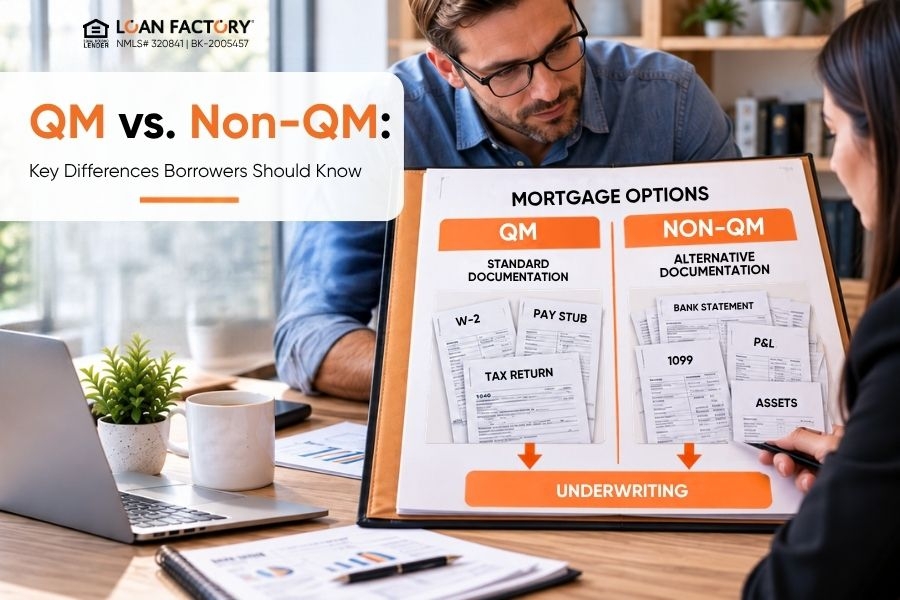
Many borrowers qualify using self-employment income, 1099 income, business income, bank statements, rental income, retirement income, or assets. However, the lender still needs to verify that you have the ability to repay the loan.
The Consumer Financial Protection Bureau’s Ability-to-Repay rule requires lenders to make a reasonable, good-faith determination that the borrower has the ability to repay a covered mortgage loan before or at consummation.
In simple terms:
You may not need a traditional job, but you still need a qualifying income or asset story that the lender can document.
Important note: This article is for informational purposes only and is not a commitment to lend. Mortgage approval, income eligibility, self-employed income review, 1099 income review, bank statement loan eligibility, asset depletion mortgage eligibility, rates, APR, fees, terms, payment estimates, and program availability depend on borrower qualifications, income, debts, assets, property details, lender guidelines, underwriting, appraisal, title, insurance, and applicable program rules.
Key Takeaways You may be able to get a mortgage without traditional W-2 employment if you can document qualifying income, assets, or repayment ability. A home loan without traditional employment is not the same as a no-income loan. Self-employed borrowers may qualify with tax returns, business income analysis, profit and loss documents, 1099s, bank statements, or other acceptable documentation. Fannie Mae says a stable and predictable flow of income is a foundational element in loan underwriting, and the lender must document that income is stable, has a history of receipt, and is reasonably expected to continue. Freddie Mac generally requires a two-year history of current self-employment in most cases to support income stability. Bank statement loans and asset depletion mortgages may help some borrowers who do not qualify through traditional W-2 income documentation. Loan Factory can help borrowers compare mortgage options from 240+ wholesale lenders, including options for self-employed, 1099, bank statement, and asset-based borrowers depending on eligibility. What Does “Without a Traditional Job” Mean? A borrower without a traditional job usually does not have standard W-2 employment with a fixed salary from one employer.
This may include borrowers who are:
Self-employed Independent contractors 1099 workers Gig workers Freelancers Business owners Commission-based workers Real estate agents Consultants Truck drivers Online sellers Creators or influencers Retirees using assets or retirement income Investors with rental income Borrowers with multiple income streams Having non-traditional income does not automatically mean you cannot qualify.
But the lender may need more documentation to understand:
How much income is stable How long the income has been received Whether the income is likely to continue Whether the income is enough for the mortgage payment Whether the borrower has reserves Whether the borrower’s debts are manageable A traditional employee may show pay stubs and W-2s.
A non-traditional borrower may need a more detailed income story.
Can I Get a Home Loan Without Traditional Employment? Yes, you may be able to get a home loan without traditional employment if your income, business cash flow, bank deposits, assets, or other qualifying sources meet lender and program requirements.
A lender may review:
Tax returns 1099 forms Business income Profit and loss statements Bank statements Business bank deposits Personal bank deposits Asset accounts Retirement income Rental income Investment income Cash reserves Credit history Debt-to-income ratio Property type Down payment Loan program guidelines The main question is not whether your income is traditional.
The main question is whether the lender can document enough stable qualifying income or assets to support the mortgage.
Fannie Mae’s income guidance says lenders evaluate income stability, adequacy, and likelihood of continuance when qualifying a borrower.
That means a borrower with a non-traditional job may still qualify if the file is documented correctly.
Business owners whose tax returns do not fully reflect current cash flow can also review P&L-only mortgage loans , where available and subject to lender guidelines.
Home Loan Without Traditional Employment: Common Options A home loan without traditional employment may be possible through several mortgage paths. The right path depends on how you earn income, how you file taxes, how much you have in assets, and what type of property you are buying.
Borrower Situation
Possible Mortgage Path
Self-employed with tax returns Conventional, FHA, VA, USDA, Jumbo, or other eligible programs 1099 contractor 1099 income mortgage, self-employed mortgage, or bank statement loan Business owner with deposits but low taxable income Bank statement loan or non-QM option Retiree with large assets Asset depletion mortgage or retirement income review Investor buying rental property DSCR loan , conventional investment loan, or other investor loanMultiple income streams Full income analysis across acceptable sources Recent business owner May need additional documentation or alternative program review
Not every borrower will qualify for every option.
The best approach is to compare multiple mortgage paths instead of assuming one program is the only choice.
Self-Employed Mortgage: How It Works A self-employed mortgage is not one single loan product. It usually means a mortgage application where the borrower’s qualifying income comes from self-employment, business ownership, freelance work, contract work, or independent income.
Fannie Mae explains that when underwriting self-employed borrowers, the key exercise is determining the amount of income that can be relied on to qualify the borrower for the mortgage obligation. The lender must review business income distributions and the viability of the business.
A self-employed borrower may be:
Sole proprietor Independent contractor Freelancer Business partner S-corp owner LLC owner Corporation owner Gig worker Consultant Real estate professional Contractor or tradesperson Documents Often Needed for a Self-Employed Mortgage Depending on the loan program, lenders may ask for:
Personal tax returns Business tax returns Year-to-date profit and loss statement Balance sheet Business bank statements Personal bank statements 1099 forms K-1 forms Business license CPA letter, if allowed and needed Articles of organization or incorporation Recent invoices or contracts Proof business is active Explanation of business income trends The lender may average income over one or two years, review business expenses, adjust for allowable add-backs, and evaluate whether income is stable.
Why Self-Employed Borrowers Sometimes Have Trouble Qualifying Self-employed borrowers often face challenges because tax returns may show lower taxable income after business deductions.
That can create a gap between:
What the borrower actually deposits What the tax return shows as qualifying income What the lender can use under program rules This does not mean the borrower has no options.
It means the file needs the right income analysis and loan structure.
1099 Income Mortgage: Can Contractors Qualify? A 1099 income mortgage may be possible if the borrower can document consistent 1099 income and meet lender requirements.
1099 borrowers may include:
Independent contractors Gig workers Freelancers Consultants Commission-based contractors Contract healthcare workers Real estate agents Insurance agents Sales professionals Rideshare or delivery drivers Creators or online workers A lender may review:
1099 forms Tax returns Bank deposits Business expenses Length of 1099 work Income consistency Industry stability Contracts or invoices Debt-to-income ratio Cash reserves A 1099 worker may be treated as self-employed for mortgage underwriting.
That means income can be more complicated than a W-2 salary.
The lender may need to determine net qualifying income after business expenses, not just gross 1099 income.
1099 Mortgage Example A borrower receives $120,000 in 1099 income.
But after business expenses, tax returns may show $78,000 in net income.
Depending on the loan program, the lender may use the qualifying income supported by tax returns and underwriting rules, not simply the gross 1099 amount.
That is why 1099 borrowers should review mortgage options early.
A bank statement loan or other non-traditional income program may be worth comparing if tax-return income does not reflect cash flow.
Borrowers paid as independent contractors can review how a 1099 income loan may use documented contractor income.
Bank Statement Loan: Mortgage Option for Non-Traditional Income A bank statement loan may help self-employed or 1099 borrowers qualify using bank deposits instead of traditional W-2 income documentation or tax-return income.
Bank statement loans are often used by borrowers who:
Are self-employed Receive 1099 income Own a business Have strong deposits but lower taxable income Have complex tax returns Deduct significant business expenses Need an alternative to traditional income documentation A bank statement loan may review:
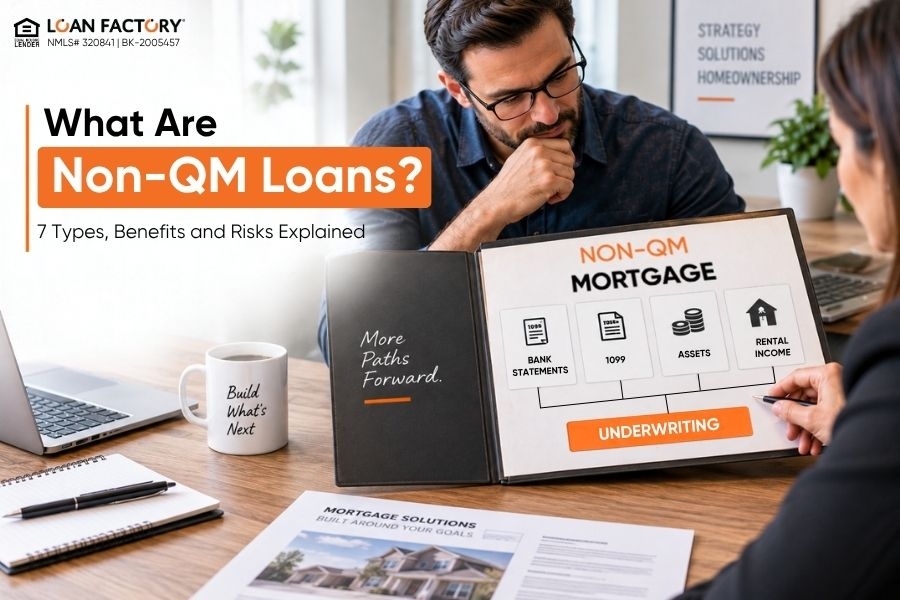
12 or 24 months of personal bank statements 12 or 24 months of business bank statements Average monthly deposits Expense factor Business type Credit profile Down payment Reserves Property type Loan-to-value ratio Debt-to-income ratio Appraisal Occupancy Bank statement loans are usually lender-specific and may be considered non-QM or alternative documentation loans.
They are not the same as no-income loans.
The lender still reviews the borrower’s ability to repay, but the income documentation method may be different.
Bank Statement Loan Pros and Cons Potential Benefit
Important Trade-Off
May use deposits instead of tax-return income May have higher rates or fees than agency loans Helpful for self-employed borrowers May require larger down payment Can reflect business cash flow Expense factor can reduce qualifying income May work when tax returns show lower income Not every lender offers it May allow complex income files Guidelines vary widely
A bank statement loan may be a strong option for the right borrower.
But it should be compared with conventional, FHA, VA, USDA, Jumbo, and other available options.
Asset Depletion Mortgage: Qualifying With Assets Instead of Traditional Income An asset depletion mortgage may allow a borrower to use eligible assets as a source of qualifying income. This can help retirees, high-net-worth borrowers, or borrowers with significant savings but limited traditional employment income.
Asset depletion may be considered for borrowers who have:
Retirement accounts Investment accounts Savings Brokerage accounts Trust assets, if eligible Other verifiable liquid assets The lender may apply a formula to convert eligible assets into monthly qualifying income.
The exact formula depends on the loan program and lender guidelines.
Asset depletion may help if you:
Are retired Recently left traditional employment Have significant assets Have limited W-2 income Have investment income Want to qualify without relying only on employment income Asset Depletion Is Not the Same as “No Income” Asset depletion does not mean the lender ignores repayment ability.
The lender still reviews:
Eligible asset type Account ownership Accessibility of funds Vesting and withdrawal rules Age or retirement-account restrictions Down payment Reserves Debts Credit Property type Loan program requirements A borrower with strong assets may have more options, but eligibility depends on lender rules.
Traditional Mortgage vs. Bank Statement vs. Asset Depletion Different non-traditional borrowers may need different mortgage strategies.
Mortgage Path
Best Fit
Income Review
Traditional mortgage W-2 or tax-return-supported borrowers Pay stubs, W-2s, tax returns Self-employed mortgage Business owners with usable tax-return income Tax returns, business income analysis 1099 income mortgage Contractors with documented income 1099s, tax returns, deposits Bank statement loan Self-employed borrowers with strong deposits Bank deposits and expense factor Asset depletion mortgage Borrowers with significant assets Assets converted into qualifying income DSCR loan Real estate investors Property rental income and debt service
The right loan depends on the borrower’s financial profile.
A self-employed borrower with strong tax returns may not need a bank statement loan.
A borrower with strong deposits but low taxable income may need alternative documentation.
A retiree with large assets may benefit from asset depletion.
A rental investor may need DSCR financing instead of a traditional owner-occupied loan.
Many borrowers who do not fit traditional lending guidelines can still explore Non-QM loans , depending on their income, assets, credit, property, and lender requirements.
What Lenders Review Without a Traditional Job When you do not have a traditional job, lenders may look more closely at the full file.
They may review:
Income Stability The lender wants to know whether income is stable and likely to continue.
Fannie Mae says stable and predictable income is a foundational underwriting element, and lenders must document income history and reasonable continuance.
Business Strength For self-employed borrowers, the lender may review whether the business can continue generating income.
Fannie Mae explains that self-employment cash flow analysis includes reviewing whether income can be relied on while maintaining the viability of the business.
Length of Income History Freddie Mac says that, in most cases, a two-year history of current self-employment is required to ensure income stability.
Some programs may allow shorter histories with additional support, but requirements vary.
Debt-to-Income Ratio Lenders compare monthly debt payments with qualifying income. Understanding how to calculate debt-to-income ratio for a mortgage can help borrowers estimate how recurring obligations may affect qualification
This may include:
Mortgage payment Credit cards Auto loans Student loans Personal loans Business debts, if personally obligated Support payments Other recurring obligations Assets and Reserves Assets can help show financial strength.
Lenders may review:
Down payment Closing cost funds Cash reserves Retirement accounts Investment accounts Business liquidity Large deposits Source of funds Credit Profile Even with non-traditional employment, credit still matters.
The lender may review:
Credit score Payment history Credit utilization Recent inquiries Collections Derogatory credit Housing payment history Property and Occupancy Loan rules may change depending on whether the property is:
Primary residence Second home Investment property Single-family home Condo Townhome Duplex Multifamily property The property must also meet appraisal and underwriting requirements.
Can You Get a Mortgage With No Job but Assets? You may be able to get a mortgage with no traditional job if you have sufficient eligible assets and meet lender guidelines. This is often reviewed through asset depletion, retirement income, investment income, or other asset-based qualification methods.
This may apply to:
Retirees High-net-worth borrowers Recently retired borrowers Borrowers with investment portfolios Borrowers with trust income Borrowers with significant savings Borrowers selling a business Borrowers between jobs with strong assets But lenders still need documentation.
A borrower may need to show:
Account statements Asset ownership Access to funds Withdrawal rights Account seasoning Retirement account rules Trust documents, if applicable Tax implications, if relevant Down payment and reserves If you have strong assets but little employment income, compare No-Doc, bank statement, and DSCR loans .
Can You Get a Mortgage With Gig Income? You may be able to get a mortgage with gig income if the income is documented, stable, and acceptable under lender guidelines.
Gig income may include:
Rideshare income Delivery income Freelance platforms Online sales Creator income Contract work Short-term projects App-based services A lender may ask for:
Tax returns 1099 forms Bank statements Platform earnings reports Profit and loss statement Business expense documentation Length of earning history The challenge is consistency.
If income changes every month, the lender may need a longer history to calculate a stable monthly average.
If the gig income is new, it may be harder to use.
Can You Get a Mortgage If You Recently Became Self-Employed? You may be able to get a mortgage after becoming self-employed, but a short self-employment history can make underwriting more difficult.
Freddie Mac generally requires a two-year history of current self-employment in most cases to ensure income stability.
Some files may be reviewed differently if the borrower has prior experience in the same field or industry, but lender and program rules vary.
A recently self-employed borrower should prepare:
Prior W-2 history in the same field Current business income Business license Contracts Invoices Bank statements Profit and loss statement Tax returns, if available Explanation of business transition If you recently changed from W-2 to 1099 in the same industry, explain that early.
It may help the lender understand income continuity.
Documents Needed for a Home Loan Without Traditional Employment Borrowers without traditional employment should prepare documents early.
Self-Employed Documents Personal tax returns Business tax returns Year-to-date profit and loss statement Balance sheet Business bank statements Personal bank statements Business license CPA letter, if needed and accepted Articles of organization K-1s, if applicable 1099s, if applicable 1099 Income Documents 1099 forms Tax returns Bank statements Invoices Contracts Platform earnings reports Profit and loss statement Business expense records Bank Statement Loan Documents 12 or 24 months of bank statements Business narrative Expense factor documentation CPA letter, if required Business license Proof business is active Personal identification Asset statements Asset Depletion Documents Bank statements Brokerage statements Retirement account statements Trust documents, if applicable Proof of account ownership Proof of access to funds Withdrawal terms Documentation of down payment and reserves General Mortgage Documents Government-issued ID Credit authorization Purchase contract, if buying Homeowners insurance quote Gift letter, if applicable Source of large deposits Explanation letters, if requested The more organized your documents are, the easier it may be for the lender to evaluate your file.
First-time buyers can also use Loan Factory’s guide to documents needed for first-time home buyers to organize common income, asset, debt, and property records.
How to Improve Approval Chances Without a Traditional Job A borrower without traditional employment can improve approval chances by documenting income clearly, lowering debts, saving reserves, keeping bank statements clean, and comparing multiple loan programs.
1. Keep Business and Personal Finances Organized Separate accounts can make income review easier.
If business and personal deposits are mixed together, underwriting may take longer.
2. Reduce Monthly Debts Lower debt can improve debt-to-income ratio.
Consider paying down:
Credit cards Auto loans Personal loans Business debts personally tied to you Other recurring obligations 3. Avoid Large Unexplained Deposits Large deposits may need documentation.
Keep records for:
Transfers Gift funds Business revenue Sale of assets Tax refunds Reimbursements 4. Save More Reserves Reserves can help offset income complexity.
This is especially important for self-employed, 1099, bank statement, or asset depletion borrowers.
5. Prepare a Clear Income Story Your loan advisor should be able to understand:
What you do How you earn income How long you have done it Whether income is stable Whether income is seasonal Whether income is likely to continue Which documents support the income 6. Compare Multiple Loan Programs Do not assume one denial means no options.
You may need to compare:
Conventional FHA VA USDA Jumbo Bank statement Asset depletion DSCR, for investment properties Portfolio or non-QM options Loan Factory’s access to 240+ wholesale lenders may help borrowers compare paths that a single retail lender may not offer.
Mistakes to Avoid When Applying Without a Traditional Job Non-traditional income borrowers can avoid delays by preparing early and avoiding common mistakes.
Mistake
Why It Can Hurt
Assuming gross income is qualifying income Lenders may use net income after expenses Mixing business and personal deposits Can make income analysis harder Writing off too much income before applying May reduce qualifying tax-return income Waiting until contract to organize documents Can delay underwriting Making large undocumented deposits May trigger source-of-funds questions Opening new credit before closing Can affect DTI and credit profile Ignoring reserves Reserves may help offset income complexity Assuming bank statement loans are no-income loans Income still must be supported Not comparing programs Different lenders treat non-traditional income differently Misstating occupancy or income Can create serious loan and legal issues
The best strategy is to prepare before you shop. A documented mortgage preapproval can help identify which income documents and loan paths may fit before you make an offer.
Case Study: Self-Employed Borrower With Strong Deposits Here is a hypothetical example of how a borrower without traditional employment may compare options.
Hypothetical example only: This is for informational purposes only and not a commitment to lend. Loan approval, income eligibility, rates, APR, payment, terms, fees, and program availability depend on borrower qualifications, lender guidelines, property details, underwriting, appraisal, title, and applicable program rules.
A self-employed borrower owns a small business and wants to buy a primary residence.
The borrower has:
Two years of self-employment history Strong monthly bank deposits Business tax returns Personal tax returns Low personal debt Good credit Savings for down payment and reserves However, the borrower’s tax returns show lower net income because of business deductions.
The loan advisor compares:
Conventional self-employed income review FHA option Bank statement loan Asset-based qualification, if applicable Larger down payment scenario Different debt payoff options The borrower may find that a traditional loan works if tax-return income is sufficient.
If not, a bank statement loan may offer another path, depending on lender guidelines.
Loan Factory Experience Note: In real mortgage reviews, self-employed and 1099 borrowers often need more than a rate quote. They need an income strategy. The best loan path depends on tax-return income, bank deposits, business stability, debts, reserves, and how the lender calculates qualifying income.
Should You Use a Bank Statement Loan or a Traditional Mortgage? A bank statement loan may be helpful if your tax returns do not show enough qualifying income, but a traditional mortgage may offer better pricing if you qualify.
Before choosing, compare:
Rate APR Monthly payment Down payment Closing costs Cash reserves Mortgage insurance, if applicable Prepayment penalty, if applicable Documentation requirements Long-term plan A bank statement loan can solve documentation challenges, but it may have trade-offs.
A traditional mortgage may be better if your tax-return income supports approval.
The right answer depends on your full file.
Should You Use Asset Depletion or Income Qualification? Asset depletion may help if you have strong eligible assets but limited employment income. Traditional income qualification may be better if you have stable documented income.
Ask your loan advisor:
Which assets are eligible? How are assets converted to income? Are retirement accounts counted fully or discounted? Do I need to withdraw funds? Will the assets still be available after closing? Does the loan require reserves? Is this conventional, jumbo, or non-QM? How does payment compare with other options? Asset depletion can be useful, but it should be reviewed carefully.
Speak with a tax professional about tax consequences before withdrawing retirement or investment funds.
Loan Factory helps borrowers compare mortgage options from 240+ wholesale lenders using technology designed to make the home loan process clearer, faster, and more transparent.
If you are asking, “Can I get a home loan without a traditional job?”, Loan Factory can help review your income, bank statements, assets, debts, credit, down payment, and available mortgage options.
What Loan Factory Offers Non-Traditional Income Borrowers Access to 240+ wholesale lenders Side-by-side mortgage options to compare rate, APR, payment, fees, and cash-to-close TERA technology platform to support pricing, loan comparison, document flow, and loan review Local loan advisor support for self-employed, 1099, bank statement, and asset-based mortgage scenarios No application fee to start reviewing your options Guidance for Conventional, FHA, VA, USDA, Jumbo, bank statement, DSCR, asset depletion, and other available programs depending on eligibility Support before you shop, make an offer, refinance, or compare non-traditional income options Not every non-traditional income file will qualify.
But not having a traditional job does not automatically mean you cannot get a mortgage.
Loan Factory can help you compare available paths and understand what documents may be needed.
Ready to compare mortgage options without a traditional W-2 job?
Compare mortgage options: LoanFactory.com/quote LoanFactory.com/apply Loan Factory Mortgage Calculator Loan Factory Mortgage Rate Alert
Author Box Written by: Loan Factory Mortgage Education Team
About Loan Factory : Loan Factory is a technology-powered mortgage platform helping homebuyers, homeowners, and real estate investors compare mortgage options from 240+ wholesale lenders. Our mortgage education content is designed to help borrowers understand self-employed mortgages, 1099 income, bank statement loans, asset depletion, qualification factors, affordability, and the home loan process before applying.
Compliance Disclaimer This content is for informational and educational purposes only and is not a commitment to lend or a guarantee of eligibility. Self-employed mortgage options, 1099 income review, bank statement loans, asset depletion mortgages, loan approval, program availability, rates, APR, fees, terms, payment estimates, down payment, cash to close, and closing timelines depend on borrower qualifications, income, debts, credit profile, assets, property details, lender guidelines, underwriting, appraisal, title, insurance, and applicable program rules. Not all applicants will qualify. Terms may change without notice.
Loan Factory is not affiliated with or acting on behalf of any government agency. FHA, VA, USDA, Conventional, Jumbo, DSCR, bank statement, asset depletion, and other loan programs are offered through participating lender partners, subject to eligibility and underwriting approval.
Equal Housing Opportunity.
FAQ: Can I Get a Home Loan Without a Traditional Job?