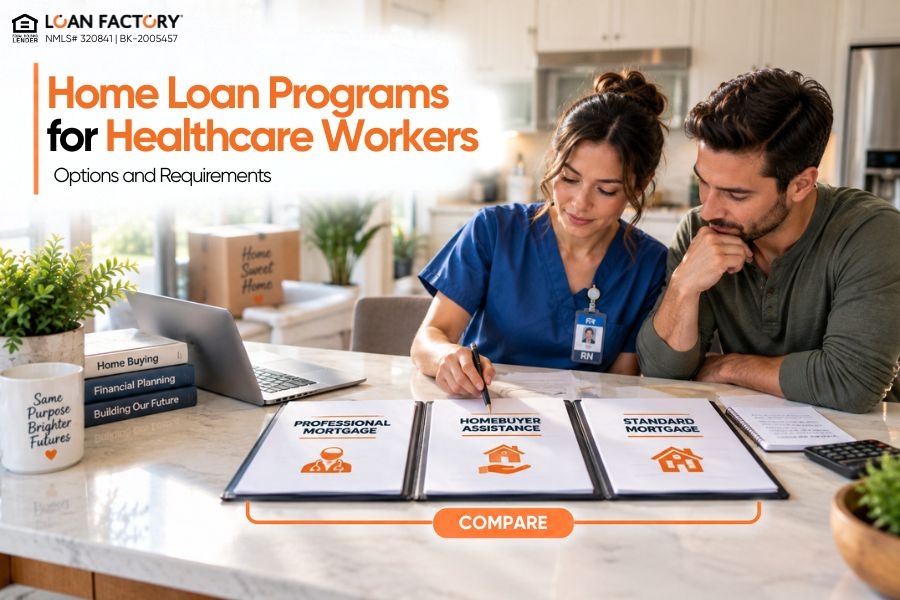
A doctor home loan program , also called a physician mortgage loan, is a mortgage option designed for doctors and certain medical professionals who may have strong earning potential but unique financial challenges.
Many doctors finish school with high student loan debt, limited savings, and a new employment contract instead of a long history of pay stubs. A traditional mortgage may not always evaluate that situation well.
That is why some lenders offer doctor home loan programs with more flexible features for eligible medical borrowers.
These programs may help with:
Low or no down payment options No private mortgage insurance on certain loan structures Flexible student loan treatment Employment contract-based income review Higher loan amounts than some standard programs Options for residents, fellows, new attendings, and established physicians However, doctor loans are not automatically the best choice. Borrowers should compare the interest rate, fees, payment, student loan calculation, loan term, and long-term cost before deciding.
What Is a Doctor Home Loan Program? A doctor home loan program is a mortgage program offered by certain lenders for eligible medical professionals.
It is not one single government program. Each lender may have different rules.
A doctor loan may be designed for borrowers such as:
Medical Professional
May Qualify?
Medical doctors, MD Often yes Doctors of osteopathic medicine, DO Often yes Dentists, DDS or DMD Often yes Residents May qualify, depending on lender Fellows May qualify, depending on lender Veterinarians Some programs allow Pharmacists Some programs allow Nurse practitioners or physician assistants Some programs allow Other advanced medical professionals Depends on lender
Because eligibility varies, borrowers should not assume every “doctor loan” accepts every medical profession.
Why Doctor Home Loans Exist Doctors often have a financial profile that looks different from many other homebuyers.
Common challenges include:
Large student loan balances Limited savings after medical school New job contract but not many pay stubs yet Relocation for residency, fellowship, or attending position Strong future income but short employment history Need to buy near a hospital, clinic, or medical center A doctor home loan program may help lenders evaluate this profile differently from a standard mortgage.
For example, a lender may consider a signed employment contract, review student loan payments differently, or offer options with no monthly mortgage insurance depending on the program.
Common Benefits of a Doctor Home Loan Program Doctor loan programs can vary, but common potential benefits include:
Benefit
Why It Matters
Low or no down payment options Helps doctors buy sooner with less upfront cash No PMI on certain programs May reduce monthly cost compared with some low-down-payment loans Student loan flexibility May help if medical school debt affects debt-to-income ratio Employment contract review Helpful for new attendings, residents, or fellows Higher loan amount options Useful in higher-cost housing markets Professional income recognition Program may account for medical career path
These benefits can be helpful, but they should be compared against the full loan cost. A loan with no PMI is not automatically better if the interest rate or fees are higher.
Doctor Loan vs. Conventional Loan A conventional loan may still be a strong option for many doctors, especially those with stronger credit, stable income, and enough down payment.
Feature
Doctor Home Loan Program
Conventional Loan
Designed for physicians Yes, depending on lender No PMI with low down payment Often waived on eligible doctor loans May apply with lower equity Student loan treatment May be more flexible Follows conventional guidelines Employment contract May be accepted by some lenders May be harder depending on file Interest rate Can vary by lender Can be very competitive Best for Doctors with student debt, limited savings, or new contracts Borrowers with strong credit, assets, and stable income
The best choice depends on the numbers. Some doctors may get a better overall deal with a conventional loan, especially if they can avoid PMI or qualify for strong pricing.
Doctor Loan vs. FHA, VA, and USDA Loans Doctors should not assume a doctor loan is the only option.
Other mortgage programs may also work:
Loan Type
When It May Fit
FHA loan Buyers who need flexible credit or lower down payment options VA loan Eligible veterans, active-duty service members, or surviving spouses USDA loan Buyers purchasing eligible rural or suburban properties Conventional loan Buyers with stronger credit and stable income Jumbo loan Buyers purchasing higher-priced homes Doctor home loan Eligible medical professionals needing flexible underwriting
A doctor who is also a veteran may want to compare VA financing. A doctor buying in an eligible rural area may review USDA. A doctor with strong income and assets may compare conventional or jumbo options.
The right loan is the one that fits the borrower’s full financial profile.
→ Read more: What are the different types of mortgages?
Who Is a Doctor Home Loan Program Best For? A doctor home loan program may be worth reviewing if you are:
A resident or fellow relocating for training A new attending with a signed employment contract A physician with high student loan debt A doctor with strong income but limited savings A dentist, veterinarian, or other eligible medical professional Buying in a higher-cost market Trying to avoid monthly mortgage insurance Comparing low-down-payment options These programs can be especially useful early in a medical career, when income is expected to grow but cash reserves may still be limited.
When a Doctor Home Loan May Not Be the Best Fit A doctor home loan may not be the right choice if:
The interest rate is higher than other available options Closing costs are too high You have enough down payment for a better conventional structure You qualify for VA benefits You plan to sell or relocate soon You are buying an investment property The program has loan amount or property restrictions Student loan treatment is not meaningfully better than other options A doctor loan should be compared, not assumed.
→ Read more: Which Mortgage Type Is Right for Me?
Student Loans and Doctor Mortgage Approval Student loan debt is one of the biggest reasons doctors look at physician mortgage programs.
Many medical professionals have large student loan balances, but the actual monthly payment may be lower if they are on an income-driven repayment plan, in deferment, or starting a new job.
Doctor home loan programs may handle student loans differently than some standard mortgage programs, depending on lender guidelines.
Borrowers should ask:
How will my student loans be calculated? Will the lender use my actual payment? How are deferred student loans treated? How are income-driven repayment plans reviewed? Will student loans affect my debt-to-income ratio? Should I compare doctor loan, conventional, FHA, and VA options? The student loan calculation can significantly affect qualifying power, so it should be reviewed early.
Can Residents and Fellows Qualify? Some doctor home loan programs may allow residents and fellows to qualify, but rules vary by lender.
A lender may review:
Residency or fellowship contract Future employment contract Start date Specialty Income documentation Credit history Student loans Cash reserves Property location Occupancy intent If you are relocating for residency, fellowship, or a new attending role, ask the lender whether they can use your signed contract before your first paycheck.
Doctor Home Loan Program Checklist Before applying, prepare:
Item
Why It Matters
Medical degree or license information Helps confirm professional eligibility Employment contract May support income approval Pay stubs, if available Verifies current income Student loan statement Needed for debt calculation Credit report review Affects approval and pricing Bank statements Shows funds for closing and reserves Property location Some programs are state-specific Loan amount target Helps match lender limits Occupancy plan Most programs focus on primary residences Comparison Loan Estimates Helps compare true cost
The more organized your file is, the easier it is to compare doctor loan options against other mortgage programs.
Questions Doctors Should Ask Before Choosing a Loan Before choosing a doctor home loan program, ask:
Am I eligible based on my degree or profession? Can residents or fellows qualify? Can you use my employment contract before I start work? How are my student loans calculated? Is there monthly mortgage insurance? What is the interest rate compared with conventional, FHA, VA, or jumbo options? What are the closing costs? Are there prepayment penalties? Is the loan fixed-rate or adjustable-rate? Can I refinance later if my financial situation improves? These questions help you compare the full loan structure instead of focusing only on the down payment.
Common Mistakes Doctors Should Avoid Mistake 1: Choosing a Doctor Loan Without Comparing Alternatives A doctor loan can be helpful, but it is not always cheaper than a conventional, VA, FHA, or jumbo loan.
Mistake 2: Looking Only at No PMI No PMI is attractive, but the rate, fees, and long-term cost also matter.
Mistake 3: Underestimating Student Loan Impact Student loan calculation can change your approval amount. Review this before making an offer.
Mistake 4: Buying Too Much Home Too Early Future income may be strong, but your current payment should still feel comfortable.
Mistake 5: Not Comparing Loan Estimates Two lenders may offer very different doctor loan terms. Always compare the full Loan Estimate, not just the headline benefit.
Why Choose Loan Factory for Doctor Home Loan Programs If you are searching for doctor home loan program, you likely want to know which mortgage option fits your medical career stage, student loan profile, income, and homebuying goals.
A doctor loan may be a helpful option for some medical professionals, but it is not always the best or lowest-cost choice. Depending on your situation, a Conventional, FHA, VA, USDA, Jumbo, refinance, or other mortgage option may be worth comparing.
Loan Factory helps doctors and medical professionals compare loan options across a broad lender network instead of relying on one lender’s program.
Here is how Loan Factory helps:
Compare 240+ lenders through one platform. Review doctor loan options alongside other mortgage programs such as Conventional, FHA, VA, USDA, Jumbo, and refinance options. Zero application or junk fees to get started. Local loan advisors who can review your income, student loans, employment contract, residency or attending status, down payment, cash to close, and long-term plan. Tera AI technology for faster pricing, document review, and loan matching. Transparent side-by-side comparison of rate, payment, mortgage insurance, closing costs, lender credits, and total loan structure. Guidance from Loan Factory, led by Thuan Nguyen, #1 Loan Officer in the U.S. For doctors, the best mortgage is not always the one labeled “physician loan.” The best mortgage is the one that fits your income, student loans, savings, career stage, property location, monthly payment comfort, and long-term financial plan.
Ready to compare doctor home loan program options? This article is based on real doctor home loan, physician mortgage, student loan review, employment contract, FHA, VA, Conventional, Jumbo, and first-time buyer scenarios reviewed by Loan Factory’s lending team while assisting medical professionals across multiple U.S. housing markets.
Disclaimer This is for informational purposes only and is not a commitment to lend. Doctor home loan program availability, professional eligibility, down payment options, mortgage insurance requirements, student loan treatment, employment contract acceptance, rates, fees, loan amount, and approval depend on lender guidelines, credit, income, assets, property location, property type, occupancy, underwriting review, investor guidelines, and applicable laws. Loan Factory is not a government agency and does not guarantee approval, savings, or program availability.
FAQ: Doctor Home Loan Program