If you want to apply for an FHA loan with no down payment , the most important thing to know is this: FHA loans are low down payment loans, not true zero down loans by themselves.
Under most FHA programs, borrowers are required to make a minimum down payment of at least 3.5% of the lower of the appraised value or sales price, and borrowers also need enough funds for borrower-paid closing costs and fees at settlement.
However, some buyers may be able to reduce the amount they pay out of pocket by using approved down payment assistance, gift funds, seller credits, lender credits, or by comparing true no down payment options such as VA or USDA if they qualify.
Important note: This article is for informational purposes only and is not a commitment to lend. Loan approval, down payment requirements, assistance eligibility, rates, APR, credits, fees, mortgage insurance, and terms depend on credit, income, property eligibility, occupancy, underwriting, investor guidelines, and lender requirements.
Key Takeaways FHA loans generally are not no down payment loans. FHA is best understood as a low down payment mortgage option. FHA loans may allow down payments as low as 3.5%, but mortgage insurance is required for FHA loans. Buyers searching for 0 down first time home buyer loans should compare VA and USDA options if eligible. Down payment assistance, gift funds, seller credits, or lender credits may help reduce upfront cash, but they must meet program and underwriting rules. The right option depends on your credit, income, location, property type, military eligibility, first-time buyer status, cash to close, and monthly payment. Can You Apply for an FHA Loan With No Down Payment? You generally cannot get a standard FHA purchase loan with no down payment by itself. FHA loans are designed to offer a low down payment, often as low as 3.5%, but the borrower still needs an acceptable source of funds for the required investment and closing costs.
This is where many buyers get confused.
They may search:
Apply for FHA loan no down payment FHA loan 0 down 0 down first time home buyer First time home buyer loans with no down payment Low down payment mortgage options The search intent makes sense.
Many buyers want to know whether FHA can help them buy with little or no money upfront.
The direct answer is:
FHA can help reduce the down payment, but FHA by itself is usually not a zero down mortgage.
That does not mean you are out of options.
You may be able to explore:
FHA with approved down payment assistance FHA with eligible gift funds FHA with seller credits toward closing costs FHA with lender credits VA loans, if eligible USDA loans, if eligible Conventional 3% down options HomeReady or Home Possible State or local first-time buyer programs The key is to compare your full cash-to-close options, not just the FHA minimum down payment.How to Apply for an FHA First-Time Home Buyer Loan?
Why FHA Is a Low Down Payment Mortgage Option FHA is a low down payment mortgage option because it may allow qualified borrowers to purchase with a smaller upfront down payment than many traditional loan structures. The CFPB explains that FHA loans may allow down payments as low as 3.5% and may allow lower credit scores than many conventional loans, but FHA loans require mortgage insurance.
FHA loans are insured by the Federal Housing Administration, which is part of HUD.
The FHA does not lend money directly to borrowers.
Instead, FHA insures loans made by FHA-approved lenders.
HUD describes FHA loans as offering low down payments, low closing costs, and easier credit qualifying.
FHA May Fit Buyers Who: Have limited down payment savings Need more flexible credit review Are buying a primary residence Can document income and debts Can afford the full monthly payment Want a widely available low down payment option FHA Tradeoffs to Review FHA can be helpful, but buyers should review:
Minimum required investment Upfront mortgage insurance Monthly mortgage insurance County FHA loan limits Property condition requirements Closing costs Estimated cash to close Long-term refinance strategy FHA can be a strong loan option for many first-time buyers, but it should not be marketed or understood as a guaranteed no down payment loan.
Can Down Payment Assistance Make an FHA Loan Feel Like 0 Down? Down payment assistance may help eligible buyers reduce the out-of-pocket funds needed for an FHA loan. In some cases, assistance may help cover part or all of the required down payment, but the assistance must be allowed by the program, lender, and underwriting guidelines.
Down payment assistance may come from:
State housing finance agencies Local government programs Nonprofit organizations Employer programs Community programs Approved grant sources Approved second mortgage programs The CFPB notes that local nonprofit or government organizations may offer special second mortgage programs that can replace or help with a down payment.
Assistance may be structured as:
Grant Forgivable second loan Deferred-payment second loan Low-interest second mortgage Closing cost assistance Matched savings program What Buyers Should Ask Before assuming assistance makes FHA “no down,” ask:
Is the assistance a grant or a loan? Does it need to be repaid? Is it forgivable after a certain period? Does it cover down payment, closing costs, or both? Are there income limits? Is first-time buyer status required? Does the property location qualify? Does the lender allow this assistance with FHA? Down payment assistance can reduce upfront cash, but it must be reviewed carefully before making an offer.
FHA With Gift Funds, Seller Credits, or Lender Credits FHA buyers may be able to reduce cash needed at closing by using eligible gift funds, seller credits, or lender credits. These options do not erase FHA requirements, but they may help qualified buyers manage down payment and closing costs.
Gift Funds Gift funds may help cover part of the buyer’s down payment or closing costs when allowed.
A lender may require:
Gift letter Donor information Documentation of transfer Proof the money is not a loan Acceptable source of funds Seller Credits Seller credits may help cover eligible closing costs or prepaid expenses if negotiated in the purchase contract and allowed by FHA and lender guidelines.
Seller credits may help with:
Closing costs Title and escrow fees Prepaid taxes Homeowners insurance Discount points, when allowed Other eligible settlement costs Lender Credits Lender credits may help reduce upfront closing costs, often in exchange for a different rate or pricing structure.
Buyers should compare:
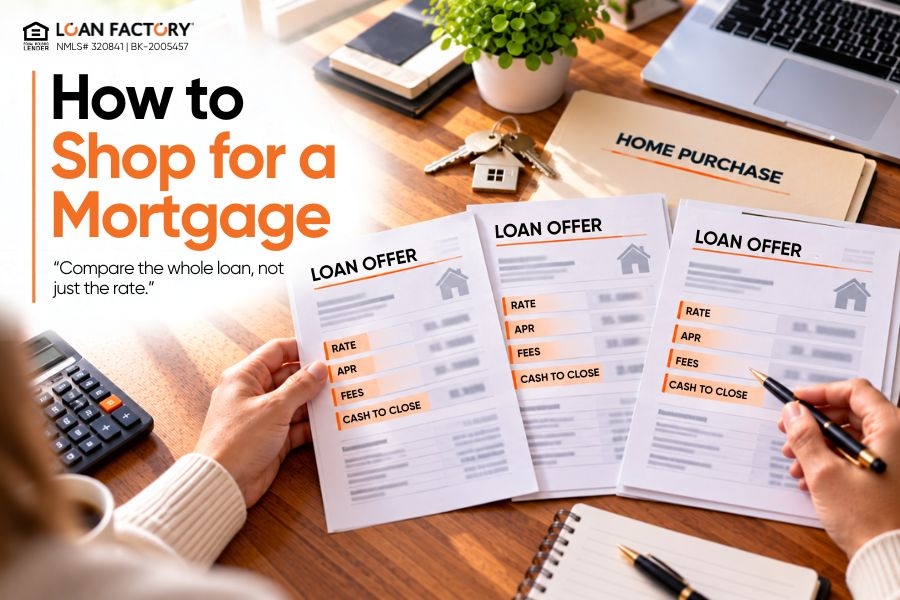
Rate APR Monthly payment Cash to close Total cost over time Reducing cash to close is helpful, but buyers should compare the full Loan Estimate before choosing a structure.
FHA vs. 0 Down First Time Home Buyer Loans FHA is a low down payment loan, while true 0 down first time home buyer loans are usually VA or USDA loans for eligible borrowers. FHA may be easier to access for many buyers, but VA and USDA may allow no traditional down payment if the borrower and property qualify.
Here is a practical comparison:
Loan Option
Down Payment Feature
Good For
Important Notes
FHA Loan Often as low as 3.5% down Buyers needing flexible credit guidelines FHA mortgage insurance required VA Loan Often no down payment Eligible Veterans, service members, and surviving spouses VA funding fee may apply unless exempt USDA Loan May allow no money down Eligible buyers in approved rural/suburban areas Income and property eligibility required Conventional 3% Down As low as 3% down Qualified first-time or eligible buyers PMI may apply HomeReady As low as 3% down Eligible low- to moderate-income borrowers Income and program rules may apply Home Possible As low as 3% down Eligible very low- to moderate-income borrowers Homebuyer education may apply Down Payment Assistance Varies Buyers who meet local/state rules Grant or second-loan terms vary
The CFPB explains that VA loans do not require a down payment for eligible servicemembers or family members, and USDA offers a no-down-payment mortgage program for eligible low- and moderate-income households in eligible rural areas.
Fannie Mae’s HomeReady mortgage may require a down payment as low as 3% for eligible borrowers, while Freddie Mac’s Home Possible mortgage also offers a down payment as low as 3%.
If your goal is truly no down payment, FHA may not be the first program to check. But FHA can still be one of the strongest low down payment options if VA or USDA does not fit.
-> Read more: How Can You Buy a House With No Down Payment? The Real Options Explained
First Time Home Buyer Loans With No Down Payment First time home buyer loans with no down payment may be available through VA or USDA if the buyer and property qualify. First-time buyer status alone does not automatically create a zero down loan, but it may help buyers qualify for assistance programs or special mortgage options.
VA Loans A VA loan may help eligible military borrowers purchase a home with no down payment.
VA-backed purchase loans can help eligible borrowers buy, build, or improve a home, especially if they do not want to make a down payment.
VA loans may fit eligible:
Veterans Active-duty service members National Guard members Reserve members Certain surviving spouses Buyers should still review:
Certificate of Eligibility VA funding fee, unless exempt Occupancy requirements Appraisal Closing costs Monthly payment USDA Loans A USDA loan may help eligible buyers purchase with no money down in approved rural or suburban areas.
The CFPB explains that USDA can be a good option for borrowers with little available savings and that USDA loans offer zero down payments, though borrowers may pay upfront and ongoing USDA-related fees.
USDA buyers should review:
Property location eligibility Household income limits Primary residence occupancy Guarantee fees Credit and income requirements Appraisal and property condition VA and USDA may be better aligned with a true zero down goal than FHA, but they are not available for every buyer or every home.First Time Home Buyer Programs With No Money Down
When FHA May Still Be the Better Option FHA may still be the better option when a buyer does not qualify for VA or USDA, the home is not USDA-eligible, or the buyer needs more flexible credit guidelines. FHA can also pair with approved assistance programs in some scenarios.
FHA may fit when:
You are not VA-eligible The property is not USDA-eligible Your income exceeds USDA limits You need more flexible credit review You are buying a primary residence You have access to gift funds or assistance You can afford FHA mortgage insurance The FHA payment fits your budget FHA May Not Fit When: You need a true no down payment loan without assistance FHA loan limits are too low for the home price The property condition does not meet FHA standards Mortgage insurance makes the monthly payment too high A conventional option is more cost-effective FHA is often a practical path for buyers with limited savings, but it should be compared against VA, USDA, conventional, and assistance-based options.
What Costs Should FHA Buyers Expect? FHA buyers should expect more than the down payment. Even with an FHA low down payment structure, buyers may still need funds for closing costs, prepaid expenses, escrow reserves, inspection, appraisal, mortgage insurance, and moving costs.
Common buyer costs may include:
FHA minimum required investment Upfront mortgage insurance Monthly mortgage insurance Earnest money deposit Home inspection Appraisal Title and escrow fees Closing costs Prepaid property taxes Homeowners insurance Escrow reserves HOA fees, if applicable Moving expenses Emergency savings after closing HUD’s FHA guidance states that borrowers must have sufficient funds to cover borrower-paid closing costs and fees at settlement, in addition to the minimum down payment.
Before applying, ask for an estimated cash-to-close breakdown — not just the minimum down payment amount.
You can also use the Loan Factory mortgage calculator to estimate how purchase price, down payment, taxes, insurance, and loan term may affect your monthly payment.How Do I Calculate My Mortgage Payment?
Case Study: FHA With Assistance vs. True 0 Down Options A buyer searching for “apply for FHA loan no down payment” may be trying to reduce upfront cash. The right answer may be FHA with assistance, VA, USDA, or another low down payment option, depending on eligibility.
Hypothetical Buyer Scenario A first-time buyer wants to purchase a $350,000 primary residence.
Loan Path
Down Payment Feature
What the Buyer Should Review
FHA Loan 3.5% minimum in many cases Mortgage insurance, cash to close, assistance options FHA + DPA Buyer cash may be reduced if eligible Grant vs. loan, income limits, repayment rules VA Loan $0 down if eligible COE, funding fee, appraisal, occupancy USDA Loan $0 down if eligible Property location, income limits, guarantee fees Conventional 3% Down 3% if eligible PMI, credit profile, payment HomeReady/Home Possible 3% if eligible Income limits, PMI, education requirements
In this example, FHA alone is not the same as a no down payment loan.
But if the buyer qualifies for down payment assistance, seller credits, or gift funds, FHA may still reduce cash needed upfront.
If the buyer qualifies for VA or USDA, a true no down payment option may be available.
Loan Factory Experience Note: In real first-time buyer reviews, many borrowers ask whether FHA can be “0 down.” The most accurate review is to compare FHA with assistance, VA, USDA, and conventional low down payment options side by side. Sometimes FHA is the strongest approval path. Other times, VA, USDA, or a 3% conventional option may create a better total payment or lower cash-to-close.
How to Apply for FHA or Compare No Down Payment Alternatives To apply for FHA or compare no down payment alternatives, start with a pre-approval review. A loan advisor can check FHA, VA, USDA, conventional 3% down, HomeReady, Home Possible, down payment assistance, seller credit, and gift fund options based on your situation.
Step 1: Review Your FHA Eligibility A lender may review:
Credit history Income Employment Debt-to-income ratio Assets Primary residence occupancy Property condition FHA loan limits Mortgage insurance impact Step 2: Check Assistance Options Ask:
Are there state or local programs available? Do I need to be a first-time buyer? Are there income limits? Does the home location qualify? Is the assistance a grant or a loan? Can it be used with FHA? Step 3: Compare VA and USDA Ask:
Am I eligible for VA? Can I obtain a Certificate of Eligibility? Is the property USDA-eligible? Does my household income fit USDA limits? Which option has the better monthly payment? Step 4: Compare Low Down Payment Mortgage Options Compare:
FHA Conventional 3% down HomeReady Home Possible VA USDA Down payment assistance Seller credit strategies -> Read more: Minimum Down Payment for First-Time Home Buyers (0%–3% Options Explained)
Step 5: Review Cash to Close and Monthly Payment Before choosing a loan, compare:
Down payment Closing costs Prepaids Mortgage insurance Guarantee fees Interest rate APR Monthly payment Cash left after closing The best loan is not always the one with the lowest down payment. It is the one that fits your approval path, monthly budget, and cash-to-close plan.
Start by checking your options through Loan Factory’s mortgage quote tool or begin your application at Loan Factory online application .
Common Mistakes to Avoid The biggest mistake with “FHA no down payment” is assuming FHA automatically offers 0 down. FHA usually requires a minimum investment, but buyers may be able to reduce upfront cash through approved assistance, credits, gifts, or by comparing VA and USDA options.
Mistake 1: Thinking FHA Means 0 Down FHA is a low down payment loan, not typically a no down payment loan.
Mistake 2: Ignoring Mortgage Insurance FHA loans require mortgage insurance, which affects the monthly payment.
Mistake 3: Forgetting Closing Costs Even if assistance helps with the down payment, closing costs and prepaids may still apply.
Mistake 4: Not Checking VA or USDA If you qualify for VA or USDA, those may be stronger zero down options than FHA.
Mistake 5: Choosing Based Only on Upfront Cash A lower cash-to-close option may not always be the best long-term fit.
Compare the full monthly payment and total cost.
Loan Factory helps homebuyers compare mortgage options from 240+ wholesale lenders using technology designed to make the home loan process clearer, faster, and more transparent.
If you are searching for apply for FHA loan no down payment, Loan Factory can help you understand whether FHA, FHA with assistance, VA, USDA, conventional 3% down, or another low down payment option may fit your situation.
What Loan Factory Offers Homebuyers Compare options from 240+ wholesale lenders Review FHA, VA, USDA, Conventional, Jumbo, and specialty loan options through lender partners Explore FHA and low down payment mortgage options Compare no down payment alternatives when eligible Check estimated payment, APR, fees, and cash-to-close side by side Use TERA technology for faster loan comparison Work with local loan advisors Review seller credits, gift funds, and assistance options before making an offer Ready to see whether FHA or another low down payment option may fit your situation?
Check your mortgage options: LoanFactory.com/quote LoanFactory.com/apply Loan Factory Mortgage Calculator
Author Box Written by: Loan Factory Mortgage Education Team
Loan Factory is a technology-powered mortgage platform helping homebuyers compare mortgage options from 240+ wholesale lenders. Our mortgage education content is designed to help buyers understand FHA loans, down payment options, affordability, qualification factors, and the mortgage process before applying.
Compliance Disclaimer This article is for informational and educational purposes only and is not a commitment to lend. Loan programs, down payment options, grants, lender credits, rates, APR, fees, mortgage insurance, guarantee fees, and approval are subject to credit approval, underwriting, investor guidelines, property eligibility, income limits, occupancy requirements, assets, appraisal, and program availability. Not all applicants will qualify. Terms may change without notice.
Loan Factory is not affiliated with or acting on behalf of any government agency. FHA, VA, USDA, Conventional, Jumbo, and other loan programs are offered through participating lender partners, subject to eligibility and underwriting approval.
FAQ: Apply for FHA Loan No Down Payment